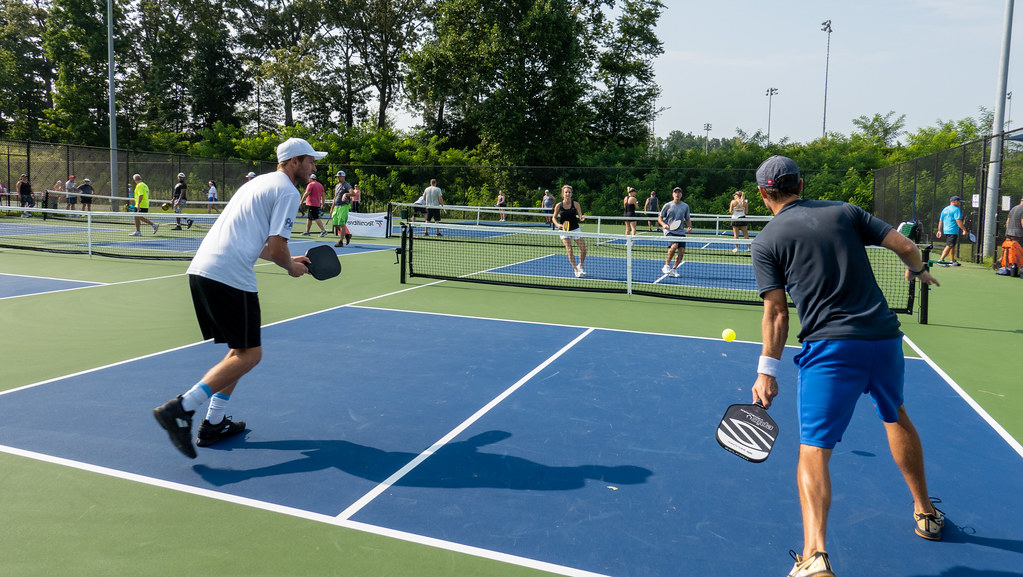
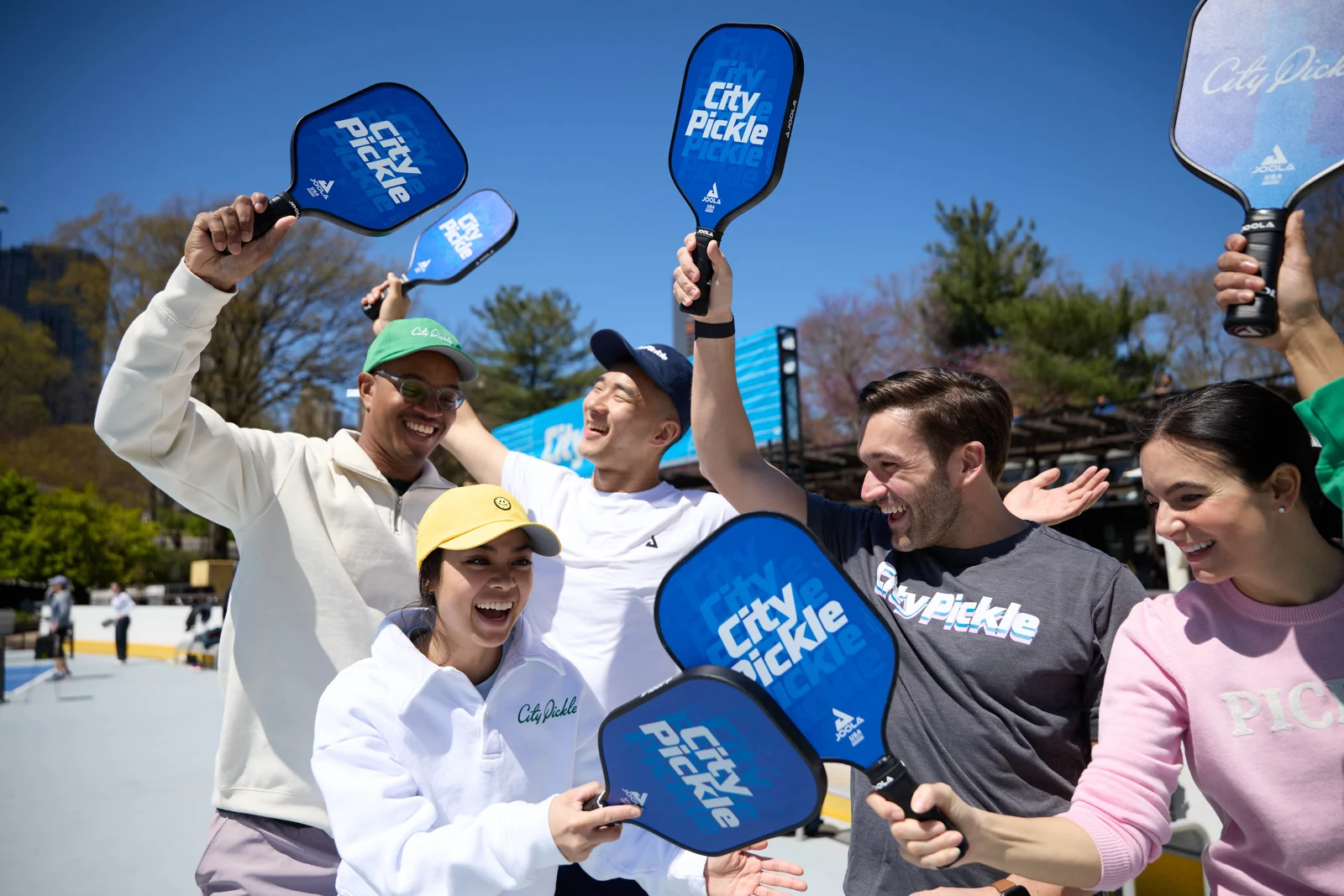
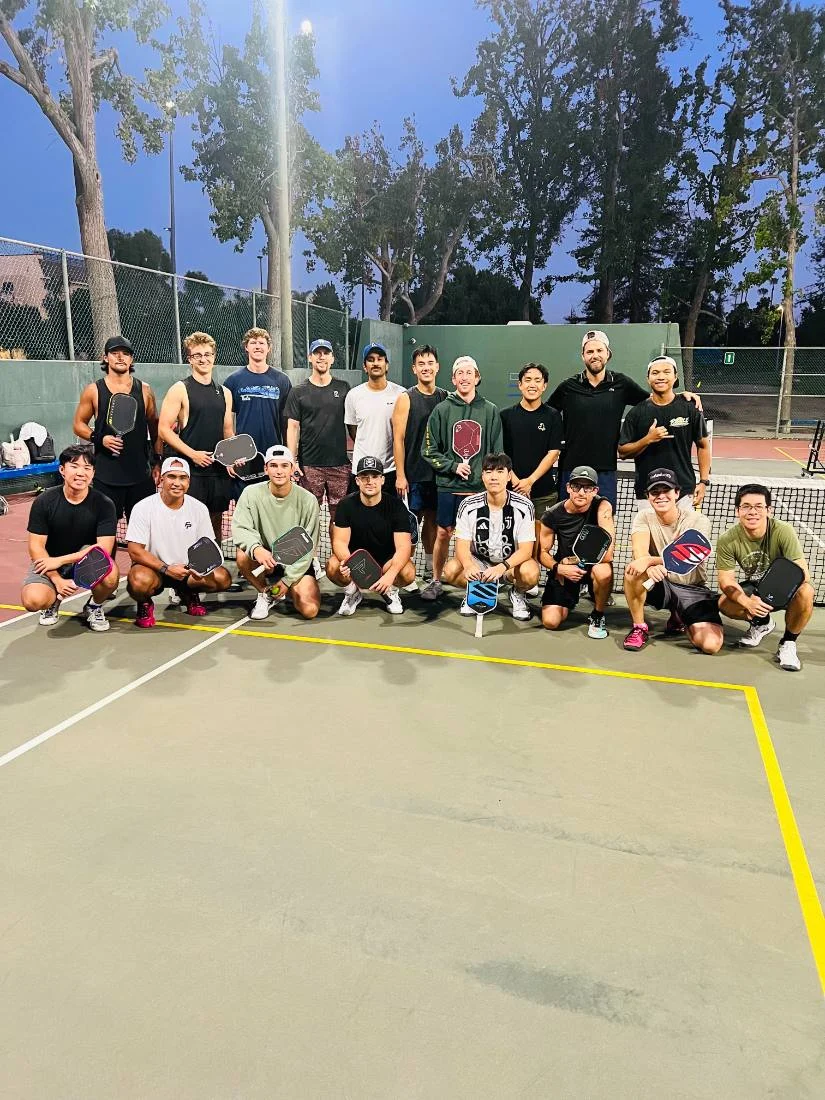
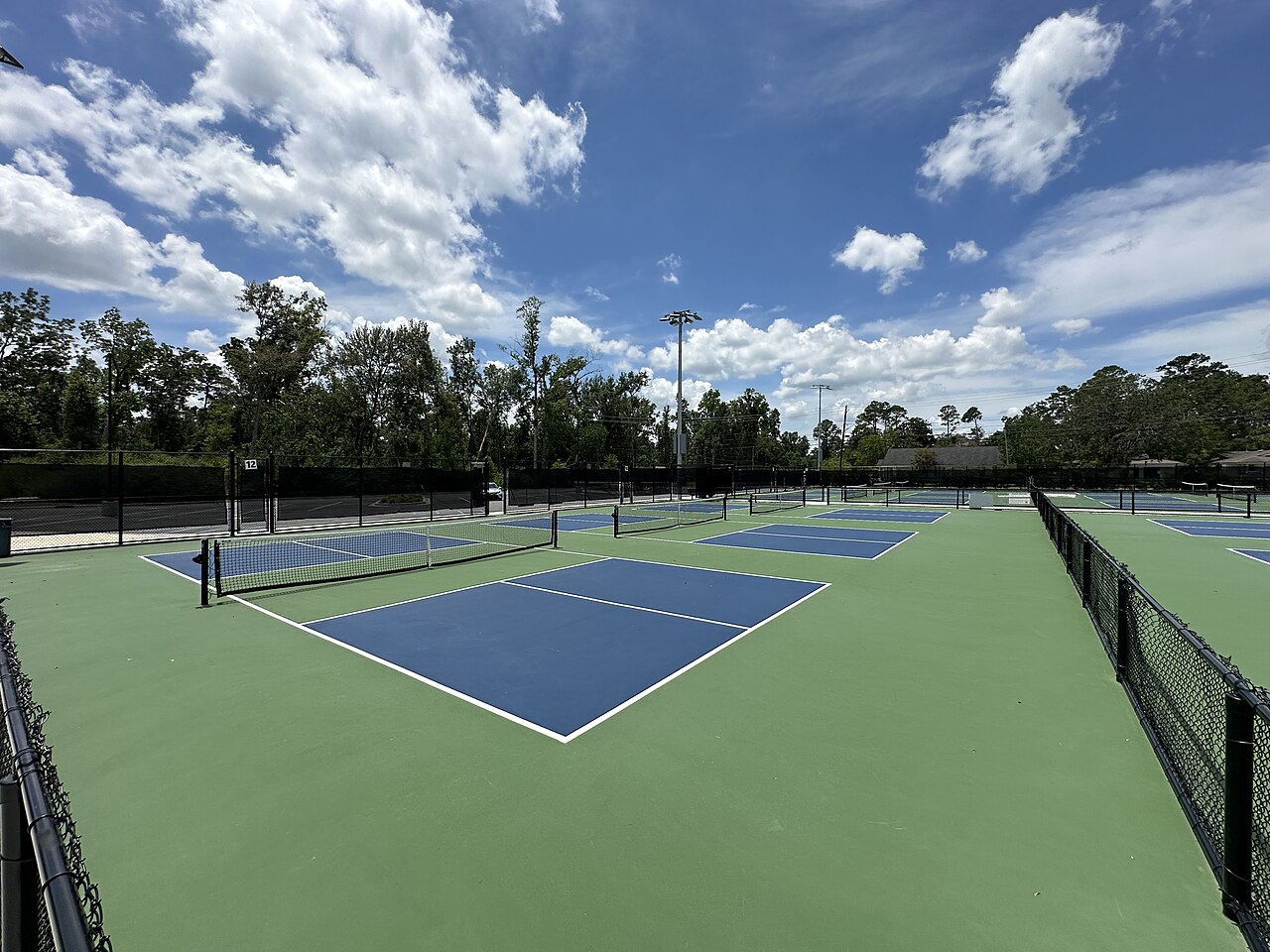
Dink Digest maps the people, places, matches, and ideas making U.S. pickleball feel bigger than a scoreline.
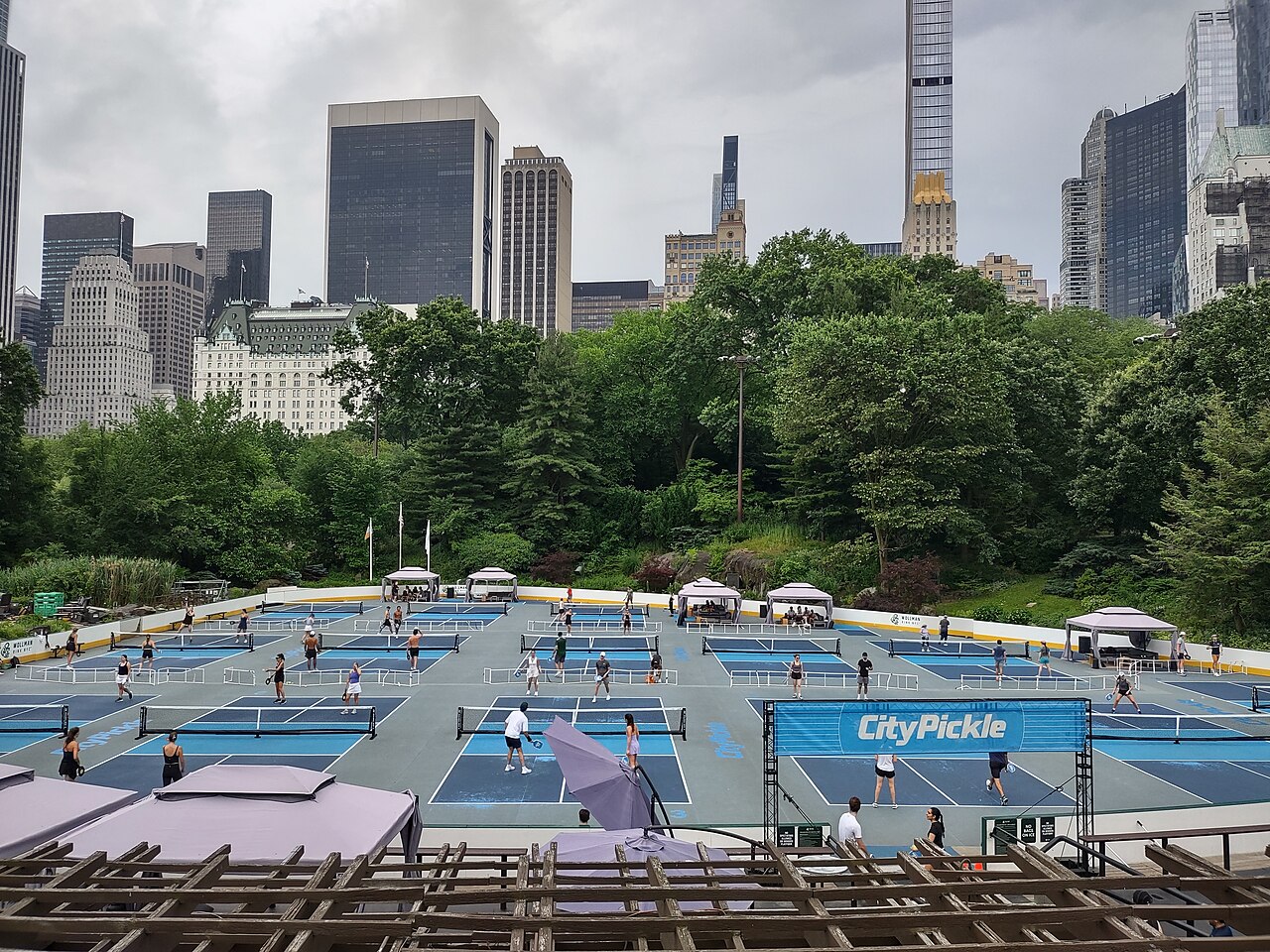
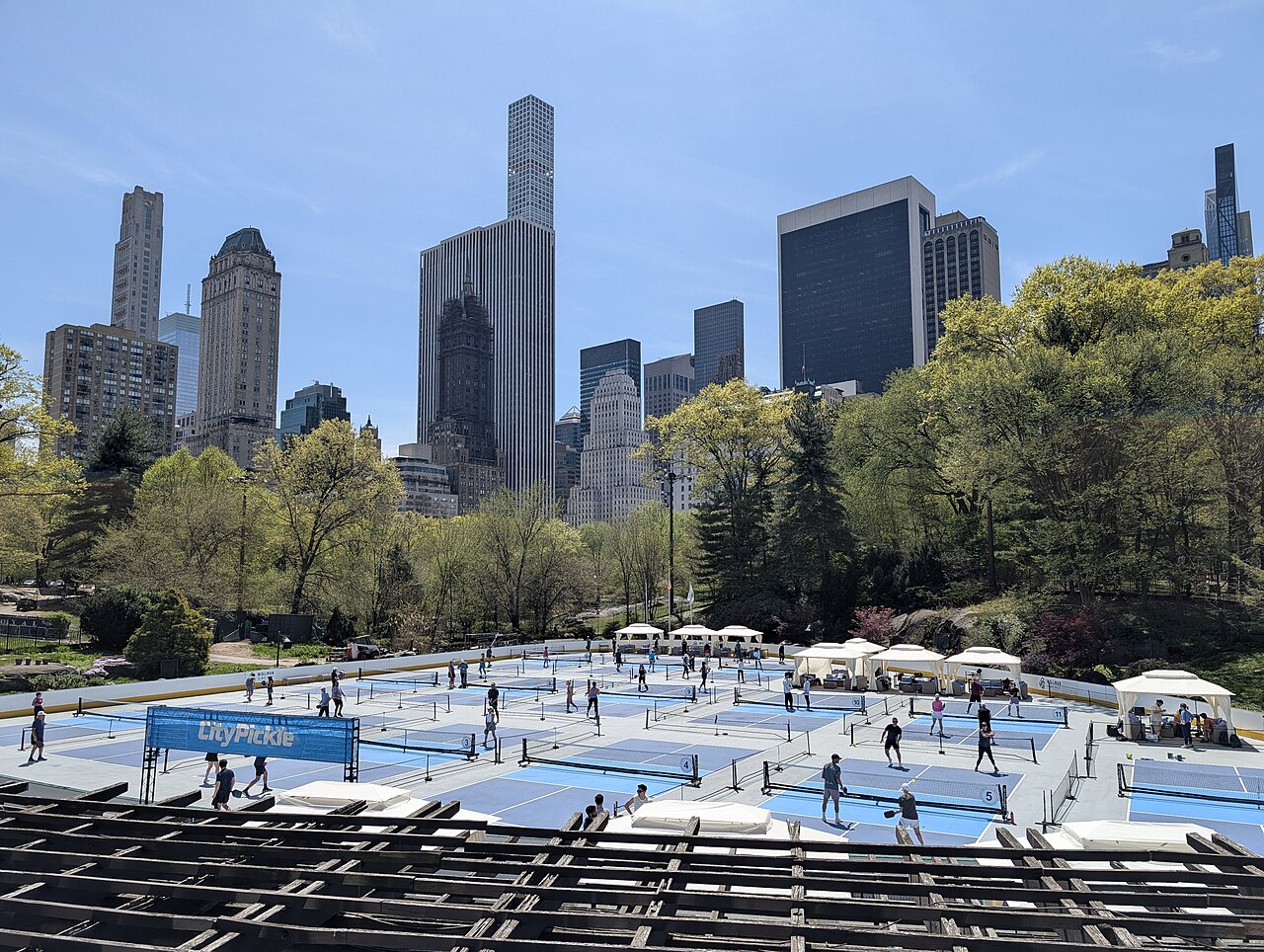
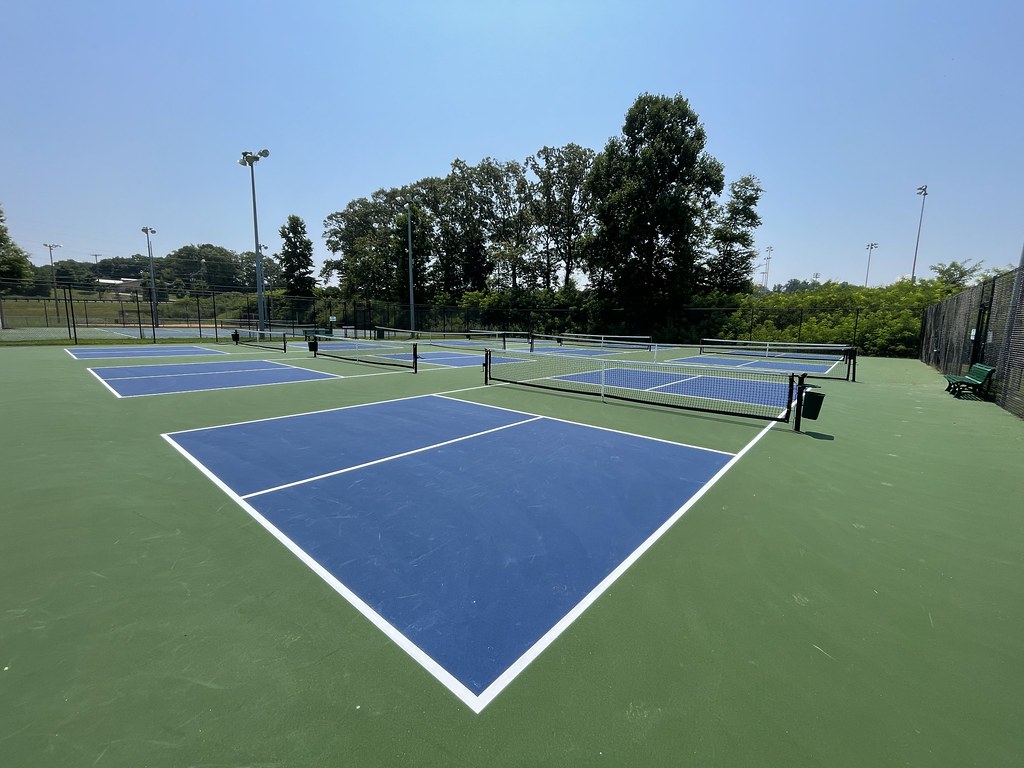
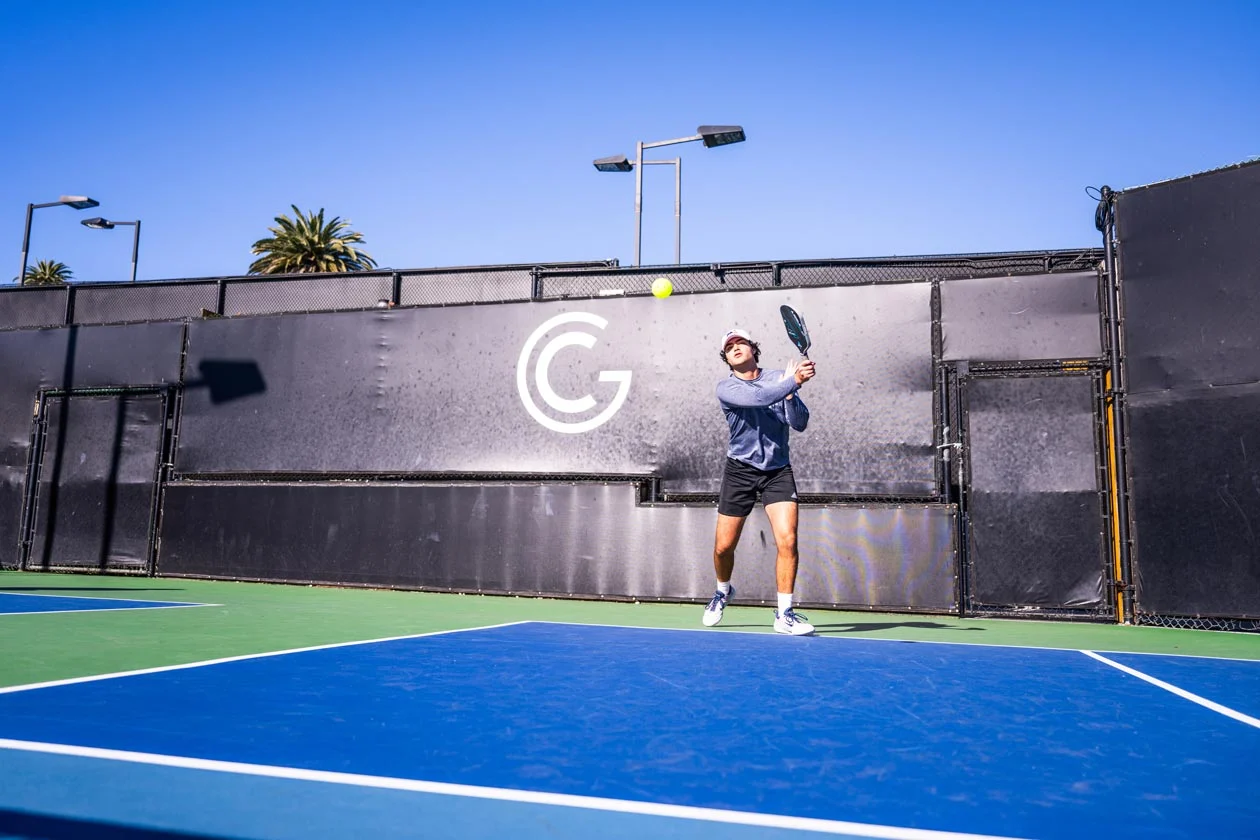
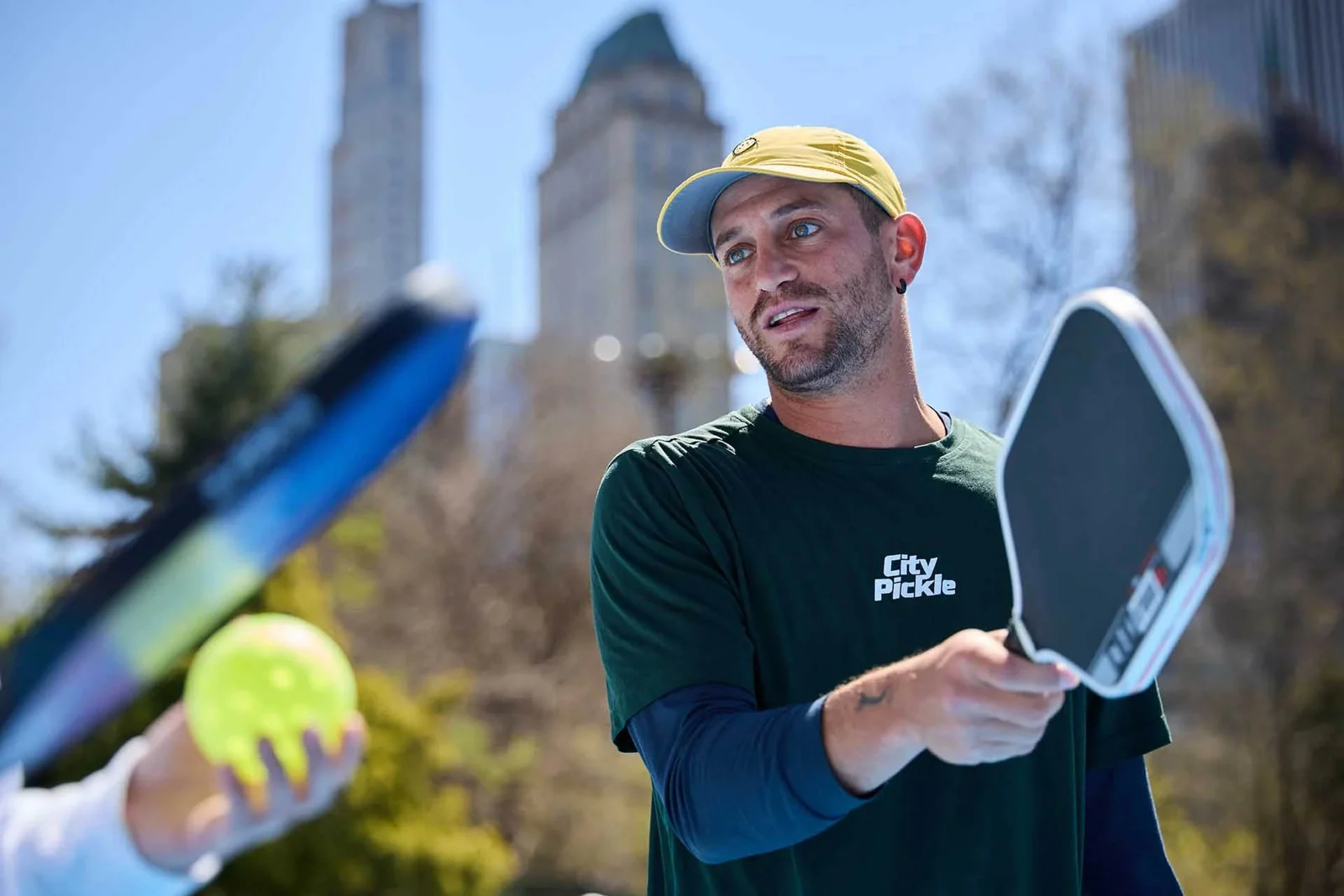
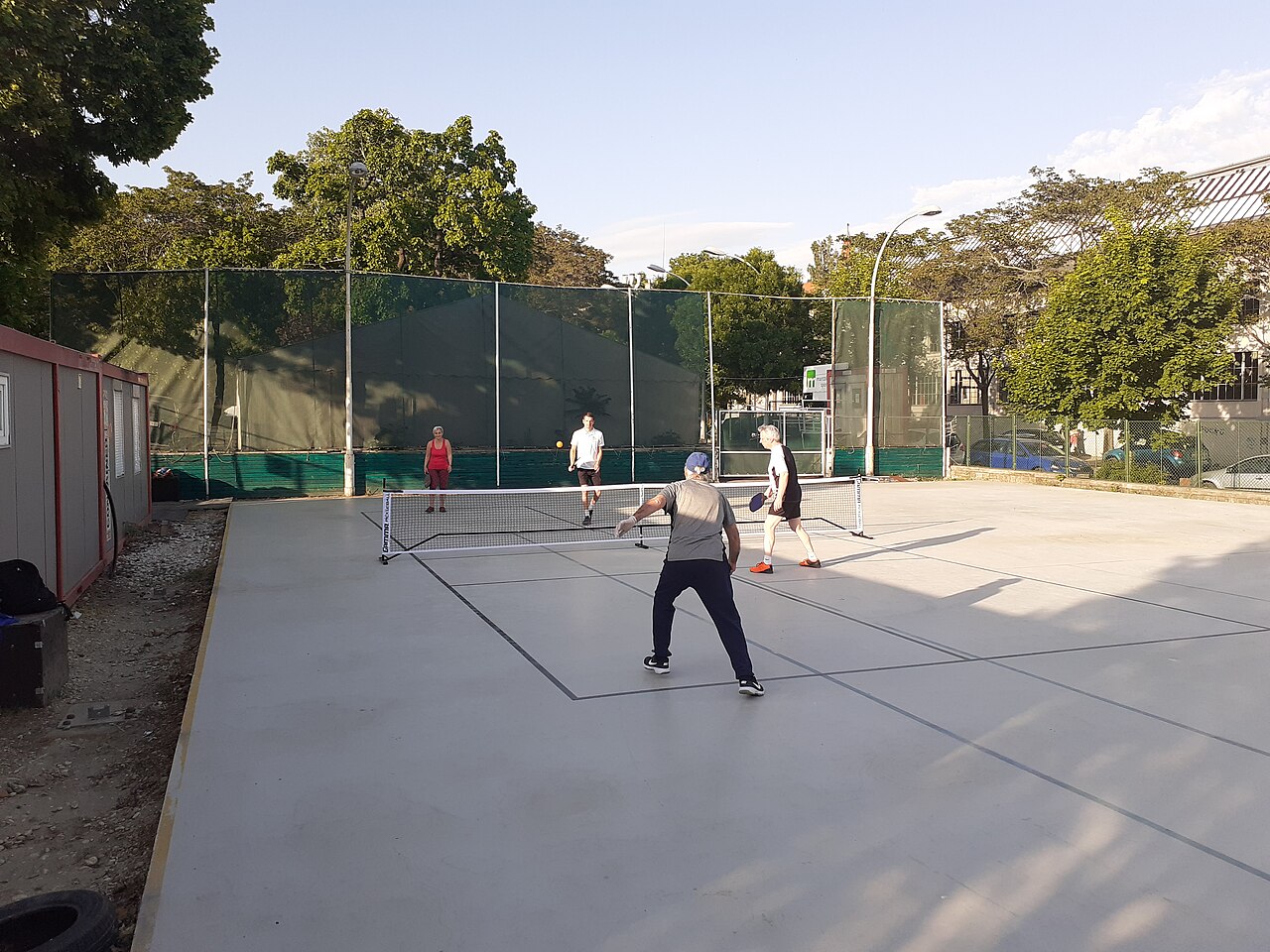
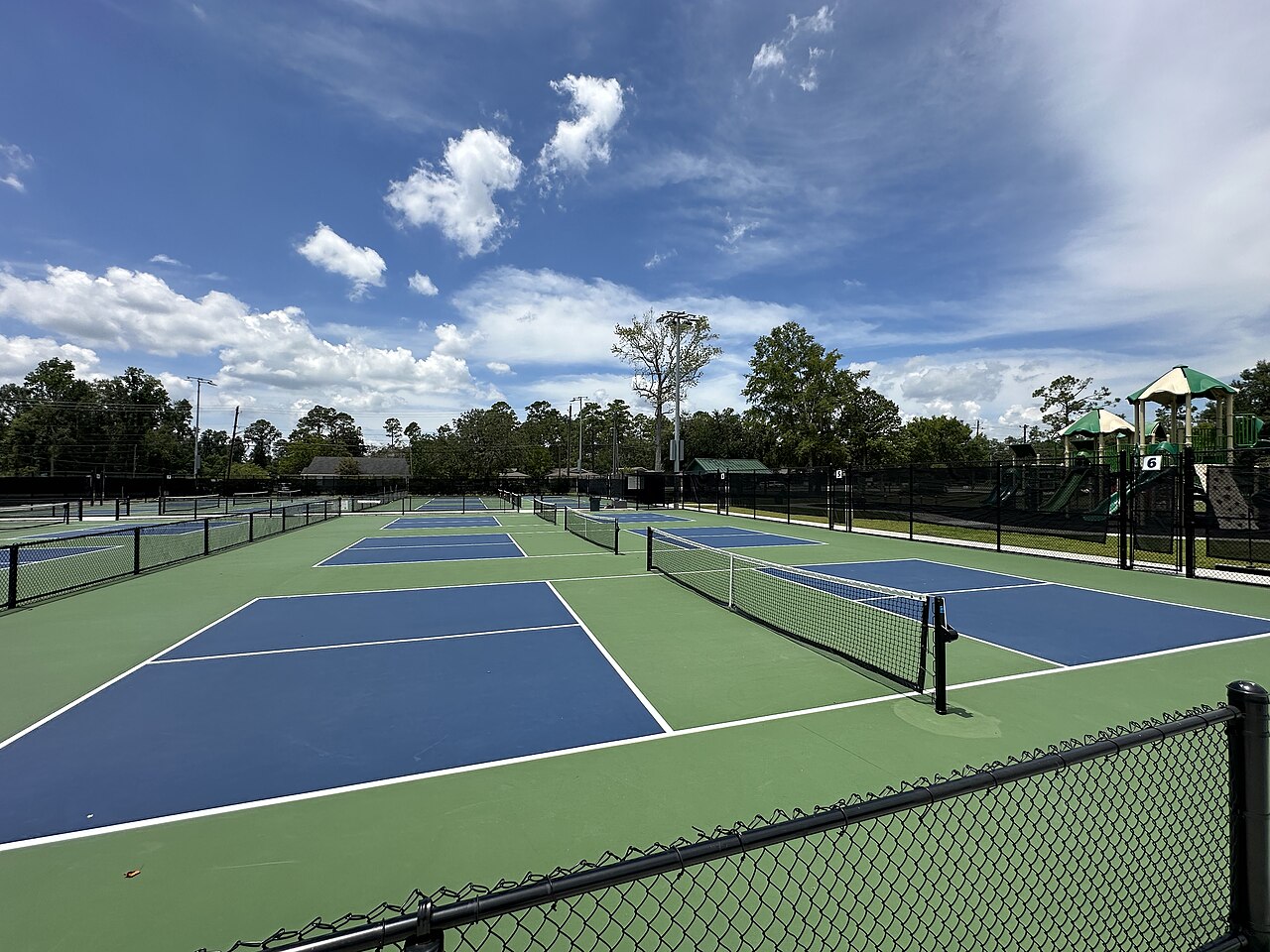
Central Park. Jim.henderson · CC BY-SA 4.0
Page 01 · Cover
A first issue for the clubs that keep the lights on, the ladders moving, and the welcome warm. This edition is built around a frozen public-source window ending September 20, 2026.
Chapter 01
The Front
The brief, the calendar, and how to read this issue.
4 stories
02Masthead
A magazine for the people between games.
Dink Digest is a source-linked field guide for players, coaches, organizers, older adults, and the clubs that connect them.
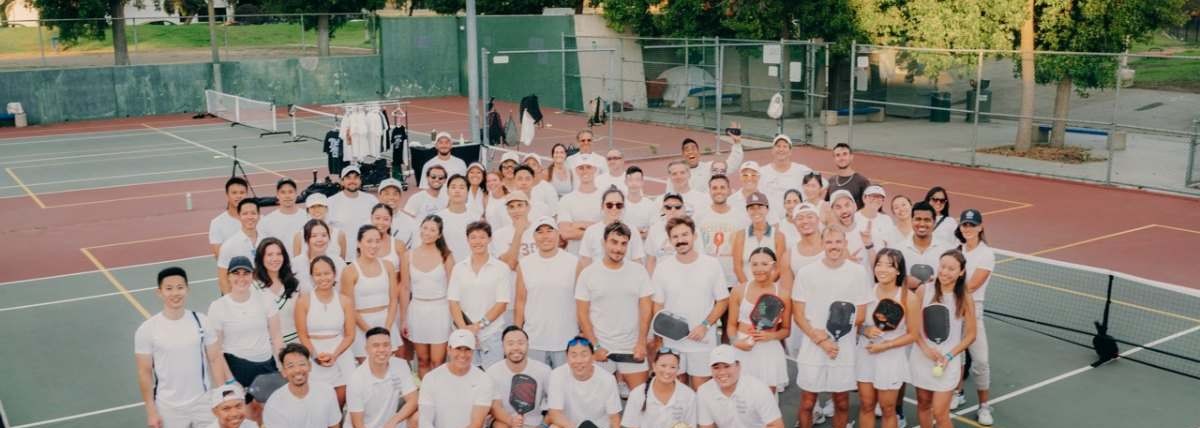
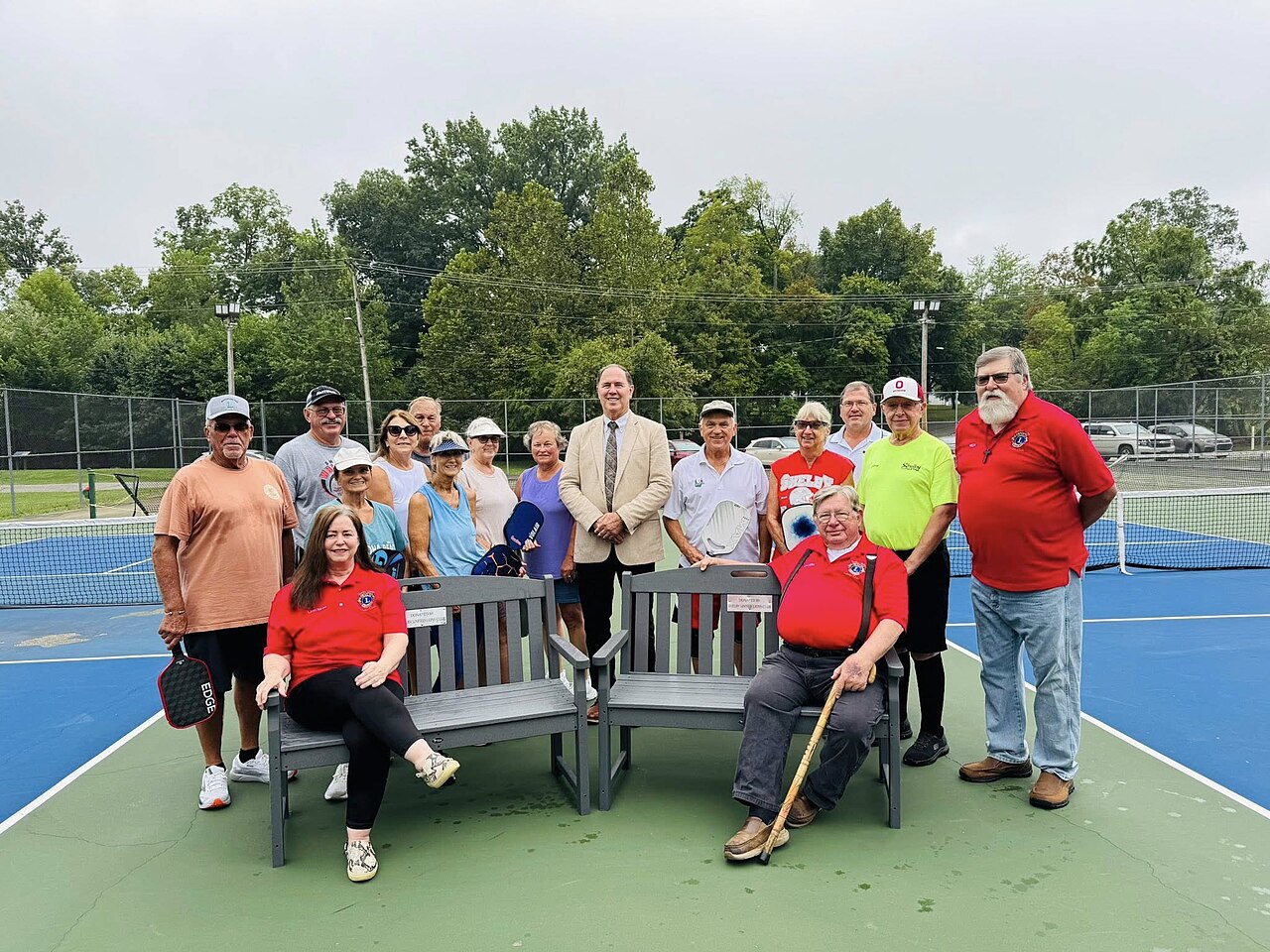
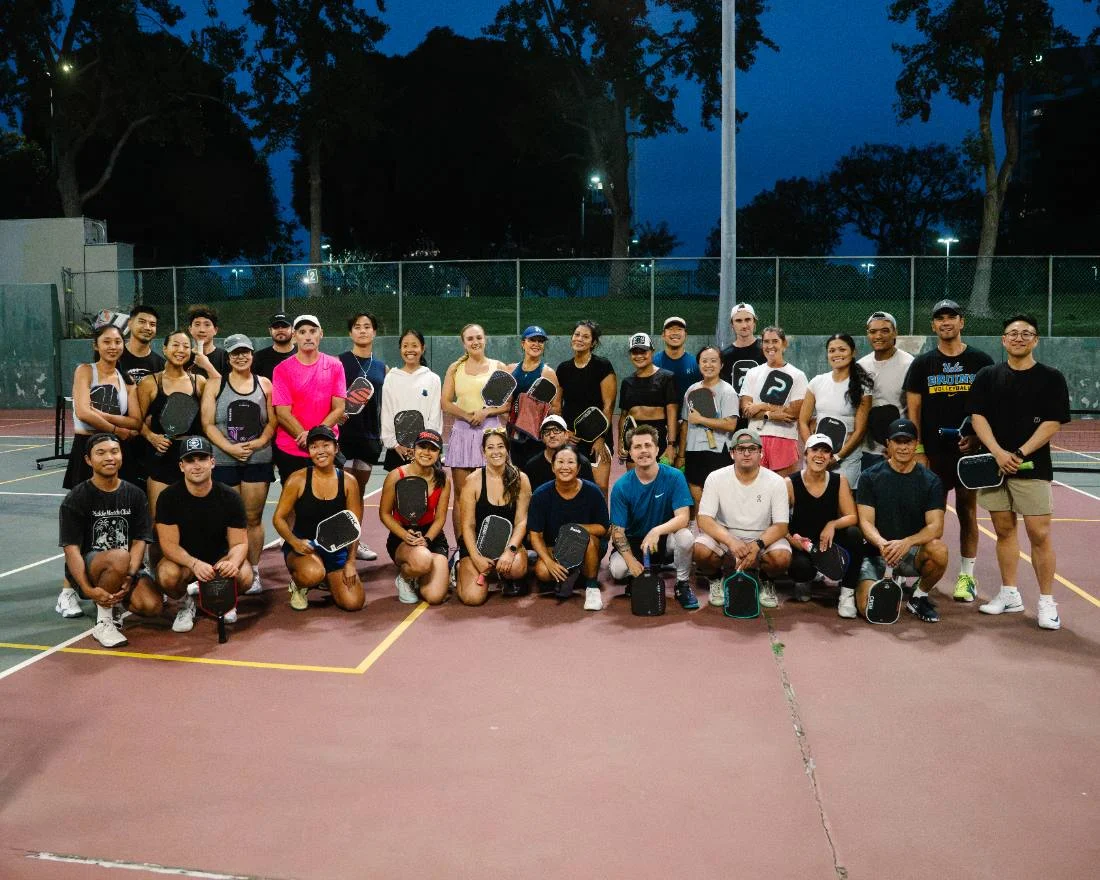
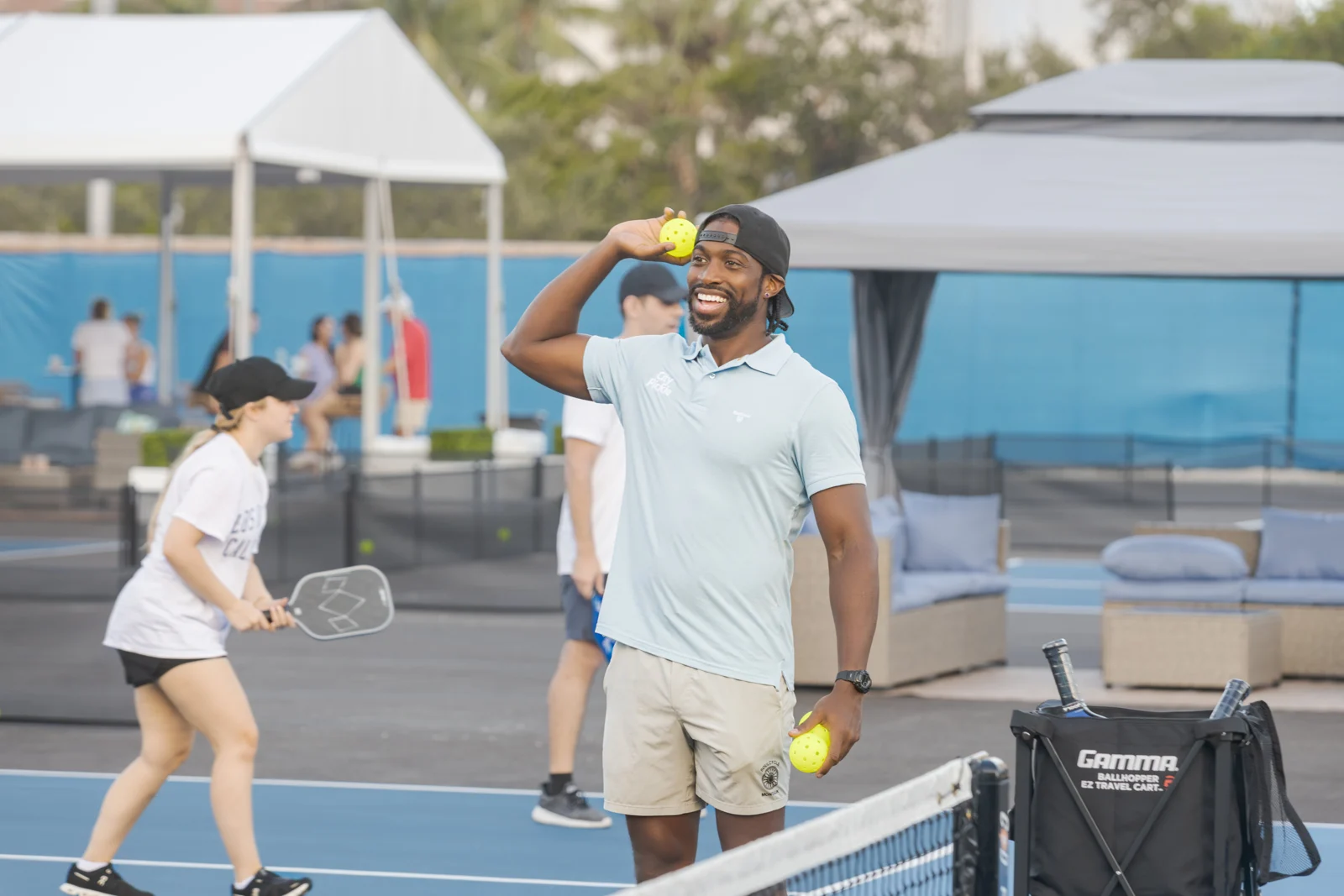
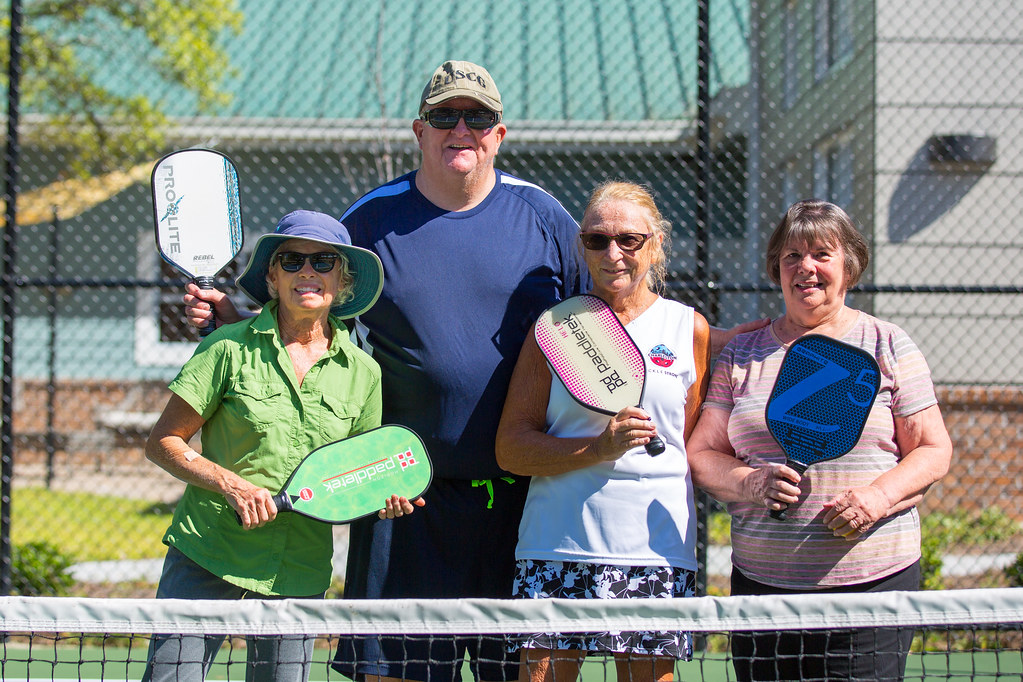
picklematch.club photoPickle Match Club members, from the club’s own site.picklematch.club · rights review pending
The sport is changing fast enough to require both a scoreboard and a neighborhood lens. We separate reported facts, editorial recognition, modeled playbooks, reported partnerships and held claims so readers can tell what they are looking at.
This first issue is a local web edition. a medical guide, or a promise that a Sunday result was final before it was published.
03Contents
One hundred three pages. One long rally.
Start with the news desk, stay for the club map, and finish with a practical field guide to the city.
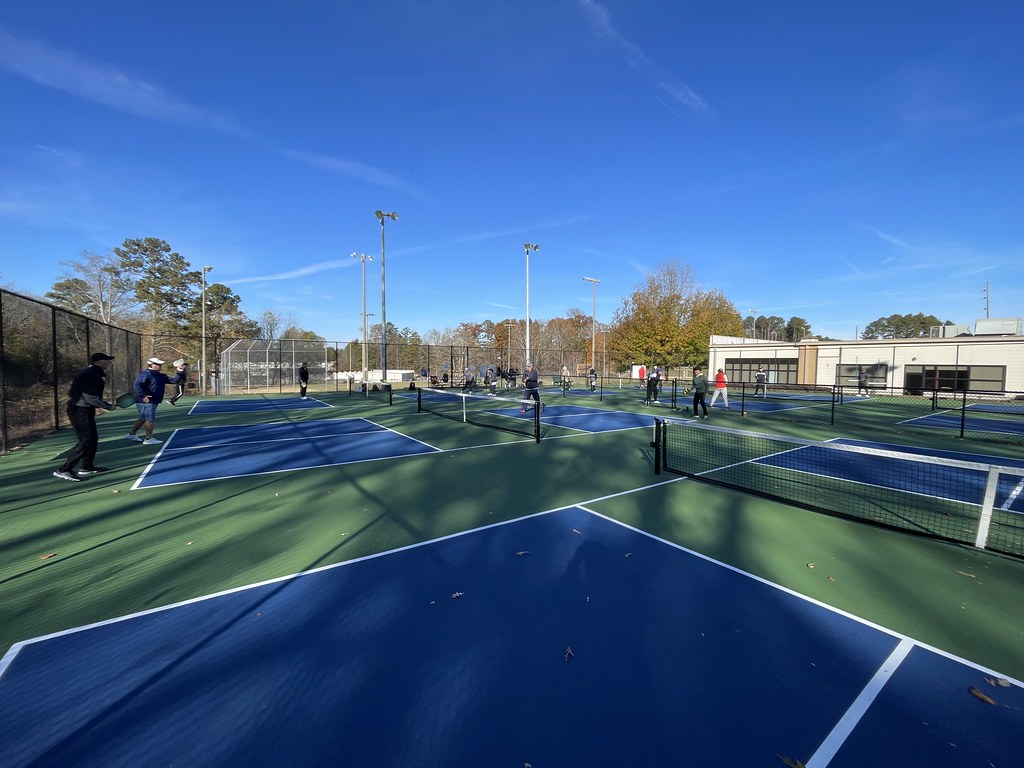
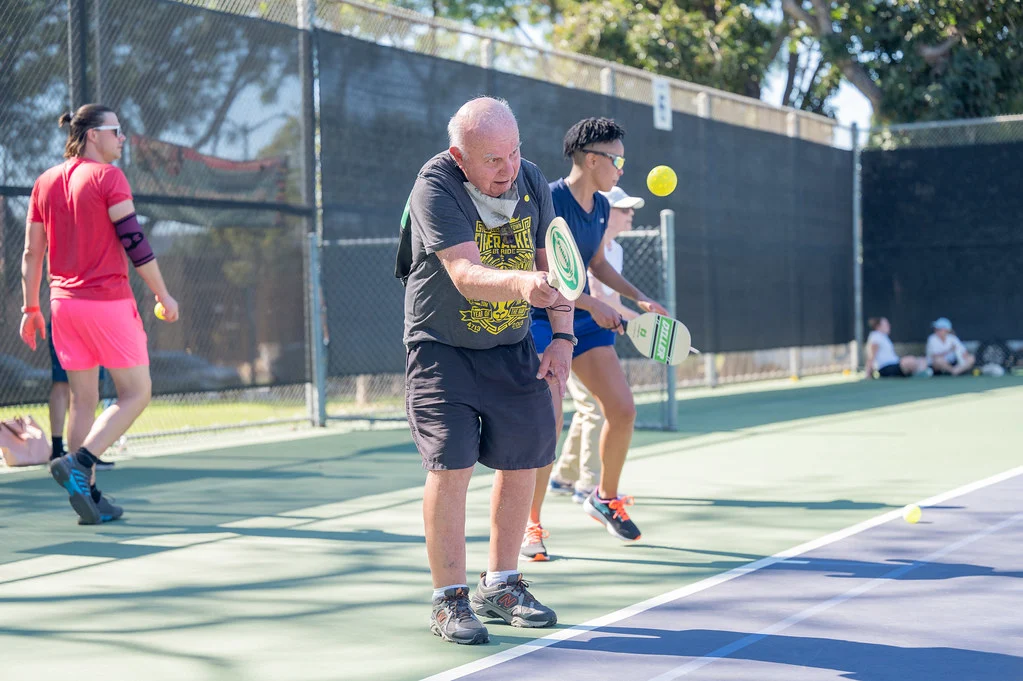
Reference photoDay 326 - Advance League Practice Match.StephenGA · CC0
The issue is laid out as 103 linked reader sections. Each section has a page number, a visible evidence label, and a source rail when a public claim is involved.
The page count is an editorial unit count, not a claim that a PDF was publicly distributed. The local reader is the release artifact for this run.
04The Brief
The week in 60 seconds.
Arizona is the national stage. Long Beach is the Southern California heartbeat. LA keeps inventing new ways to stay after the match.
usapickleball.org photousapickleball.org · rights review pending
The frozen window catches the Veolia Arizona Open in Mesa, the USAP Long Beach Championships at El Dorado, and an unusually active Los Angeles calendar. The editorial line is not that every event is equal; it is that local texture gives the sport staying power.
We also see three useful signals: the PPA is formalizing a global ranking layer, USA Pickleball is expanding youth and adaptive access, and LA organizers are blending sport with music, food, and other social rituals.
A weekly brief only works if it says what changed since the last one. In the seven days this issue tracked, the PPA Tour ran its first open of the season in Mesa, released draws for the next stop in Las Vegas, and kept counting down one player's march toward a round number.
The Veolia Arizona Open in Mesa closed on September 20 with 1,000 ranking points on the line and the tour's new World Pickleball Rankings deciding the round-of-16 byes for the first time. Five days later, the tour's newsroom posted storylines for the Rate Las Vegas Open at the Darling Tennis Center: year seven at that venue, 1,000 points again, and best-of-three finals in every draw.
A practical desk for players who want to turn a magazine read into a court plan.
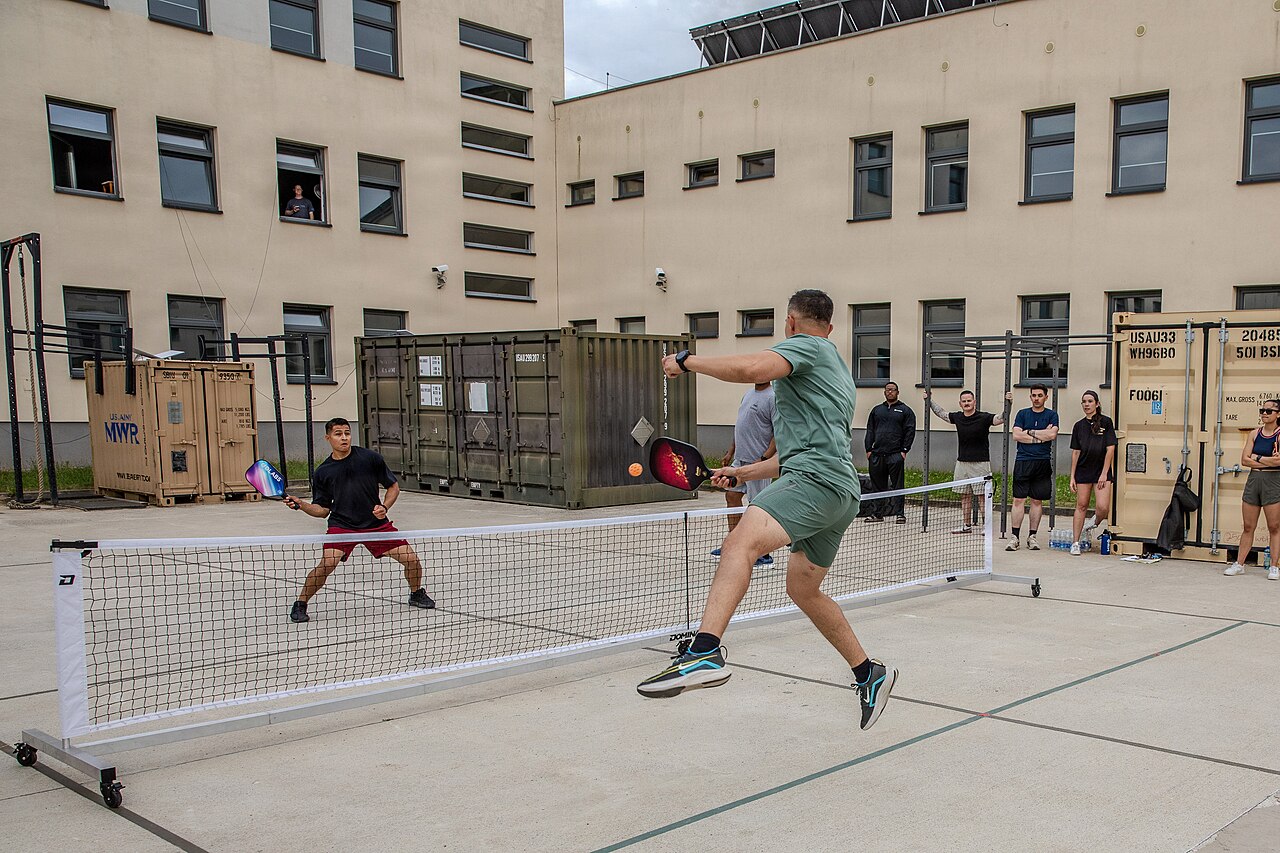
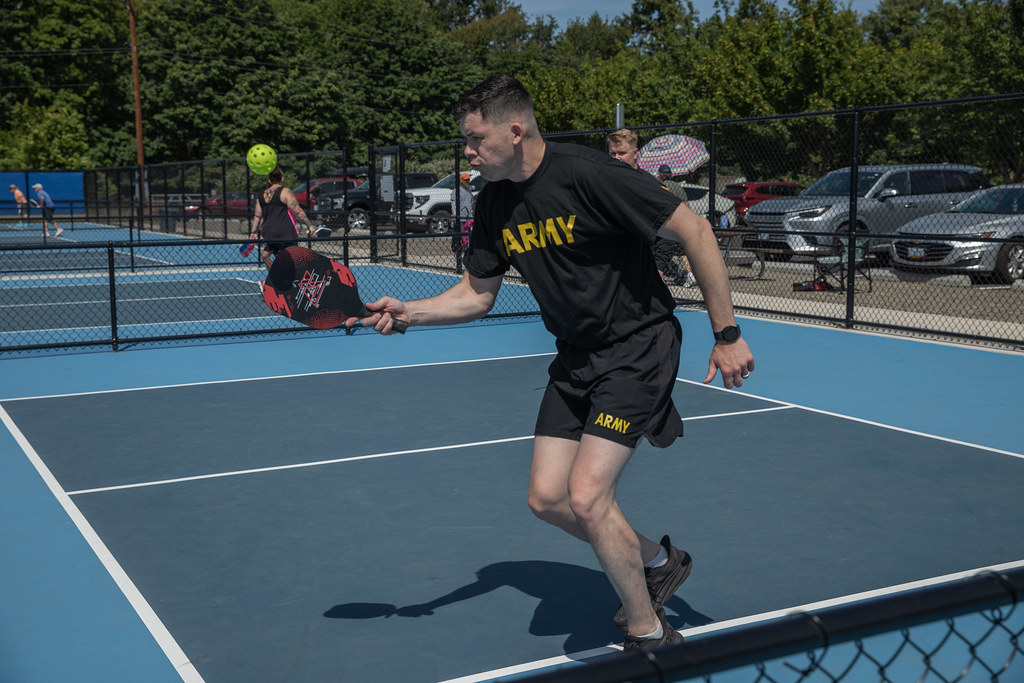
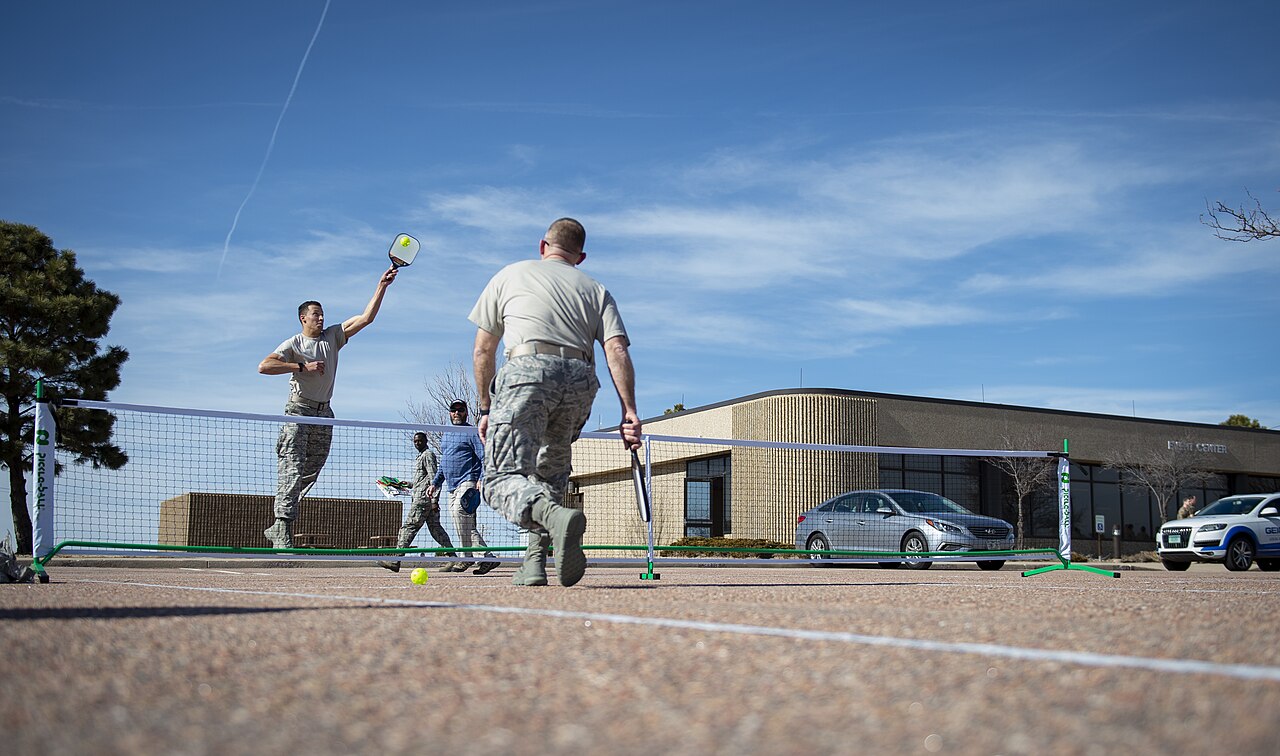
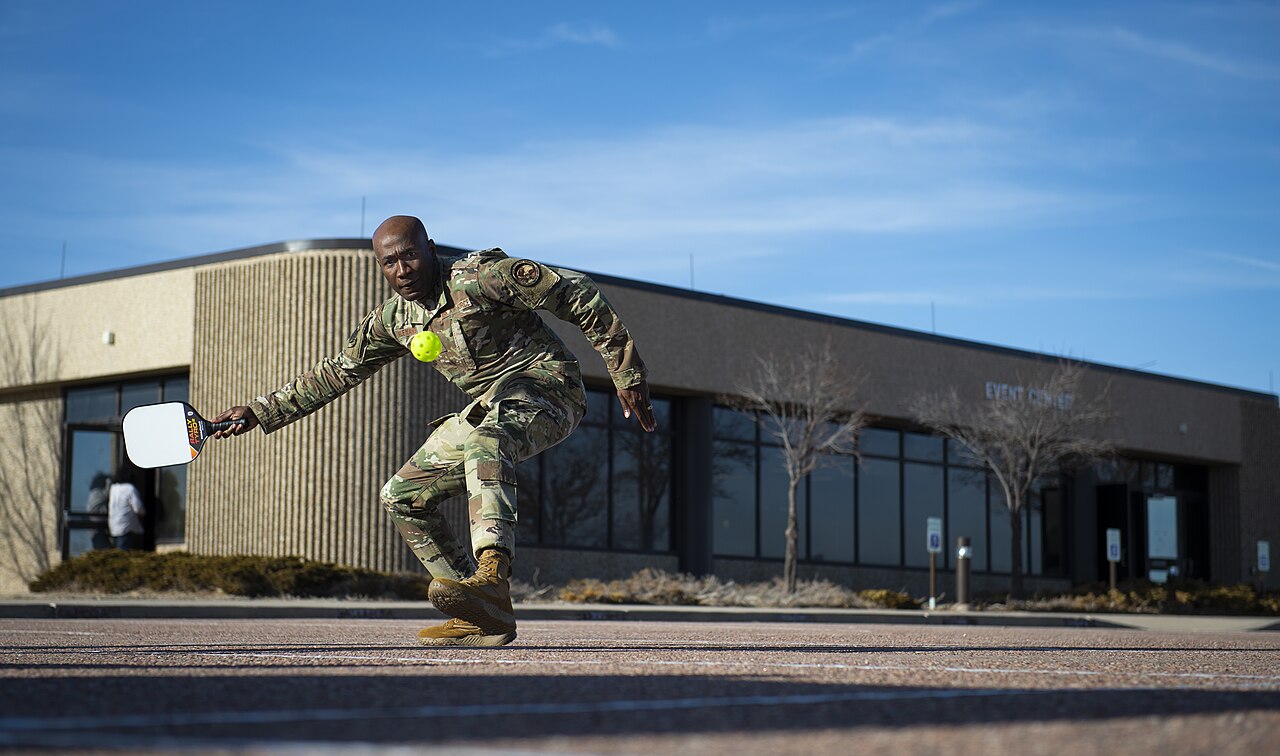
Reference photoRecreational tournament play on outdoor hard courts.U.S. Army Reserve photo by Staff Sgt. Logan Ubaldo Lechuga · Public domain
The Southern California calendar lists a September 26 Pickle with Purpose event in South Pasadena, a September 27 singles showdown at the Anderson Munger YMCA, and a September 27–28 autumn classic in Thousand Oaks. The LA club calendar adds ladders and women’s, men’s, mixed, and singles sessions.
Dates are listed as discovered public information, not a guarantee of entry or venue availability. Re-check the host page before registering.
Southern California does not have one pickleball calendar; it has several, and stitching them together is its own small service. Two sites do that work for this issue's two service desks: a regional tournament list and a Los Angeles club with its own weekly season.
SoCalPB.org compiles every upcoming tournament from Santa Barbara to San Diego, DUPR-rated, pro tour, and skill-level events, into one filterable list by region, rating type and time window. The site is candid about its own limits: it was compiled in May 2026 from a dozen named sources — CAPA, iPickle, APA, ID Sports, the Epic Pickleball Tour, National Pickleball, PIKL, the PPA Tour, MLP, USA Pickleball, Cal State Games, PickleballTournaments.com, the American Pickleball Series and The Dink Spot — and it asks players to confirm details on the official registration page before signing up. That caveat is worth repeating here: a compiled list is a starting point, not a booking.
New York’s sunset arrives 106 minutes earlier on Nov. 1 than on Oct. 1, and L.A.’s earliest sunset is 15 minutes later than New York’s.
Local sunset time, Central Park and downtown Los Angeles, Sept. 15 to Dec. 31, 2026. Clocks fall back on Nov. 1: sunset jumps to 4:52 pm in New York and 5:00 pm in L.A.
Data tableComputedTwo falling lines that drop by an hour on Nov. 1. New York starts later in September and ends earlier in December than Los Angeles. Source: NOAA Global Monitoring Laboratory, Solar Calculator equations (computed by Dink Digest) (US public domain). Captured 2026-10-08. Computed for a flat horizon; buildings and hills shade courts earlier. Sunset is not the end of playable light (civil twilight adds about 25–30 minutes).
Central Park destinations, borough leagues, and the council line.
10 stories
46NY Service
The 50+ ladder turns midday into a league.
NYC Pickleball’s new Wednesday ladder gives players over 50 a daytime lane with DUPR-rated games, inside a fall league map with a slot for almost every level.
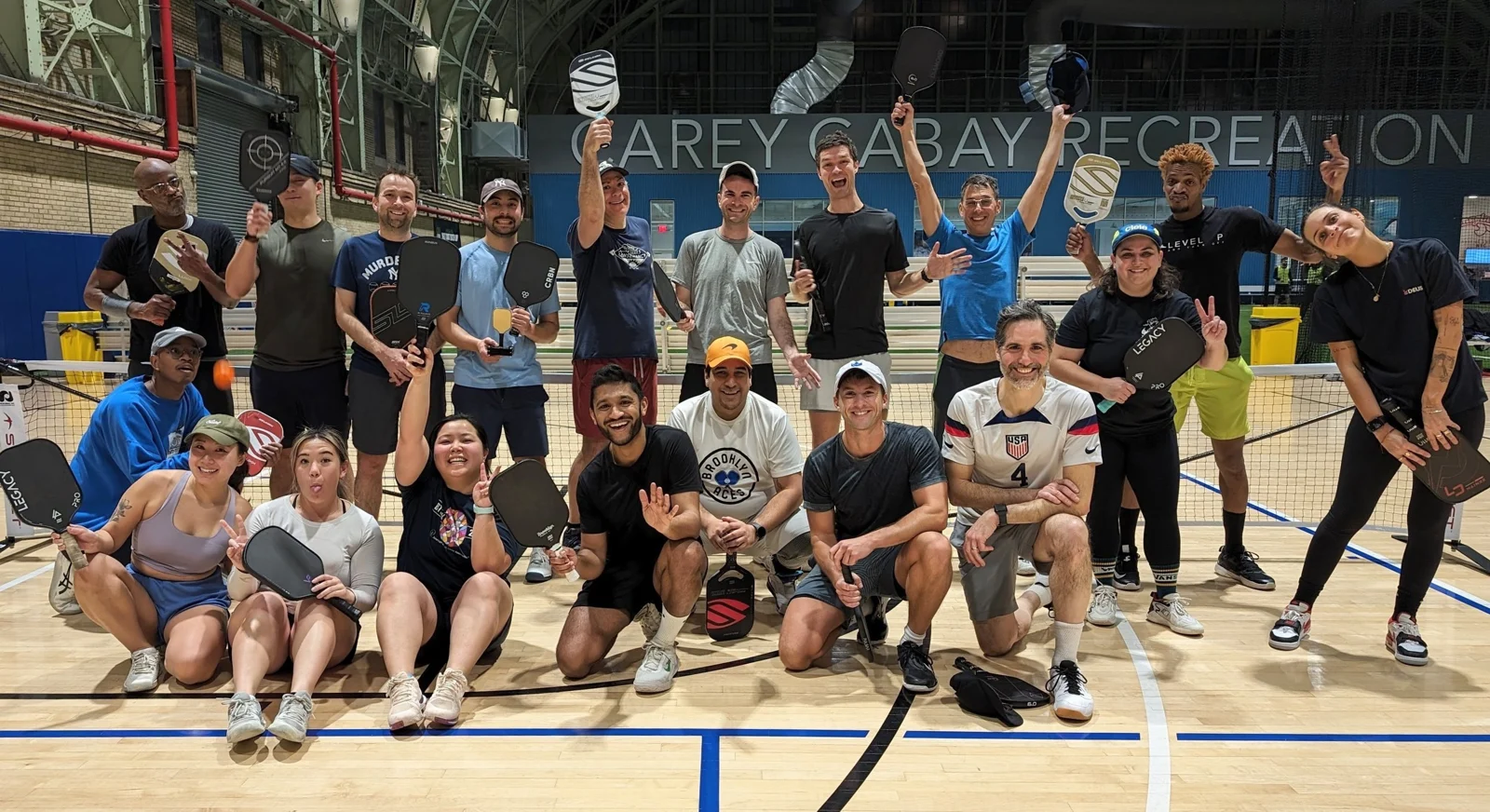
NYC Pickleball photoNYC Pickleball’s community at Carey Gabay Recreation Center; this archive image does not….NYC Pickleball · rights review pending
A daytime lane for players 50 and up
NYC Pickleball’s fall schedule includes a 50+ Mid-Day Ladder League for players aged 50 and up who want competitive, DUPR-rated games during the day. It runs Wednesdays from 11 a.m. to 1 p.m. at Gotham Pickleball in Hunter’s Point, Long Island City, starting September 23, 2026 — a fixed weekly slot, a clear age lane and a public way to register, aimed at players who are retired, work flexible hours, or simply prefer daylight.
How the ladder works, and a correction
Leagues are coed, run in rotating-partner doubles on a four-court ladder, run seven weeks a season, and level is set by DUPR rating or a coach/league-manager check for Level 3 and above. An earlier version of this story described a citywide Manhattan network with a midday utilization surge and a six-flight participant count; we could not source those figures, the league is in Queens (Long Island City), not Manhattan, and this version reports only what NYC Pickleball publishes.
Most league nights in New York start after work. NYC Pickleball’s fall schedule includes one that doesn’t: a 50+ Mid-Day Ladder League for players aged 50 and up who want competitive, DUPR-rated games during the day. It runs on Wednesdays from 11 a.m. to 1 p.m. at Gotham Pickleball in Hunter’s Point, Long Island City, starting September 23.
The appeal is simple. Players who are retired, work flexible hours or simply prefer daylight get the same league structure as the evening crowd: a fixed weekly slot, a clear age lane and a public way to register.
Major R. Owens becomes a first step for players who need a named place, level, and start date.
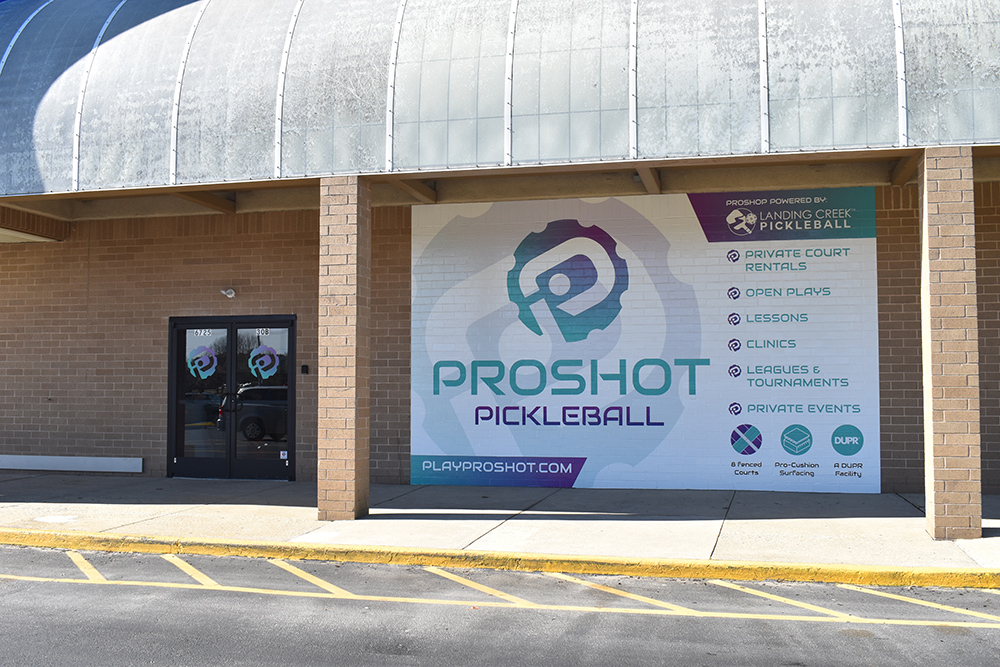
Reference photoProshot Pickleball in EHT NJ.Jean12345679 · CC BY-SA 4.0
The NYC Pickleball league page lists a Level 1 beginner session on Sundays from 5–7 p.m. at Major R. Owens Community Center, starting September 20.
That is a better onboarding story than “pickleball is for everyone” on its own. The page names the level and venue; the reader still needs to verify registration and equipment details.
Every league system needs a door that doesn't require a rating to walk through. NYC Pickleball's is the Level 1 ladder league: for players with no DUPR rating or a DUPR of 2.5 and below, explicitly "intended for beginner players to get comfortable with the game." It runs as the Sunday Evening League, 5 to 7 p.m., at Major R. Owens Community Center, starting September 20, 2026.
The mechanics are the same across all of NYC Pickleball's ladders, beginner or not. Leagues are coed and open to all genders. A player signs up alone, not with a partner, and plays doubles with a rotating set of teammates. Each week's result moves a player up or down a four-court ladder, and games run for two hours on traditional scoring.
Wollman is the largest named site in this snapshot.
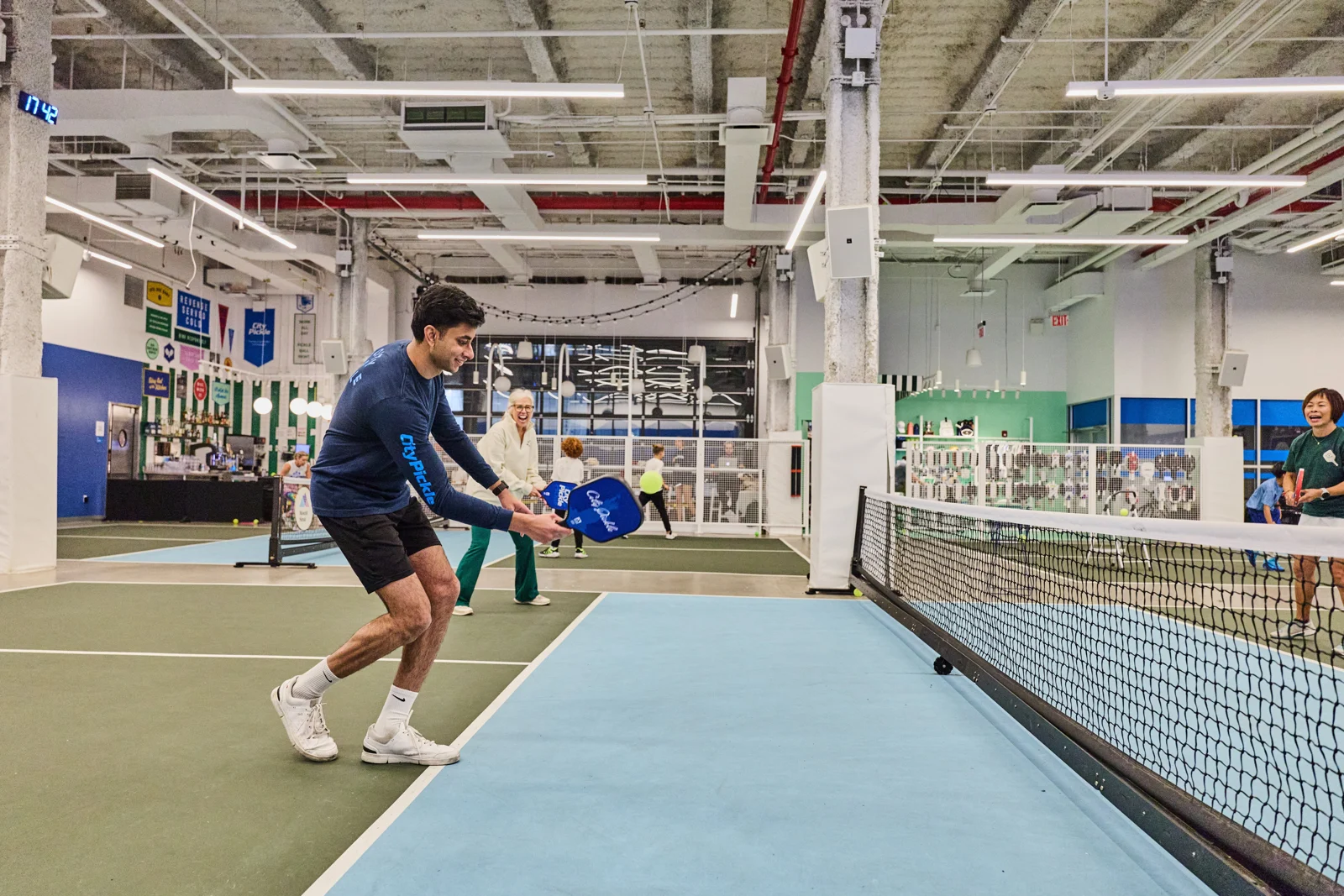
CityPickle’s 14 courts at Central Park’s Wollman Rink are the highest-visibility public pickleball site in the metro, on a 20-year license and a seasonal calendar.
Central ParkPickleball courts and players at Wollman Rink, Central Park, New York City, April 2025.Erictleung · CC BY-SA 4.0
CityPickle operates 14 courts at Wollman Rink in Central Park, and in 2026 NYC Parks awarded the company a new 20-year license there following a competitive RFP, a deal reported at more than $100 million in value to the city (a $91 million minimum fee plus a $10.9 million minimum capital investment). CityPickle’s company, which also runs three other CityPickle sites in the city — Times Square, Long Island City and Brooklyn Bridge Park — was co-founded by Erica Desai and Mary Cannon.
The Dink Pickleball, a trade outlet covering the sport, reported that more than 180,000 players had used the Wollman Rink courts over CityPickle’s first three seasons there; the operator’s own site also lists discounted community-play sessions alongside paid open play, clinics and leagues. Those are the operator’s and trade press’s own figures, not an independent city audit — and they describe attendance and a licensing deal, not a specific dollar estimate of seasonal economic impact, which we have not found in any city or park record.
Central Park's Wollman Rink is best known for ice skating in winter. For three years running, it has also been one of the busiest pickleball sites in New York City — and in late 2025, NYC Parks made that arrangement permanent. Following a competitive RFP process, the city awarded CityPickle a 20-year contract to operate pickleball courts at Wollman Rink.
The dollar figures are specific and public. According to CityPickle, the total value of the deal to the city will exceed $100 million, including a record cumulative minimum fee offer of $91 million, alongside a minimum capital investment of $10.9 million. For a single recreational concession in one park, those numbers put Wollman in a different category than a typical parks vendor contract.
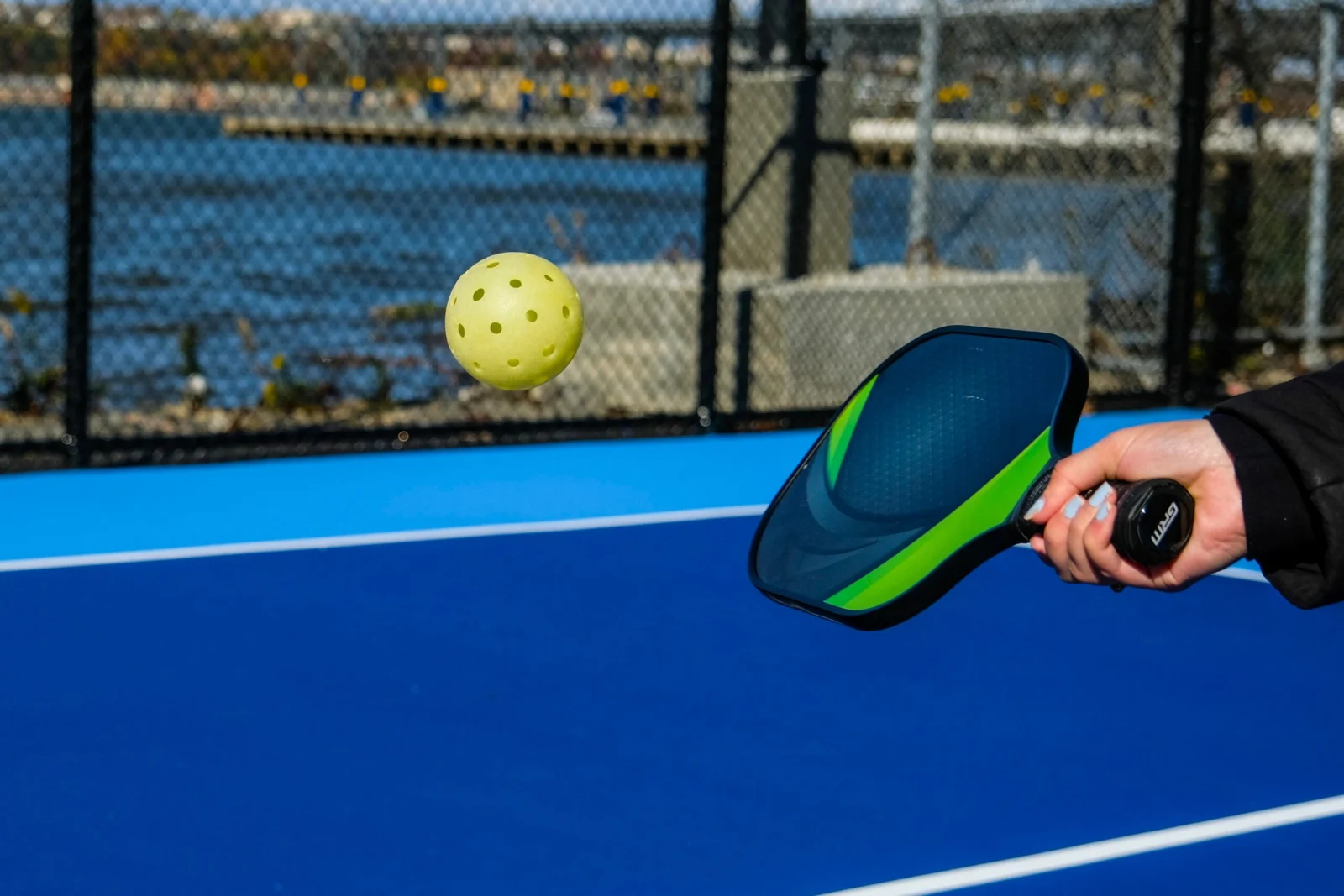
Four free courts behind the Javits Center come with permanent nets and lighting — and a waterfront wind that changes how the point is played.
Hudson River Park photoA paddle and ball beside Hudson River Park’s waterfront pickleball courts.Hudson River Park · rights review pending
The Hudson River Park Trust lists interim pickleball courts along the park, free and open to the public, with permanent nets rather than the portable nets common at shared-use sites. Players who track conditions there note the Hudson’s waterfront wind is a real factor on the courts closest to the river, strong enough to carry a lobbed ball well past the baseline.
That is a service detail worth publishing on its own: a free, permanently-equipped court is a better local recommendation than a converted tennis court with portable nets, and a wind note is more useful to a visiting player than an engineering claim we cannot document. We have not found a published capital plan, gust-speed rating or hardware specification for these courts, so this story does not report one.
Hudson River Park Trust opened four new pickleball courts behind the Javits Center, a ten-minute walk from the Hudson Yards 34th Street subway station and reachable by the park's bike path. Unlike the shared, striped-over tennis courts common elsewhere in the city, these came with dedicated nets and lighting, and official hours of 6 a.m. to 1 a.m.
What makes this source worth quoting is not the announcement, but the community report that followed it. NYC Pickleball's newsletter visited the site and published a court-by-court assessment rather than a simple thank-you note. That kind of on-the-ground follow-up is rare, and it is exactly the information a player needs before showing up.
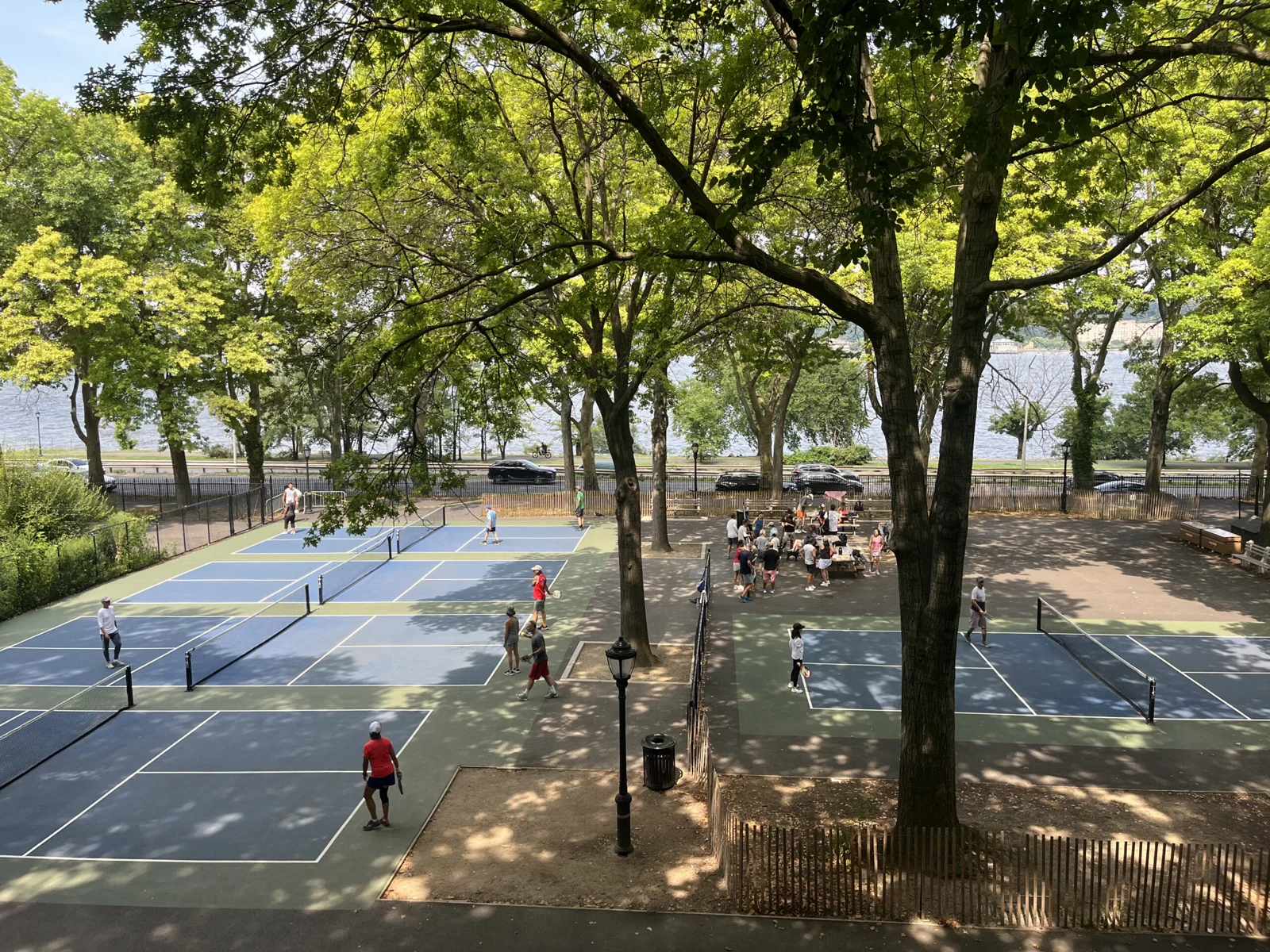
Riverside Park’s courts run on a crew and a group chat.
On the Upper West Side, pickleball joined a busy recreation level — kept playable by a conservancy maintenance crew, donors, and a player-run user group.
Riverside Park Conservancy photoPickleball courts pictured by Riverside Park Conservancy, New York.Riverside Park Conservancy · rights review pending
A new arrival on a busy recreation level
Riverside Park’s recreation level already had basketball, baseball, volleyball, soccer, handball and skateboarding; pickleball is the newest arrival, which the Riverside Park Conservancy says has “quickly become a new neighborhood favorite.” The Conservancy is direct that “city resources alone aren’t enough” for the wear from heavy use, so the new courts — along with the park’s 29 other courts and playing fields — are looked after by its Ballfields Crew, recently expanded to meet demand and working seven days a week, including maintaining a newly installed portable bathroom at 110th Street. Donations made on the Conservancy’s pickleball page fund that crew directly, with named supporters listed at different giving levels.
How players organize themselves, and a correction
Day-to-day community runs through a player user group — an email list and a TeamReach group with the code RiversidePark — which is the practical front door for a newcomer: when courts are busy, how rotation works, who to play with. The group also runs events, including a Halloween Pickleball Tournament the Conservancy has thanked participants for. An earlier version of this story gave a court count, sound measurements and a “community compact” that the Conservancy’s own page does not state; we have removed them. How many courts are open, and when, is best checked with the user group or in person.
Riverside Park’s recreation level already had basketball, baseball, volleyball, soccer, handball and skateboarding. Pickleball is the newest arrival, and the Riverside Park Conservancy says it has “quickly become a new neighborhood favorite.”
The Conservancy’s pickleball page is short, but it answers a question that most court announcements skip: who looks after the courts once they open?
Roosevelt Island makes instruction part of the visit.
Two free, first-come courts at Sportspark pair with volunteer-led beginner lessons twice a week — paddles supplied.
Reference photoCommunity doubles at Eagle Watch courts.StephenGA · CC0
The Roosevelt Island Operating Corporation (RIOC), the state public authority that runs the island, lists two outdoor pickleball courts at the Sportspark facility, free to play on a first-come, first-served basis from April through November. Open play is hosted Tuesday and Thursday mornings, with a beginner lesson block from 9 to 10 a.m. — paddles supplied — followed by intermediate and advanced play.
That is a genuinely low-friction on-ramp: no permit, no fee, no equipment required. It is also a smaller and less formal setup than a mandated instruction-for-permit program — RIOC’s own listing describes first-come-first-served access and a volunteer-run lesson block, not a commercial-permitting condition, and we have not found a participation count for the program.
Roosevelt Island is a narrow strip of land in the East River, run as a state public benefit corporation, RIOC, that also manages the island's tram, transit and community facilities. Its pickleball courts sit on the east side of the Sportspark athletic facility at 250 Main Street.
RIOC's own description of the courts is brief, and that brevity is itself the point: this is a low-friction public amenity with a short season and simple expectations. Courts are maintained by RIOC staff and open from April 1 through November 30 each year. There is no booking system. Play operates strictly first come, first served, and RIOC asks players to follow the rules posted at the entry and to remain courteous toward other players.
The HPA September tournament turns a neighborhood court into a date, a format, and a route to enter.
Reference photoRecreational tournament play on outdoor hard courts.U.S. Air Force photo by Airman Amanda Lovelace · Public domain
The Harlem Pickleball Association lists a September 26 tournament at Jackie Robinson Park, with open doubles and a Silver Paddles division. A DUPR account is required, but a rating is not.
The service story is the detail stack: location, start times, fee differences, partner-matching note, and a registration deadline. That is what makes a listing useful before the first serve.
A public park becomes a tournament venue when someone writes down the details. The Harlem Pickleball Association did that for September: its tournament listing puts play at Jackie Robinson Park, at Bradhurst Avenue and West 152nd Street in Manhattan, on the weekend of September 26–27, 2026.
The listing is a good example of what makes a community event easy to join. It gives a place, start times, a format, fees, a deadline and a contact, and it tells you what happens if you don’t have a partner.
Road to Minors connects local tournament play with a developing team identity.
Brooklyn Pickleball Team photoBrooklyn Pickleball Team’s block party from its archive; community context, not a Road to….Brooklyn Pickleball Team · rights review pending
Brooklyn Pickleball Team describes a Road to Minors series running through the 2026 MLP season. The September 11–13 stop is one piece of a longer player-development and community-building route.
That is different from a one-weekend result. The story is how a team gives intermediate and advanced players a shared uniform, a practice lane, and a reason to keep returning.
Most amateur tournaments end on Sunday. The Brooklyn Pickleball Team’s Road to Minors series is built to keep going. Launched in November 2025 and running through the end of the 2026 Major League Pickleball season, it gives amateur players a way to qualify for one of the franchise’s minor league rosters.
BKPT is Brooklyn’s MLP team, and its pro roster includes Rachel Rohrabacher, Christian Alshon, Jackie Kawamoto, Riley Newman, Chris Haworth and Hannah Blatt. Its minor league program has rosters at DUPR 12, 14, 16, 18 and 20.
Eight listed league lanes make a crowded fall map.
The NYC league page is not one ladder; it is a weekly grid across level, age, and borough.
NYC Pickleball photoNYC Pickleball tournament play from the organiser’s archive; not a photograph of a….NYC Pickleball · rights review pending
The current Fall 2026 listing names eight sessions across Hunter’s Point, Major R. Owens, and Red Hook. That makes the city’s league story a routing problem: who needs a beginner doorway, who needs a 50+ daytime lane, and who needs a higher-level night slot?
The dot plot counts listed sessions by lane from the public page. It is a source snapshot, not a measure of demand or quality.
Read as one list rather than one story at a time, NYC Pickleball's fall 2026 schedule is a routing problem the organizer has already solved for the reader: who needs a beginner doorway, who needs a 50-and-up daytime lane, and who needs a higher-level night slot, all inside three venues.
Laid out together, three patterns stand out. First, Mondays are the busiest night on the calendar, with three different levels running simultaneously across two venues — a scheduling choice that spreads demand rather than clustering it on a single popular night. Second, Gotham Pickleball at Hunter's Point hosts four of the eight sessions, making it the closest thing to a home base in this system, while Velto Pickleball in Red Hook and Major R. Owens Community Center each host two. Third, every session shares the same underlying format: individual sign-up, rotating doubles partners, and two-hour blocks with traditional scoring in the regular season.
Brooklyn holds 27 of the 41 pickleball facilities on NYC Parks’ own map.
Facility records flagged for pickleball in the NYC Parks Athletic Facilities dataset, by borough. Hover a bar for the parks.
Data tableOfficial recordFive bars: Brooklyn 27, Staten Island 7, Queens 3, Bronx 3, Manhattan 1. Source: NYC Open Data, NYC Parks Athletic Facilities (qnem-b8re) (NYC Open Data terms of use). Captured 2026-10-08. Records are mapped facility polygons, not individual courts. Lines painted on tennis courts and private clubs (including CityPickle at Wollman Rink) are not in this layer.
A council budget line gives the sport a public-service angle.
The New York City Council’s Fiscal 2026 schedule names instruction, clinics, tournaments, and prizes in a district allocation.
Reference photoSeattle Parks & Recreation · CC BY 2.0
A city budget document lists a $10,000 allocation for Joseph Prison to Palace Program, Inc. for pickleball instruction, clinics, tournaments, and prizes in Council District 42.
This is not a citywide court census or proof of program outcomes. It is a narrow public-investment signal worth tracking alongside participation and delivery evidence.
New York City Council members direct discretionary funds to nonprofits and local projects every budget cycle, through what the Council calls "Schedule C" funding. An earlier version of this story claimed a specific $10,000 Schedule C allocation for a pickleball instruction program in a named council district. We could not verify that claim, and we're publishing the correction instead of the original story.
We first went back to the Fiscal 2026 budget schedule PDF that was cited as the source. The extracted text of that document contains no mention of pickleball anywhere. We then queried the Council's own public discretionary-funding dataset — 97,002 individual funding records, searchable by organization, program name and purpose — for any entry containing the word "pickleball" in its program name or purpose of funds. That search returned zero results.
NYC Parks maps 21 tennis facilities for every dedicated pickleball one.
Facility records by primary sport, NYC Parks Athletic Facilities dataset: 826 tennis, 39 pickleball.
Data tableOfficial recordHandball 2139, Basketball 2024, Tennis 826, Pickleball 39 Source: NYC Open Data, NYC Parks Athletic Facilities (qnem-b8re) (NYC Open Data terms of use). Captured 2026-10-08. Records are polygons, not courts: a tennis record may be one court, a pickleball record a multi-court block. Only sports with a matching flag column are shown.
City Hall, new courts, warehouse clubs, and Friday nights.
15 stories
05LA Desk
A city of courts is an architecture story.
LA’s pickleball map is really a fight over which tennis courts get repainted — and the city’s own language is now “standalone, not shared.”
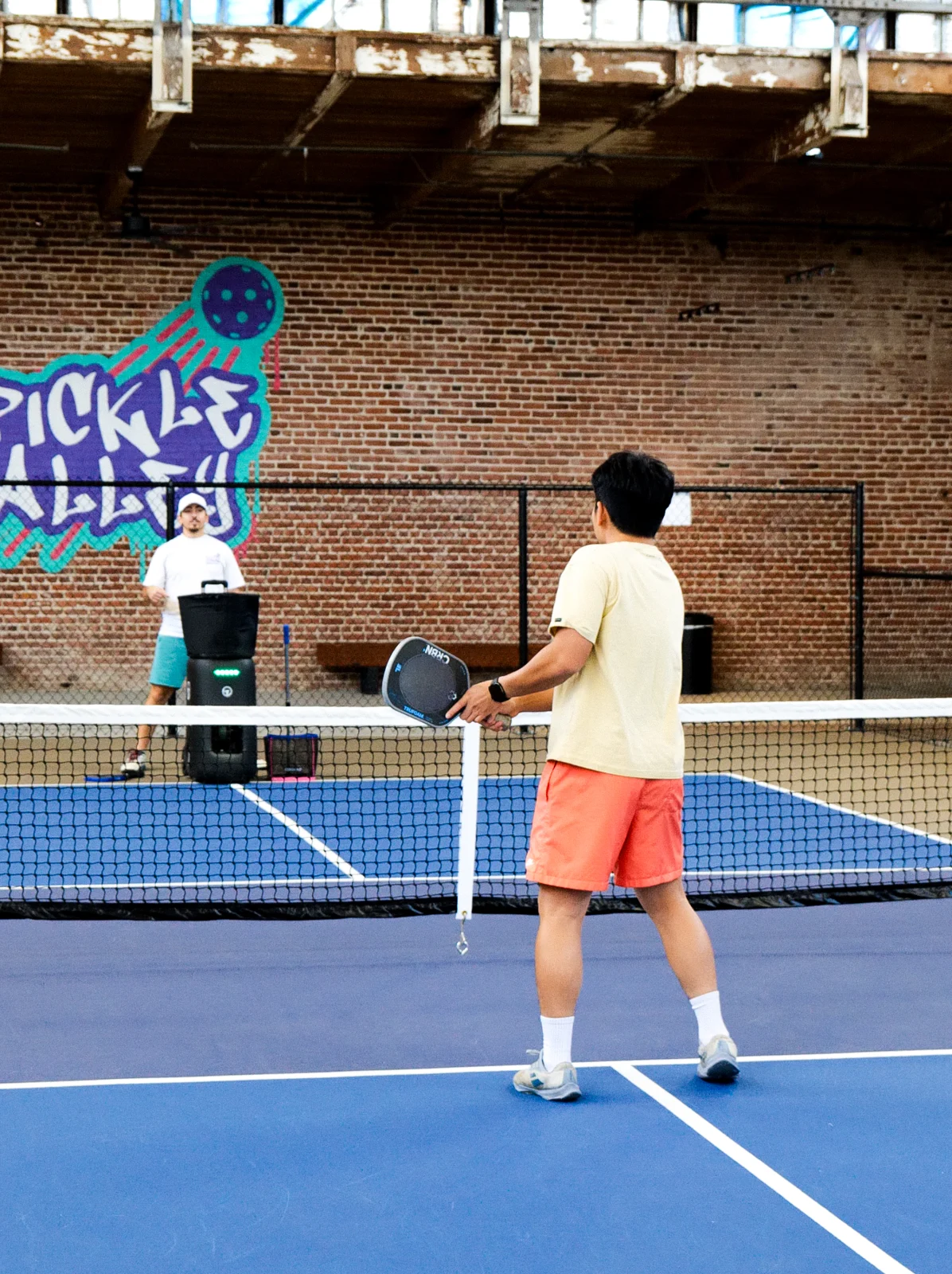
Pickle Alley photoOutdoor courts at Pickle Alley, Los Angeles.Pickle Alley · rights review pending
The City of Los Angeles Department of Recreation and Parks describes its approach as balancing access to pickleball with preserving tennis, and department staff have told local reporters they are moving away from shared-use, hybrid-striped courts toward standalone pickleball facilities where space allows. That shift followed disputes at several parks — Hermon Park, Griffith-Riverside and others — where tennis players objected to losing courts outright to conversion.
The department’s own map is genuinely mixed: some sites, like La Mirada Community Regional Park, converted a portion of existing tennis courts (two of twelve) into four dedicated pickleball courts; others, like Porter Ranch, added standalone pickleball facilities without touching a tennis court. Alongside the public system, private and membership clubs — Pickle Alley in the Arts District, LA Pickle Club at Griffith Park and Westchester — and informal community groups fill in where public courts are scarce or booked solid.
Real estate is always at a premium in Los Angeles, and that scarcity now runs straight through the city's public courts. At Hermon Park in northeast LA — a multi-acre green space with a playground, picnic tables and 11 free tennis courts, most first-come, first-served — the city's Department of Recreation and Parks proposed converting one tennis court into four pickleball courts. It is not the first LA park caught in this argument, and it will not be the last.
Cynthia Su, a freelance film worker who plays tennis most days at Hermon, has become an organizer against court conversions after a similar fight at Griffith-Riverside in late 2023, where a petition stopped a plan to demolish spectator bleachers for six pickleball courts. "I'm not fundamentally against pickleball," she said. "I just wish it didn't have to come at the expense of an existing sport that already means so much to so many people." Tennis coach Alex Haug, who works out of Hermon almost daily, called the idea of converting courts "kind of upsetting," citing consistently long tennis wait times.
El Dorado Park’s tennis-and-pickleball center lists a men’s doubles and a master’s 50-and-over bracket on its public schedule — that’s the story before any results page exists.
Reference photoArmy Birthday Pickleball Tournament.Oregon National Guard · CC BY 2.0
Long Beach Parks, Recreation and Marine lists El Dorado Tennis Center, at 2800 N. Studebaker Rd., as offering eight shared-use pickleball courts with scheduled drop-in play Tuesday and Thursday mornings and Friday evenings; a nearby annex, El Dorado Park West, adds three more courts on a shared sports surface. Citywide, Long Beach’s own count lists 24 dedicated pickleball courts across its parks, with drop-in play priced at $5 per person for up to three hours and private reservations at $10 per court per hour at the two tennis centers.
That is a smaller, shared-use footprint than a purpose-built 32-court tournament venue — we have not found a published court count, attendance figure or economic-impact estimate for a specific Long Beach pickleball tournament weekend, so this story reports the facility’s standing schedule rather than a one-weekend dollar figure.
Long Beach's Parks, Recreation and Marine department runs pickleball the way a city runs a utility: fixed hours, posted prices, and an explicit plan for what expands next. Both of the city's tennis centers now carry pickleball drop-in and reservation blocks layered onto existing tennis court time.
El Dorado Tennis Center offers eight shared-use pickleball courts, with drop-in play currently available Tuesday and Thursday mornings from 8 to 11 a.m., and Friday evenings from 6 to 9 p.m. Billie Jean King Tennis Center runs a smaller current footprint — four shared-use courts, drop-in on Saturday and Sunday afternoons from 2 to 6 p.m. The city has published its own expansion plan: El Dorado is set to add weekday morning drop-in on every weekday plus private reservations from 11 a.m. to 4 p.m. Monday through Friday; Billie Jean King will add weekend morning drop-in from 8 to 11 a.m. and private reservations most days from 11 a.m. to 8 p.m.
Pickle Alley turns a warehouse into a court atlas.
A restored Arts District warehouse holds 9 indoor and 5 outdoor courts plus a 2,800-square-foot gym — a membership club, not a public facility.
Pickle Alley photoIndoor open play at Pickle Alley, Los Angeles.Pickle Alley · rights review pending
Pickle Alley, at 350 S Anderson St in the Arts District/Boyle Heights area of Los Angeles, describes itself as a locally owned club built inside a restored 1930s warehouse, with 9 indoor courts and 5 outdoor courts — 14 total — plus a 2,800-square-foot gym and recovery space, showers, lockers and a pro shop. The club opened around the 2025 holiday season and runs open play, ladders, clinics, coaching and youth summer camps alongside membership and drop-in options.
That is a membership athletic club, not a public park facility — its pricing, hours and specific programming are set by the operator and change, so a visiting player should confirm current booking terms on the club’s own site rather than treat this as a public court listing.
Most of the court stories in this issue are about adding pickleball to something else: a tennis center, a park, a rink. Pickle Alley is the other model — a Los Angeles facility built with pickleball as the whole point, not an addition.
The club lists nine indoor courts and five outdoor courts, year-round play protected from weather on the indoor side, plus a 2,800-square-foot gym, showers, lockers, a pro shop, free parking, towel service and a ball machine. That combination — courts, fitness, recovery — is closer to an athletic club model than a typical municipal court block.
Griffith Park to Westchester, with a club in between.
LA Pickle Club runs two city locations under one operator — a useful case study in how one brand serves two very different neighborhoods.
Reference photoHarry B. Anderson Tennis Center - Pickleball Courts 7-9.GA Kevin · CC0
LA Pickle Club, founded in 2020 as a division of LA Tennis Inc., runs programming at two Los Angeles Department of Recreation and Parks sites: Griffith Park (3401 Riverside Dr) and Westchester Recreation Center (7000 W Manchester Ave), the latter also serving nearby Playa Vista, Marina del Rey and Venice. The club describes itself as the first recognized pickleball operator in City of LA parks, and its Westchester open play has run at a flat per-session rate with courts grouped by skill level and coaches circulating to give pointers.
The two sites make a useful case study in local brand architecture — one operator serving two very different neighborhoods on a single shared calendar — but Dink Digest is listing this as public club information, not an endorsement, and pricing and schedules should be confirmed directly with the operator before a visit.
LA Pickle Club runs two locations under one operator: Griffith Park Pickleball Center at 3401 Riverside Drive, and Westchester Pickleball Center at 7000 West Manchester Avenue. The club describes itself as "the first and only recognized Pickleball operator in City of Los Angeles Parks," staffed by certified coaches.
The two sites serve different parts of the city. Griffith Park sits at the edge of the park itself, a central, tourist-adjacent location. Westchester, a division of the same company under LA Tennis Inc. and founded in 2020, explicitly lists its service area as Westchester, Playa Vista, Marina Del Rey, Playa Del Rey, Venice, Santa Monica, Inglewood, Culver City, Mar Vista, El Segundo, Torrance and Manhattan Beach — a whole swath of the city's Westside and South Bay.
City parks staff describe a shift toward standalone pickleball courts instead of shared striping — a policy story, not a completed-court count or a budget line.
Reference photoVolleyball, Pickleball, and Tennis Courts at Welles Park.Shotgunheist · CC BY-SA 4.0
The LA Department of Recreation and Parks says it is identifying underused tennis courts across the city for standalone pickleball facilities or hybrid shared-use conversions, describing the goal as letting both sports “thrive” rather than displacing tennis outright. Department staff have told local reporters the department is now leaning toward standalone facilities specifically to avoid the kind of dispute that surfaced at Hermon Park, where an initial plan to convert two tennis courts into eight pickleball courts was scaled back to one court into four after community pushback.
We have not found a published citywide capital-budget figure, a total court-conversion target, or a specific dollar amount for acoustic mitigation tied to this policy — the department’s own materials describe an approach and a list of considerations (access, inclusive programming, older-adult and disability use), not a finalized dollar budget, so this story reports the policy as described rather than a completed spending plan.
Every city adding pickleball eventually has to answer the same question: does it take space from tennis, or build new space? Los Angeles' Recreation and Parks department has a stated answer, and it comes with real numbers attached to it.
Juan Aynat, who chairs the department's pickleball committee, described a strategy that has already shifted once. The original approach was a "hybrid" model — tennis and pickleball sharing the same striped court. The department is now moving toward dedicated, standalone pickleball facilities instead, precisely so that adding pickleball doesn't mean subtracting tennis. "We are definitely headed in the direction of just doing dedicated facilities," he said.
West Hollywood’s Plummer Park agenda turns pickleball into a public-process story with a named council sponsor.
Reference photoRibbon Cutting at Pickle Ball Courts.CA Shelby · CC BY 4.0
A March 2026 City of West Hollywood staff report initiated by Councilmember John M. Erickson proposed a phased increase in dedicated pickleball access at Plummer Park, beginning with Courts 6 and 7 and community engagement.
Dink Digest labels this as a public directive and staff-report story, not an endorsement. The community question is what happens after the vote: timing, resurfacing, communication, and shared-court trust.
Plummer Park sits on North Vista Street in West Hollywood, and on most days its courts look like any busy public facility: seven lighted tennis courts, a mixed-use paddle court, a pro shop, and a reservation app that everyone refreshes. What changed this year is that the courts became an agenda item.
On March 2, 2026, the City Council took up item F.6, “Dedicated Pickleball Courts at Plummer Park,” initiated by Councilmember John M. Erickson. The item asked staff to increase dedicated pickleball access in two phases. First, Courts 6 and 7 would be reservable only for pickleball, by or before July 1, 2026. Second, after community outreach and feedback, those two courts would be restriped for pickleball only.
Eight dedicated courts are a better lead than an abstract growth statistic.
Reference photoDay 210 - New Courts!.StephenGA · CC0
LA City Parks highlights Balboa Sportscenter as a newest-court story with eight dedicated courts now open. A strong local feature should show what changed for nearby players: capacity, lighting, programming, and the first month of use.
The image desk pairs a crowd scene with a court card so readers can see both atmosphere and operating detail.
Growth in pickleball is usually reported as a percentage. The City of Los Angeles Department of Recreation and Parks does something more useful on its own page: under “Highlighting our newest Pickleball Courts,” it names one site, Balboa Sportscenter, with eight dedicated courts, “Now Open.”
Eight dedicated courts is a number a player can use. It means lines that are painted for pickleball, nets that stay up, and no negotiation with a tennis booking. It is also a statement of policy from a department that has been careful about how it adds courts.
The launch checklist is maintenance, rotation, lighting, safety, and a public answer to “how do I get on?”
Reference photoNew Pickleball courts under construction, Redstone Arsenal.The Redstone Rocket · Public domain
LA City Parks lists waiting systems, clearly marked courts, adequate lighting, and well-maintained facilities among the citywide committee objectives. Those are the pieces a launch photograph cannot show.
For monthly coverage, Dink Digest will revisit new courts after the ribbon-cutting. A busy opening day is a signal; a repeatable schedule is the product.
A ribbon-cutting is the easy part. What actually determines whether a new court works — for years, not just its opening weekend — is a duller list: lighting, marking, a fair waiting system, and who gets priority when. Los Angeles' Department of Recreation and Parks names that list explicitly on its own pickleball page, through the objectives it has set for its Citywide Pickleball Committee.
The department asks its committee to: identify underused tennis courts for new standalone or hybrid pickleball sites; promote the sport with local ambassadors; recommend facilities offering instruction from beginner to advanced; encourage tournaments and events; advocate for well-maintained courts with clear markings, established rules, an organized waiting system and adequate lighting; advise on the latest rules and best practices; and push for dedicated playing times for older adults and players with disabilities.
West LA Pickleball Cup publishes two divisions with separate leaderboards. Division 1 runs through Griffin Club, Jonathan Club, Brentwood, and a Hillcrest championship; Division 2 moves through Hillcrest, Brentwood, Griffin, and a Jonathan championship.
That structure gives the LA desk a real schedule and a real caveat: standings should be read within division, not collapsed into one citywide ranking. Spring 2026’s champion was Griffin Club, with Jonathan Club as finalist.
Most of the competitive structure covered in this issue is one of two kinds: national pro events like the PPA Tour, or a single club's own internal ladder. The West LA Pickleball Cup, by its own name, is something in between — an inter-club tournament meant to pit West LA's separate clubs against each other rather than rank players within just one of them.
We were not able to confirm the current schedule, format or participating clubs from the page we captured; the site's public schedule page did not return readable content at the time of research. What the name and framing tell a reader, and what we can verify, is the structural idea: a city with enough separate pickleball clubs to need a cross-club competition is a city where the sport has moved past informal drop-in play.
Griffin Club keeps recurring drop-in on the calendar, turning a venue into a weekly habit.
Griffin Club photoPickleball play at Griffin Club, Los Angeles.Griffin Club · rights review pending
Griffin Club’s public pickleball events page lists Friday drop-in dates through October 2026. A recurring listing is small news, but it answers the question many players actually have: when can I show up and find a game?
The calendar is a source-linked starting point, not a guarantee of capacity. Recheck the host page before making the trip.
Griffin Club Los Angeles, on Motor Avenue in West LA, has been a tennis club since 1926. Its pickleball program is new by comparison, but it isn't an afterthought: four brand-new LED-lit courts, drop-in play on Wednesdays and Fridays, plus bookable court time, clinics, tournaments and special events throughout the week.
The club's own events calendar makes the Friday slot explicit and recurring: a weekly "Pickleball Drop-In Play" session, listed on the club's court calendar every Friday from October through December 2026 with no exceptions shown in the schedule we captured. That kind of unbroken weekly cadence is what turns a court booking into a habit — members don't have to check whether Friday night pickleball is happening; it simply is.
Los Angeles Xtreme takes the home court on the road.
A California identity can travel even when the season’s fixtures do not.
Reference photoRecreational tournament play on outdoor hard courts.U.S. Air Force photo by Airman Amanda Lovelace · Public domain
Los Angeles Xtreme’s 2026 schedule places the team in a Champions Series that moves through Northbrook, Carrollton, Austin, Phoenix, and Columbus, with Carlsbad as the home base and a Dallas championship stop.
For the local fan, the useful question is not only “when is the next LA match?” It is how a city-facing team builds a calendar of clinics, exhibitions, and watchable fixtures around a traveling season.
Los Angeles Xtreme is the city's newest professional pickleball franchise, competing in the inaugural 2026 MLP Champions Series with a roster of 24 players split across three age-tiered teams: Prime 40+, Premier 50+ and Master 60+. The franchise leans into Southern California identity in its own marketing — "championship pedigree, Southern California grit" — while training out of Rally House Pickleball Club in Carlsbad, about 90 miles south of downtown LA.
The team's published 2026 schedule is almost entirely road games. After a pre-season exhibition against the Coachella Scorpions in Palm Springs on July 9, the regular season runs Away MLP Champions Series stops in Northbrook and Mt. Prospect, Illinois (Jul 23–26); Carrollton and Denton, Texas (Aug 6–9); Austin and Phoenix (Sep 3–6); and Columbus, Ohio (Oct 8–11), before the MLP Champions Series championship in Dallas, Texas (Oct 30–Nov 1).
A court closure is part of the player experience when the notice names the work and the reopening path.
City of West Hollywood photoA pickleball clinic at Plummer Park, from the City of West Hollywood’s 2022 archive.City of West Hollywood · rights review pending
West Hollywood’s facility notice says LED lighting upgrades at Plummer Park run through an August 17–September 4 window, with phased court closures during weekday work.
This is the kind of small operational story that prevents a bad trip. The court is not just a destination; it is a living schedule with maintenance, reservations, and daily changes.
West Hollywood's Plummer Park is already this issue's example of how a council agenda item can reshape two courts. Its facility notice for the same period is a smaller, more practical story: routine maintenance that closed specific courts on a rolling schedule, exactly the kind of detail a player needs before showing up.
Beginning Monday, August 17, 2026, the city upgraded existing court lighting fixtures to new energy-efficient LED fixtures, with an estimated completion of Friday, September 4. Construction ran on weekday daytime hours only, with all work areas cleared by the afternoon each day.
The public record moves from a council directive to implementation, resurfacing, and communication.
Reference photoNew Pickleball courts under construction, Redstone Arsenal.The Redstone Rocket · Public domain
The West Hollywood agenda item describes a phased approach to dedicated pickleball access at Plummer Park, beginning with Courts 6 and 7 and community engagement before restriping.
That makes the story bigger than a yes-or-no vote. It is a case study in how a city absorbs demand while preserving a workable reservation and maintenance system.
This issue already reports West Hollywood's Plummer Park court debate in full elsewhere: Councilmember John M. Erickson's March 2, 2026 item asking staff to phase Courts 6 and 7 toward pickleball-only use, the roughly 16,000-to-14,000 pickleball-to-tennis booking split behind the request, and the lopsided public comment against it. Rather than repeat that reporting, this page exists to flag the "second act" framing directly: a city council vote on court access is rarely a single, final event.
The council item itself was structured as two phases, not one: first, adjusting the reservation system for Courts 6 and 7 by or before July 1, 2026, then, based on separate community outreach, physically restriping those courts for pickleball only. That built-in second phase means the decision the council made in March was never the end of the process — a further community engagement step and a second, physical construction decision were still to come, with funding for it planned for Fiscal Year 2026–27.
A practical local listing can say what is available and what is not.
Reference photoPickleball hall with Short mat bowls rink.Lee Vilenski · CC BY-SA 4.0
LA City Parks lists indoor open pickleball at Stoner Recreation Center on Tuesdays, Wednesdays, and Thursdays from 10 a.m. to 1 p.m., with three gym courts and a participation-first format.
The same page says outdoor pickleball is not permitted on Stoner’s tennis courts. A good service page prints both halves so players do not infer permission from the sport’s popularity.
Not every court in this issue is its own destination. Stoner Recreation Center, at 1835 Stoner Avenue near the Santa Monica border, lists pickleball as one line inside a much broader community-center program: dance, basketball, volleyball, tennis, soccer futsal, baseball, skating and skateboarding, fitness, flag football, boxing — and pickleball.
The center's regular hours run Monday through Friday, 9 a.m. to 9 p.m., and Saturday 9 a.m. to 5 p.m.; it is closed Sundays. It also closes for a specific list of city holidays through the year, including January 19, February 16, March 30, May 25, June 19, July 3, September 7, October 12, November 11, and November 26–27 and December 25, 2026. Registration for programs runs through the department's own online portal.
Nineteen Southern California listings, one decision rail.
The SoCal calendar is most useful when it helps a player choose the next event, not when it becomes a wall of dates.
Reference photoJohn Beagle · CC BY 2.0
The public Southern California calendar shows 19 tournaments in its current snapshot, spanning recurring DUPR events, pro-format weekends, charity events, and skill-level tournaments.
The desk should sort by geography, format, and time horizon. “What can I actually play?” is a better filter than “what exists?”
Southern California's pickleball tournament scene is genuinely fragmented: CAPA, iPickle, APA, ID Sports, the Epic Pickleball Tour, National Pickleball, PIKL, the PPA Tour, MLP, USA Pickleball, Cal State Games, PickleballTournaments.com, the American Pickleball Series and The Dink Spot each run or list their own events, with no single organizer covering the whole region. SoCalPB.org exists specifically to compile those separate lists into one filterable calendar, by county, rating type and time window.
The site sorts every listing into three categories that map directly onto what a player actually needs to know before registering: DUPR-rated events, where results post to the official rating system; Pro/Mixed events, combining pro tour brackets with amateur side draws; and Non-DUPR events, skill-level only, with no rating impact. That three-way split answers the first question any competitive player asks about an unfamiliar tournament — will this count toward my rating? — before they even click through.
Arizona, Nationals, the people on the podium, and the numbers behind them.
26 stories
07Tournament Desk
Arizona opens the new season with 1,000 points.
The Veolia Arizona Open in Mesa is the first open of the new PPA season, with the top four in each draw receiving round-of-16 byes through the new World Pickleball Rankings system.
PPA Tour photoArizona Athletic Grounds in Mesa, pictured by the PPA Tour.PPA Tour · rights review pending
PPA’s preview frames the week around heat, ranking points, and open draws. Anna Leigh Waters is playing singles and mixed rather than chasing a triple crown, while new partnerships add volatility to the bracket.
The issue freezes before a full championship recap. That is deliberate: live event coverage should not be backfilled with guessed winners.
The PPA Tour’s new season reached its first open in Mesa, Arizona, from September 14 to 20, 2026. The Veolia Arizona Open was worth 1,000 ranking points and, according to the tour’s preview, was the first event at which the World Pickleball Rankings decided the byes: the top four players or teams in each draw went straight to the round of 16.
It was the second event of the new season and the tour’s second visit to Mesa in calendar year 2026. It was also a return to the city where the PPA started in 2020, though not to the same venue. The forecast called for highs above 100 degrees.
Ben Johns and Federico Staksrud’s first partnership met Nico Acevedo and Yuta Funemizu — and the new duo went home early.
PPA Tour photoBen Johns in an official PPA Tour portrait.PPA Tour · rights review pending
The reported scoreline was 11–4, 11–5. The useful editorial lesson is not to turn one match into a career verdict. New pairings have to build shared language in real time: who takes the middle, who covers the lob, who resets after speed-up.
This is why the highlight match belongs in a club magazine. The pro story becomes a conversation prompt for a Saturday ladder.
Gabe Tardio was out of the country, so Federico Staksrud stepped in next to Ben Johns for the Veolia Arizona Open — the first tournament these two had ever played together. They still entered as the No. 1 seed in men's doubles, which is its own small statement about the depth of talent on the PPA Tour: even a brand-new partnership built around Johns starts as the team to beat.
In most established racket sports, a top seed's doubles partnership has years of shared history. Pickleball's professional structure is young enough that a top seed can be assembled the week of the tournament out of circumstance — one partner traveling, another player stepping in — and still be favored to win. That is less a story about one match than about how thin, and how talented, the pro depth chart still is at the very top.
On semifinal Saturday, the PPA newsroom identified Alshon as the only player alive in singles, mixed doubles, and gender doubles.
PPA Tour photoChristian Alshon in an official PPA Tour portrait.PPA Tour · rights review pending
That triple-duty note is an editorially clean way to talk about workload. It tells readers what to watch without inventing a result, a medal, or a stamina claim. The page stays a watchlist until the source window closes with a verified final recap.
For club players, the translation is simple: versatility is a schedule problem as much as a skill problem.
Going into semifinal Saturday at the Veolia Arizona Open, the PPA Tour's own newsroom flagged one name as still alive in every draw he entered: Christian Alshon, competing in men's singles, mixed doubles, and men's doubles. No other player at the event matched that spread.
This is the underlying fact behind this issue's separate player-of-the-week feature on Alshon — the specific, narrow, verifiable claim that made him the pick that week. Surviving to the semifinal round in three separate draws, in the same triple-digit-heat week, is a genuine physical and competitive workload most players on tour never carry at once.
Dink Digest’s editorial player of the week is a time-stamped recognition based on the PPA semifinal watchlist, not an official award.
Reference photoChristian Alshon in a PPA Tour photograph.Photograph from www.ppatour.com · Source photograph — rights review pending
The selection is narrow: Alshon was the only player named as still alive in three divisions entering semifinal Saturday. The distinction is about the week’s most watchable workload, not a claim that he won the event.
The page model is reusable. Each weekly pick should show the source, the cutoff, the reason, and the unresolved result if play is still live.
Dink Digest’s player of the week is an editorial pick with a timestamp. It is not an official award, and it is not a claim about who won. This week the pick is about workload: at the Veolia Arizona Open in Mesa, Christian Alshon was a top-four seed in three draws.
He was the No. 4 seed in men’s singles, the No. 2 seed in mixed doubles with Rachel Rohrabacher, and the No. 2 seed in men’s doubles with Andrei Daescu. That is a heavy load for a week that the tour played one round per bracket per day, with triple-digit heat in the forecast.
The current PPA World Pickleball Rankings list Waters first among women, while the September story arc tracks her pursuit of another title milestone.
PPA Tour photoAnna Leigh Waters in an official PPA Tour portrait.PPA Tour · rights review pending
Dink Digest’s monthly player page combines official rank and recent story relevance: Waters is listed at No. 1, and PPA coverage says she moved closer to 200 career titles after the national championships. The issue does not turn that into a prediction for Arizona.
The monthly distinction is editorial and dated. Rankings move; readers should follow the source rail for the latest table.
Two facts from this issue's own tour coverage explain why Anna Leigh Waters is this month's north star rather than just another top seed. First, her unbeaten streak had reached two years, three months and 18 days by the start of the Veolia Arizona Open. Second, the tour's Las Vegas Open preview put a number on how close she is to a career milestone: two doubles titles away from title No. 200 on the PPA Tour.
Waters is playing only singles and mixed doubles this season, which means no triple-crown attempt — the sweep of singles, mixed and women's doubles titles at a single event. That is a notable choice for a player of her standing, and it reframes how her season should be read: not as an attempt to sweep every draw, but as a focused push in two disciplines.
A former UC Berkeley varsity tennis player turned pro pickleball’s reigning defensive standard — without needing an invented sponsorship number to prove it.
PPA Tour photoAnna Bright in an official PPA Tour portrait.PPA Tour · rights review pending
Anna Bright, ranked World No. 2 on the Carvana PPA Tour, played varsity tennis at UC Berkeley before turning pro in 2022; PPA’s own coverage credits her and partner Anna Leigh Waters with a run of dominant women’s doubles results built on returning nearly everything an opponent hits, denying speedups rather than out-hitting them. In mixed doubles, PPA’s championship recap credited Bright and Hayden Patriquin with a title win described as her sixth career title.
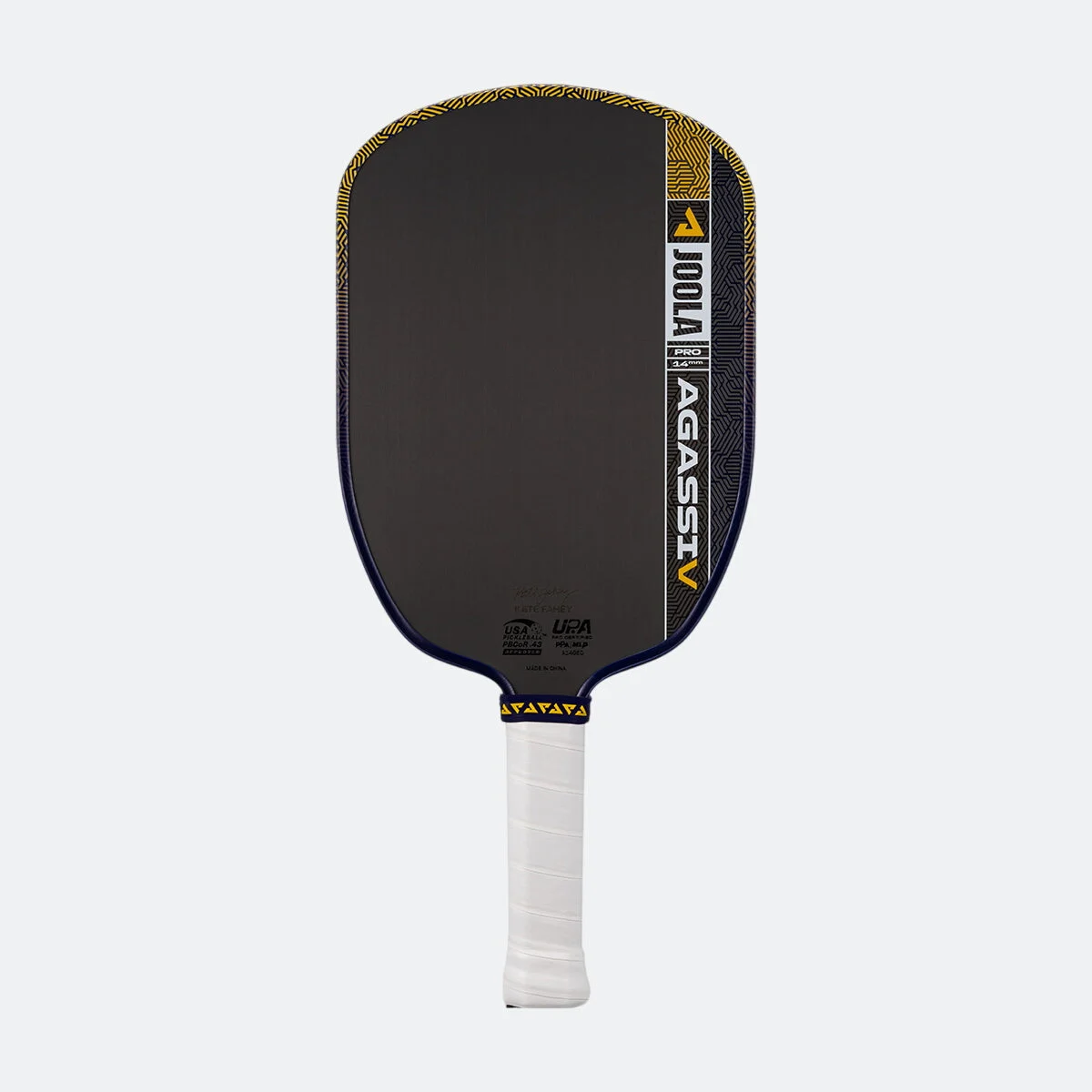
That is a strong story without reducing her game to an invented statistic — we have not found a published reaction-time measurement, return-rate percentage or sponsorship valuation for Bright, so this story does not report one. JOOLA is her listed paddle sponsor.
Before she was a pickleball pro, Anna Bright played varsity tennis at UC Berkeley, reaching a career-high national ranking of No. 13. Before that career shift fully took hold, she worked as an account manager at DUPR — the same rating system now used to measure her own pickleball career. She left that job to become a full-time pro.
Bright didn't arrive on the PPA Tour directly. She first played on MLP's Team Ranchers and on the APP circuit before joining the PPA, where she is now a Gold Card touring pro. That path — through a team league and a rival tour before settling on the PPA — is a common trajectory in a sport still consolidating its competitive structure, and it means Bright has more competitive variety in her background than a player who came up through one tour exclusively.
PPA coverage says Six Zero signed 16-year-old Cailyn Campbell, while the junior rankings show a deep under-18 field rather than one token prodigy.
Reference photoPickleball at Miller.Seattle Parks & Recreation · CC BY 2.0
A teenager feature should keep the frame wide. Campbell’s sponsorship story is a signal of professional attention; USA Pickleball’s youth program supplies the community structure underneath it. One is not a substitute for the other.
Dink Digest’s editorial rule: no minors’ personal contact details, no pressure narrative, and no ranking hype detached from age-appropriate coaching.
PPA coverage reports that paddle brand Six Zero signed 16-year-old Cailyn Campbell to a sponsorship deal. A single signing is a small data point on its own — brands sign promising young players in every sport — but set against the Junior PPA's own published rankings, it looks less like an outlier and more like evidence of how deep the youth talent pool already runs.
The Junior PPA Tour publishes full national rankings across four age groups (12U, 14U, 16U, 18U) and three formats (singles, doubles, mixed), for both boys and girls. The Boys Singles 18U rankings alone list 129 ranked players. At the very top, the gap is real but not enormous: George Wolf leads with 2,700 points at age 13, ahead of Francis Chi's 1,800 at 14 and Soli Mosseri's 1,300 at 16.
A 13-year-old’s climb into the Top 50 of junior boys singles is the real story — not an invented tourism-dollar figure attached to his name.
Reference photoPickleball court in La Crosse, Wisconsin.Wikideas1 · CC0
George Wolf, age 13, climbed into the Top 50 of the PPA Tour’s Junior Boys Singles rankings during the 2026 season, with two gold medals, two silvers and one bronze recorded in the Junior Boys U18 Singles division. Junior results are a snapshot, not a permanent label — rankings move tournament to tournament, and DUPR has separately rolled out coach-assigned ratings specifically to track younger players more consistently.
For clubs, the more useful story than any single name at the top is whether a 12U, 13–14 or 15–16 player has a safe, coached next step. We have not found a published points total, an occupancy figure, or a regional tourism-dollar estimate tied to junior tournaments in this market, so this story does not report one.
The Junior PPA's Boys Singles 18U division ranks players from age 13 to 18 against each other on one points table. At the top of that 129-player field sits George Wolf — age 13, the youngest player anywhere near the top of the rankings, not the oldest.
Wolf's 2,700 points put him 900 ahead of second-ranked Francis Chi (1,800, age 14), and more than double third-ranked Soli Mosseri (1,300, age 16). In a ranking system built around cumulative tournament points, that margin means Wolf isn't narrowly ahead — he has built a genuinely commanding lead in a division that includes players up to five years older.
USA Pickleball’s 2025 annual report lists 18,258 places to play and 82,613 courts in the Pickleheads database.
Reference photoAerial photo of pickleball courts in The Villages.TheVillagesFL · CC BY-SA 4.0
The numbers are powerful, but they are not a promise that every location has the same quality, hours, accessibility, or social welcome. A network is only useful when people can find a court and understand how to join it.
Dink Digest treats the figures as a dated source snapshot, not as live inventory.
Every local court story in this issue — a Central Park concession, a West Hollywood council item, a Roosevelt Island walk-up court — is one data point inside a much larger national network. USA Pickleball's own 2025 Annual Growth Report puts real numbers on that network for the first time in one place.
The Pickleheads court-location database, which USA Pickleball maintains, added more than 2,300 new locations in 2025, bringing the national total to 18,258 places to play. The same database now tracks 82,613 known courts nationwide, with 14,155 courts added the prior year. USA Pickleball's own membership grew to 104,828 people nationwide in 2025.
The 2026 Oceanview USA Pickleball National Championships are scheduled for October 31–November 8 at Barnes Tennis Center in San Diego.
Reference photoPickleball court in La Crosse, Wisconsin 01.Wikideas1 · CC0
USA Pickleball describes Nationals as the longest-standing and only qualification-required national championships in the sport. Oceanview’s title sponsorship makes the event a useful case study in how access, competition, and commercial partnership meet.
This is a preview page. It does not claim a Dink Digest relationship with Oceanview.
USA Pickleball's premier annual event now carries a new name and a confirmed sponsor: the 2026 Oceanview USA Pickleball National Championships, set for October 31 through November 8, 2026, at Barnes Tennis Center in San Diego. The organization describes it as the longest-standing, and only, National Championships in the sport that requires qualification to enter.
The event brings together top amateur athletes who earned a spot through USA Pickleball's Path to Nationals — including Golden Ticket tournaments and the Tiered Point System — alongside elite professional athletes, junior divisions, and wheelchair divisions. That structure is worth noting: unlike a pro-only tour stop, Nationals is built so a serious amateur can qualify their way onto the same tournament bracket structure as the sport's professionals.
The 2026 Pickleball World Championships are scheduled for October 30–November 8 at Brookhaven Country Club in Farmers Branch, Texas.
Reference photoMcKey Park pickleball courts, Valdosta, Lowndes County, Georgia.Michael Rivera · CC BY 4.0
The public announcement makes Opendoor the title sponsor and frames the championship as the sport’s marquee event. For readers, the useful question is how world-level events connect back to the local club calendar.
The answer is through pathways: watch, volunteer, play a sanctioned event, coach a junior, or host a watch party without pretending everyone is on the same competitive route.
Opendoor, the real-estate technology company known for buying and reselling homes directly, is now the title sponsor of the Pickleball World Championships in Dallas. We were unable to retrieve the original announcement page during this research pass, so we're reporting only what is independently confirmed elsewhere in this issue's sourcing: that Opendoor's name is now attached to the event.
This fits a pattern documented elsewhere in this issue's Tour & Rankings coverage: brands with no obvious connection to racket sports — a cereal company, a real-estate platform — are moving into pickleball sponsorship specifically because the sport's audience is growing fast while its sponsorship inventory is still, in one marketing executive's words, "maybe isn't fully priced yet." A national championship event in a major market like Dallas is exactly the kind of high-visibility, still-affordable inventory that pattern predicts.
The PPA schedule points to Las Vegas, Chicago, Virginia Beach, Dallas, Daytona Beach, and Malibu as the next major story stops.
Reference photoPickleball court at Salinas Park in Gulf County, Florida.The Bushranger · CC BY-SA 4.0
A calendar page is useful when it shows both event identity and reader action. This month’s route includes the Rate Las Vegas Open, Veolia Chicago Cup, Virginia Beach Open, Opendoor Worlds, Proton Daytona Beach Open, and the Veolia Malibu Cup.
Dates and locations remain subject to change; follow the official tour source before planning travel.
Read the tour's own upcoming schedule as one list, and the season's shape becomes obvious: after Arizona, the PPA and its Junior division move through Nevada, Illinois, Virginia and Texas within about six weeks.
The Las Vegas Open carries specific weight this year: it marks year seven at Darling Tennis Center, worth 1,000 points, with best-of-three finals in every draw and Anna Leigh Waters two doubles titles from career No. 200. The Junior PPA calendar runs almost entirely alongside these same senior tour stops, which is worth noting on its own — junior pickleball isn't a separate circuit bolted onto the pro tour, it travels the same cities on largely the same weeks.
The PPA’s new World Pickleball Rankings decide early byes at the Arizona Open; the reader’s job is to ask what the number measures.
Reference photoPickleball courts at Complexe sportif Aurele-Plante.Ptaff · CC0
Rankings can make the season legible, but they are not character, chemistry, or a promise of future results. In this issue we show the ranking source, date, and context alongside the editorial recognition.
Jev may help route a candidate story. It does not replace the source, the cutoff, or the human release owner.
A ranking system is easy to treat as a scoreboard — a fixed measure of who is best. What the PPA Tour's new World Pickleball Rankings actually showed at the Veolia Arizona Open is more useful: a ranking is a timestamp that does a specific job, and the job changes what it needs to measure.
At the Arizona Open, the World Pickleball Rankings decided the round-of-16 byes — the top four players or teams in each draw skipped straight past the early rounds. That single mechanical fact is the entire point: the ranking wasn't a debate topic, it was an input into the bracket. Ben Johns, seeded 22nd in singles by tournament seeding, still received a bye based on his world ranking rather than his event seed.
Dink Digest scores club visibility using public evidence of courts, recurring programs, tournament cadence, neighborhood utility, and source freshness. It does not claim to measure revenue, membership, or player quality.
The board is designed to reward useful infrastructure rather than the loudest marketing. A club can move up by publishing a better schedule, not only by adding another logo.
This issue profiles three clubs — CityPickle, Pickle Match Club, and a spread of Los Angeles operators — in a loose "club board." Before those individual pages, it's worth being explicit about what this actually is: a transparent editorial index built from each club's own public claims, not an official national ranking with a defined scoring formula.
For each club, we pulled what the operator itself publishes: number of locations, court count (indoor vs. outdoor), amenities, and any self-reported activity numbers such as Pickle Match Club's 1,631 recorded check-ins. We did not independently verify attendance, revenue, or membership totals for any of these clubs, and none of them compete on a shared, audited metric.
Club board: CityPickle leads the destination lane.
A public multi-location footprint, varied programming, and partner architecture make CityPickle the current destination benchmark.
CityPickle photoA player at CityPickle’s New York courts.CityPickle · rights review pending
The placement is editorial and time-stamped. CityPickle publicly lists locations, courts, open play, clinics, leagues, tournaments, food, and partner brands. Those are visible signals of a destination model, not proof of the best player experience in every session.
Readers should treat the board as a starting point for a visit, then verify current pricing and reservations.
In the destination lane of this issue's club board, CityPickle is the clearest example: a club built around the idea that pickleball is a night out, not just a workout. Its own site frames the offer plainly: "Play. Eat. Drink. Connect."
This issue covers CityPickle's largest site — the 20-year, $100+ million Wollman Rink concession in Central Park — in full elsewhere. On the club-board comparison specifically, what stands out is the model repeated across locations: a new Times Square flagship inside the Paramount Building with seven courts, a full bar and restaurant and city views; a Brooklyn Bridge location debuting in spring 2026; and a 25-court pickleball-and-padel facility, Boca Paddle, under development in Florida.
Club board: Pickle Match Club owns the cadence story.
A weekly calendar can be more powerful than a giant facility.
Pickle Match Club photoOn-court play at Pickle Match Club, Los Angeles.Pickle Match Club · rights review pending
Pickle Match Club reports weekly round robins, ladders, monthly standings, and quarterly tournaments, alongside self-reported August 2026 activity figures. We publish those numbers as club-reported evidence, not audited market share.
Its lesson for smaller clubs is repeatability: a player returns when the format, level, and social promise are clear enough to become a habit.
Where CityPickle sells a destination, Pickle Match Club sells a cadence. It runs no venues of its own; instead it organizes structured play across existing Los Angeles courts, built around a repeating weekly-to-quarterly rhythm.
The structure, in the club's own words: "PMC Open" is the weekly night — ladders, round robins, fixed-partner nights, rotating through DUPR-rated and moneyball formats. Points earned there roll into the monthly "PMC Series" standings, which reset on the first of each month. Four times a year, top monthly finishers qualify for "The Pickle Match Cup," the club's own seeded major.
Pickle Alley, LA Pickle Club, and local organizers make the city feel like a network of formats.
Pickle Alley photoThe indoor courts at Pickle Alley, Los Angeles.Pickle Alley · rights review pending
The LA desk sees clubs, pop-ups, public courts, and social events sharing the same players. That is why a club leaderboard should show format: warehouse, rooftop, public park, country-club, or community program.
No one format wins the city. The useful question is whether a player can find a welcoming next game.
Los Angeles doesn't have one dominant pickleball model — it has at least three, each covered elsewhere in this issue in full. Placed side by side, the differences are the real story.
That spectrum — own the building, operate inside a public park, or organize play without owning anything — maps onto three different capital and risk profiles. Pickle Alley carries real estate and facility costs but controls its own courts entirely. LA Pickle Club shares that facility risk with the city as landlord. Pickle Match Club carries almost no facility risk at all, but depends entirely on continued access to courts it doesn't control.
A number can help a player find a match; it cannot explain an entire person or club.
Reference photoPicklerpeej · CC BY-SA 4.0
DUPR describes a modified Elo-style rating influenced by results, match type, and opponent difference. USA Pickleball’s ranking explainer separates rating from ranking, a distinction every club leaderboard should repeat.
The Dink Digest rule is to print the provider, date, division, and whether a value is a rating, ranking, or editorial index.
A DUPR number gets treated, casually, almost like a personality read — "a 3.5" carries social weight at a club night the way an astrological sign does at a party. DUPR's own published methodology is much more mechanical than that reputation suggests.
DUPR describes itself as a modified Elo algorithm, updating a player's existing rating based on three specific factors: whether you won or lost, what type of result it was, and the rating gap with your opponent. Tournament, league and club-verified match results count twice as much toward your rating as a self-reported recreational game. Beat a higher-rated opponent, and your rating rises more than it would beating someone rated below you — and the reverse is true on a loss.
DUPR’s dated top table puts Ben Johns first in the captured men’s view; the snapshot belongs beside its date and provider.
Reference photoOpelika Sportsplex Pickeball Court.Spellck · CC BY-SA 4.0
The public DUPR page captured September 14, 2026 lists Ben Johns, JW Johnson, Hayden Patriquin, Gabriel Tardio, and Andrei Daescu at the top of the men’s table. These are not permanent truths; the source can change after new results post.
Dink Digest publishes the timestamp because a ranking without a date is an invitation to confusion.
DUPR's own published rankings, updated September 21, 2026, put a specific number on the exact story this issue has been tracking all month: Ben Johns leads men's open doubles at a 7.074 rating, with Christian Alshon — this issue's own player of the week — sitting fifth at 6.882.
The top ten spans ages 20 to 38, with no clear age cluster at the top — Gabriel Tardio (20) and Andrei Daescu (38) sit within a few hundredths of a point of each other. Andrei Daescu, Christian Alshon's men's doubles partner covered elsewhere in this issue, ranks fourth individually while their partnership was seeded second at the Veolia Arizona Open — a reminder that an individual DUPR rating and a specific partnership's tournament seed are two different measurements answering two different questions.
PPA’s tour-facing points, DUPR’s rating, and PickleWave’s ELO-style comparison answer different questions. A pro can lead one table and sit elsewhere on another without the data being broken.
The editorial move is to show the provider next to the number, then explain the use: seeding, match finding, historical form, or fan conversation.
A reader trying to figure out "who is actually the best player" in pickleball will find at least three different answers, all correct within their own terms: PPA tour points, which reward tournament performance on one specific tour; DUPR rating, a modified Elo system covering all match types and levels; and PickleWave's own ELO leaderboard, built purely from professional match outcomes across the PPA, APP and MLP tours.
PickleWave describes its rankings as "powered by ELO, calculated from 30,000+ pro matches across the PPA, APP, and MLP" — pro tournament results only, combined into one unified rating. By that measure, the men's singles top three as of September 28, 2026 are Christopher Haworth (2115 ELO, 80.08% win rate across 197 wins), Federico Staksrud (2038 ELO), and Hunter Johnson (1994 ELO). Christian Alshon sits sixth (1917 ELO, 71.03% win rate over 152 wins).
A strong schedule page lets players choose a weekend before the bracket fills.
Reference photoRecreational tournament play on outdoor hard courts.U.S. Air Force photo by Airman Amanda Lovelace · Public domain
The monthly tournament desk will track PPA, USA Pickleball, DUPR, local club, and community events with location, format, registration source, and last checked time. It will not invent a result when the event is still live.
The best calendar is short enough to use on a phone and specific enough to act on.
A tournament calendar looks like a simple list of dates and locations. Its real function is closer to a decision tool: it lets a player choose which weekend to build a competitive season around, before entries close, rather than discovering after the fact that the right event has already filled.
USA Pickleball sanctioned 144 tournaments in 2025, including the National Championships and 18 Golden Ticket events that feed directly into that qualification path. A player working toward Nationals isn't picking events at random from that list; the Golden Ticket structure specifically routes results toward one target date each fall.
Long Beach, South Pasadena, Thousand Oaks, and local ladders do not belong in one undifferentiated list.
Newport BeachA shot of the professional and amateur courts at the Newport Beach Doubles Shootout (PPA).Bryceppa · CC BY-SA 4.0
The Southern California calendar already shows how varied the region is: sanctioned competition, fundraising, round robins, singles showdowns, and club ladders. The issue will sort those by player intent rather than by prestige.
Senior players get an explicit filter for age division, start time, surface, and travel distance.
No single site tells a Southern California player everything they need for a tournament weekend. Stacked together, three do the job: a start-times page for the specific event, a regional calendar for what else is happening nearby, and a weekly club for the nights in between.
Pickleball.com's tournament platform — which the company says has hosted 23,100+ tournaments and logged 4.2 million matches across 6,300+ active clubs — published a granular, day-by-day start-times page for the WPA California State Championships (September 18–26, 2026, 73 players), down to individual event and venue for each match block. That level of granularity, event by event and venue by venue, is what actually lets a player or a spectator plan a specific day.
New York tournament weekends need a different map.
An urban event guide should treat transit and court access as part of the bracket.
CityPickle photoA private group event pictured by CityPickle, New York; one of the club formats discussed….CityPickle · rights review pending
CityPickle’s programs include leagues and tournaments alongside open play and instruction. The NYC neighborhood guide adds public-court context. Together they suggest a city tournament page organized around where a player can actually arrive, warm up, and leave.
The recurring service question is simple: is this a destination event, a neighborhood event, or a court session that happens to keep score?
Where Southern California's tournament infrastructure runs through start-times pages and club calendars, New York's runs through something more granular: a city guide that treats each free public court as its own listing, down to the surface material and which volunteer-run chat group organizes play there.
NYC Pickleball's guide is explicit about how these courts actually function: most outdoor groups play on asphalt or handball courts, and volunteers bring portable nets, tape court lines, and often supply balls — the guide directly asks players joining long-term to "find a way to contribute." It also flags that many groups enforce a minimum skill rating and asks players to self-rate honestly.
Title sponsorship, qualification, age divisions, and local prep turn a national event into a club conversation.
Reference photoJohn Beagle · CC BY 2.0
USA Pickleball’s public Nationals materials and Oceanview title sponsorship create a national frame, but a local magazine should translate it into preparation: what does a player need to do this week, this month, and before the next qualifier?
The page stays at the route level because event eligibility and draws can change. Recheck the official event source before printing a final schedule.
It's easy to picture Nationals as a single week in November — a backdrop for whoever happens to show up strong that month. USA Pickleball's own structure says otherwise: the National Championships is the fixed endpoint of a season-long qualification route called the Path to Nationals.
That path runs through Golden Ticket tournaments and a Tiered Point System accumulated across the season; 18 Golden Ticket events fed into the 2025 Nationals alone. Nationals itself, now named the Oceanview USA Pickleball National Championships and covered in full elsewhere in this issue, is explicitly described as the only USA Pickleball National Championships that requires this kind of qualification to enter — every other USA Pickleball national event is open entry by comparison.
MLP and minor-league formats give club players a way to root for a roster, not only a singles name.
Reference photoRecreational tournament play on outdoor hard courts.U.S. Air Force photo by Airman Amanda Lovelace · Public domain
The Dink’s current feed separates professional stories from its MiLP lane, and the public MLP image archive makes the team format visible as an event product. The lesson for clubs is narrative: captains, lineups, rivalries, and a season arc.
The team desk will not pretend a local league is professional. It will borrow the useful structure: roster, schedule, points, and a reason to return.
Major League Pickleball is only about five years old, but its sponsorship market has already gone through several distinct phases — and Marketing Brew's own reporting lays out exactly how, and why, brands are moving in now.
In the sport's early surge, more than 150 brands rushed in "without much rhyme or reason," per the report. After MLP's merger with the PPA Tour, sponsorships began resembling other pro sports, with brands like DoorDash and Anheuser-Busch buying league, team and tour naming rights. This year marked a further shift toward individual team deals — a sign, MLP Commissioner Samin Odhwani told the publication, that the sport's audience "could be reaching a tipping point."
The public systems in this issue are DUPR, PPA points, USA Pickleball ranking guidance, and UTR Sports / UTR-P references—not an invented CUPR table.
Reference photoWikimedia Commons contributor · CC BY-SA 4.0
When a reader asks for “CUPR Sport,” the editorial desk should verify the intended provider before printing a ranking. The closest established public lanes found in this research are DUPR ratings and UTR-P / UTR Sports tournament ratings.
That distinction protects players from an attractive but wrong leaderboard. A missing provider is a HOLD, not a reason to fill the table from memory.
Across this issue's rankings desk, four systems for measuring a pickleball player actually surface in our sourcing: DUPR's modified Elo rating, the PPA Tour's tournament points and new World Pickleball Rankings, PickleWave's independent ELO leaderboard, and USA Pickleball's own general ranking guidance for sanctioned play.
An earlier working title for this page referenced something called "CUPR Sport." We could not verify that name against any of the systems in our sourcing, and we're flagging it directly rather than quietly using it: if you've seen a system by that name, it isn't one this desk's research turned up, and we don't want to pass along a name that might send a reader down the wrong search.
PPA’s own recap of a 122-shot rally in Sacramento is a citable, source-linked example worth walking through shot by shot: serve, return, a Ben Johns third-shot drive, a volley, and a fifth-shot drop that resets the point. It is one observed sequence in one match, useful for discussing timing and choices — not a claim that every player should copy one pattern.
The coaching value here is a framework, not a statistic: name the third-ball intention, move as a pair through the transition zone, reset before adding pace, and review one decision after the game. We have not found a published win-rate or point-conversion percentage tied to the fifth shot specifically, so this story does not report one.
Most pickleball points end inside the textbook five-shot sequence: serve, return, third-shot drop, and a volley exchange at the net. The longest rally in any PPA Tour final since 2022 shows what happens when neither team breaks from that pattern — it happened in Game Three of the Fasenra Sacramento Open men's doubles final, between Ben Johns and Gabe Tardio against JW Johnson and CJ Klinger, and it ran 122 shots over two minutes and one second.
It started conventionally: Tardio's serve, Johnson's return, Johns' third-shot drive, Klinger's volley, and Johns' fifth-shot drop into the kitchen. Then it didn't stop. Thirty dinks passed before Johnson touched the ball again. Three dinks later, Klinger opened the first "firefight" — a fast net exchange — which ended with Tardio resetting a Johnson smash back into the kitchen. A 67-dink rally followed before Johns started a second firefight, ending when Klinger's volley sailed long. In total: 101 dinks inside a single point.
JOOLA’s catalog is real and its ball just became the official ball of DUPR — that’s the verifiable story, not an invented R&D budget.
JOOLA photoDetail of a JOOLA Agassi Pro paddle, from the manufacturer’s product photography.JOOLA · rights review pending
JOOLA’s own product pages list its paddle and ball catalog, including the HC-40 ball, which JOOLA and DUPR announced in July 2026 as DUPR’s official ball starting September 1, 2026, for The Dink Minor League Pickleball, DUPR-run collegiate and high-school events, and the College Pickleball Tour. That partnership is real and dated; a specific paddle’s carbon-fiber weave, honeycomb core thickness or dollar R&D budget is not something JOOLA publishes, and we have not found an independent source for those figures.
This is a catalog overview, not a product test or an endorsement. The useful distinction for a buyer is not hype versus no hype — it is fit: weight, handle shape, grip, price and a clear return policy, checked against USA Pickleball’s own approved-paddle list before a tournament purchase.
JOOLA's pickleball catalog is easy to read as just paddles and bags. Its ball line is where the company just landed its biggest single equipment deal of the year: the JOOLA HC-40 became the official ball of DUPR, effective September 1, 2026.
The multi-year partnership makes the HC-40 the designated ball across a wide swath of DUPR-operated competition: Dink Minor League Pickleball U.S. events including The Championships, MiLP International, National and Regional events, and college and high school programs run through DUPR. DUPR's own scale gives that reach weight — more than two million registered users across 183 countries, and roughly 350 events expected this year.
JOOLA’s HC-40 just became DUPR’s official ball, effective September 2026 — a real, dated partnership, without an invented decibel or cost-savings figure attached.
Reference photoFive pickleball balls.E is for Ian · CC BY-SA 4.0
JOOLA and DUPR announced in July 2026 that the JOOLA HC-40 would become DUPR’s official ball effective September 1, 2026, covering The Dink Minor League Pickleball U.S. Championships, MiLP international, national and regional events, and DUPR-operated college and high-school competition. JOOLA’s CEO Richard Lee said the designation means “players at every level are competing on that same standard”; DUPR’s CEO Tito Machado called ball consistency “critical to competitive integrity.”
A club’s ball choice genuinely does touch sound, pace, durability and tournament compliance — that is why this desk treats it as an operations decision rather than a small accessory. We have not found a published sound-frequency measurement, decibel figure, or a specific monthly cost-savings percentage for any ball brand, so this story does not report one; any future gear comparison should document surface, indoor/outdoor use, replacement cadence and current USA Pickleball approval status.
It's easy to treat "official ball" deals as sponsorship trivia. JOOLA's own announcement of the HC-40's new status as DUPR's official ball makes a more specific, more interesting claim: that the ball itself is part of the measurement infrastructure behind every rating a player receives.
"Accurate ratings depend on consistent play, and the ball is part of that equation," the announcement states. The HC-40's engineering is framed around that specific job — reliable flight, a true bounce, and durability that holds up across high-volume competition, reducing match-to-match inconsistency. If two players' rated matches are played with balls that behave differently, some of the resulting rating movement reflects equipment variance, not skill.
A club-cup event lists coaches by name in its public materials — a real event detail, without an inferred credential list we can’t confirm.
Reference photoA Fair-way SE versenyzői edzést tartanak.Bananajoe42 · CC BY-SA 4.0
A club cup or team format is genuinely a coaching job as much as a playing one: coaches help shape pairings, explain logistics, answer questions, and keep competition connected to sportsmanship rather than only score. Some Los Angeles pickleball coaches now teaching locally, including at least one former NCAA Division I and WTA Tour player, have real, checkable athletic backgrounds — but we have not independently verified a specific certification level (IPTPA, PPR or otherwise), a clinic-alumni count, or a pro-bono service-hours figure for any named coach or team.
The magazine does not infer personal credentials beyond what is stated in public event listings. A fuller profile naming specific coaches and their certifications would need direct confirmation from each coach and their certifying body, and consent to publish.
"Certified pickleball coach" sounds like one label. IPTPA — the International Pickleball Teaching Professional Association, founded in 2015 as the sport's first teaching organization — actually issues four distinct credentials, each qualifying an instructor for a specific, different job.
Level I is the entry point, for instructors working with beginner and recreational players, earned through online education, on-court evaluation and a formal assessment. Level II builds on that for teaching intermediate players, assessed by a skills test and an observed lesson, with a focus on shot selection and strategy. A Certified Rating Specialist (CRS) is qualified to rate players using IPTPA's on-court rating system — open to any coach, with no Level I prerequisite. A Certified Junior Pickleball Instructor (CJPI) is trained specifically to teach children safely, and does require an active Level I certification first.
A modeled beginner lesson for older adults — orientation, one cue at a time, scheduled rest — without an invented retention percentage attached.
Pickle Alley photoA player at Pickle Alley, Los Angeles; court context for the editorial welcome-session playbook.Pickle Alley · rights review pending
A modeled introductory lesson for older, first-time players starts with orientation — where to stand, how scoring works, how the queue works, who to ask for help — then adds a single technical cue at a time, with scheduled rest, water and partner rotation built in rather than left to chance. That structure is a design choice a qualified instructor can adapt to a real group; it is not medical advice.
We have not found a published 30-day retention rate, a specific session-length study, or a named health-authority endorsement tied to this exact curriculum, so this story does not report one. Clubs that want to publish real numbers should track their own signup-to-return rate and say so plainly, with the measurement period stated.
USA Pickleball's own published explainer draws a distinction worth teaching to every new player before their first competitive game: a rating estimates ability, while a ranking shows where you stand compared with others, based on results over a defined period. They work alongside each other, but they answer different questions.
Rankings, per USA Pickleball's own overview, are built entirely from verified results — only matches and events that organizers or platforms actually submit to a ranking provider count. They update continuously as new eligible events are processed, and most providers weigh the strength of your opponents, the event's tier, and how far you advanced, not just wins and losses in isolation. Recent results typically carry more weight than older ones.
The equipment story is not just a product wall: it is the net, the carry, the grip, and the small choices that shape a session.
JOOLA photoA red and black Agassi JOOLA backpack, pictured by the manufacturer.JOOLA · rights review pending
JOOLA’s public pickleball catalog makes the equipment lane legible: paddles sit beside balls, nets, bags, and accessories. That mix reflects how club players actually arrive at the court, with a kit that has to move from car to gym to outdoor session.
The useful editorial question is fit, not hype. Check dimensions, weight, grip, durability, and return terms against the way you play before treating any product as a recommendation.
JOOLA's public pickleball catalog makes the equipment lane legible: paddles sit beside balls, nets, bags and accessories as one coordinated system, not a single hero product. That mix reflects how club players actually show up to play — with a kit that has to move from car to gym to outdoor session, often in the same day.
A bag is where that mobility problem actually gets solved or doesn't. The company's own line includes purpose-built backpack designs meant to carry a paddle, balls, shoes and a water bottle without the gear shifting or scuffing en route.
Pickleball Union’s expert roster shows how the category is broadening from pro instruction to training, coaching, and physical preparation.
Pickle Alley photoOne-to-one instruction pictured by Pickle Alley, Los Angeles.Pickle Alley · rights review pending
The public expert page names coach and trainer roles across player development, camps, strength, and injury prevention. A future Dink Digest coach profile will stay specific: a drill, a player group, a progression, and one caveat.
For older adults, the best coach feature is not a promise of transformation. It is a clear next session with a safe entry point.
A strong player's third-shot drop happens fast, on instinct, built from thousands of repetitions. A good coach's job is the opposite motion: slowing that instinct down into words, footwork cues and drills a beginner can actually follow. That translation skill — not raw playing ability — is what separates a great player from a great coach, and it's why the credentialing system covered elsewhere in this issue treats coaching as its own qualification path rather than an extension of tournament results.
This shows up concretely at the club level. Pickle Alley, the Los Angeles facility profiled elsewhere in this issue, builds one-on-one coaching directly into its offering across every membership tier, not as an upsell add-on. That structural choice treats teaching as core to what a modern pickleball club sells, alongside the courts themselves.
The fastest way to make a class feel professional is to remove the opening uncertainty.
Pickle Alley photoBall-machine practice at Pickle Alley, Los Angeles; a local practice setting for this….Pickle Alley · rights review pending
Start with names, levels, and one shared goal. Explain the rotation. Give players a ball and a first target before introducing a drill. The structure is a Dink Digest playbook, not a quoted coaching prescription.
The page belongs beside the calendar because good instruction is a programming decision. If players cannot find the class, the lesson never starts.
Ask any experienced player what trips up beginners first, and the answer is consistent across this issue's sourcing: the kitchen. LA Pickle Club's own beginner rules guide puts it as rule number one — the seven-foot no-volley zone on both sides of the net, including its lines, where a player cannot hit the ball out of the air. Any lesson plan that saves this for later is teaching in the wrong order.
The kitchen rule is unintuitive precisely because it contradicts instincts carried over from tennis, where charging the net to volley is rewarded. A new player's first few games are usually full of accidental kitchen violations — stepping in in the follow-through of a volley — until the rule becomes physical memory rather than a fact they were told once. Front-loading it saves a beginner from relearning their footwork mid-rally later.
Comparable pickleball media now treats injury prevention as a core desk, not an occasional warning box.
Reference photoFitness programming Greenville Aquatics &.Creator not supplied · CC0
The Dink’s current instruction feed includes shoulder protection during serves, while Pickleball Magazine gives health and injury prevention their own editorial lanes. Dink Digest keeps the language educational and general.
The practical takeaway is to warm up, scale volume, and seek qualified advice when pain persists. This is not personal medical guidance.
Part of what makes pickleball spread so fast is how playable it is, often — a smaller court and shorter points mean many players show up two or three times a week, sometimes more, in leagues covered elsewhere in this issue. That same frequency is exactly what makes shoulder health a real, ongoing concern rather than a one-time injury risk.
A sport played once a week gives a shoulder time to recover between sessions. A sport played three or four times a week on ladder leagues and club nights — the pattern this issue documents at NYC Pickleball, Pickle Match Club and elsewhere — compresses that recovery window. Overhead serves, repetitive rotational swings at the net, and quick direction changes all load the same joint repeatedly, with less rest between exposures.
A senior-friendly magazine can talk about recovery without turning play into a medicalized lifestyle brand.
Reference photoFitness programming Greenville Aquatics &.Creator not supplied · CC0
A useful physiology page tracks effort, rest, heat, hydration, and the difference between a tournament day and a social hour. It also respects that older players may be managing existing conditions outside the court.
Future issues can invite qualified professionals to review copy. Until then, the page remains a general education prompt with no diagnosis or treatment claim.
USA Pickleball's own 2025 Annual Growth Report shows a sport with real scale and real age range: 104,828 members nationwide, and a National Championships field spanning an 11-year-old competitor to an 87-year-old. A sport played this widely, this often, across that wide an age span, cannot treat physical conditioning as optional extra credit.
With 144 tournaments sanctioned in 2025 alone, and club and league play running on top of that, an active competitive player's calendar fills quickly. For a 60-year-old picking up the sport for the first time, in particular, the physical demands — lateral movement, overhead motion, quick stops — are a genuine adjustment from a more sedentary baseline, not a minor one.
JOOLA, Selkirk, Franklin, and other brands belong in a buying guide only when the questions are visible.
JOOLA photoAn Agassi JOOLA paddle, shown in manufacturer product photography.JOOLA · rights review pending
JOOLA’s public catalog and news desk give the category enough breadth for a recurring gear page. The next step is a disclosed protocol: weight, balance, grip, control, power, sound, durability, and price at capture.
Dink Digest does not call a product the best from a catalog page. It calls the page a candidate gear desk and leaves the review claim for a tested issue.
A pro shop's paddle wall can look like an undifferentiated wall of choice. JOOLA's own catalog structure — organized by named product lines with published specs for each — is a reminder that the real differences are measurable, not aesthetic.
Weight changes how a paddle feels on a fast net exchange versus a slower dinking rally — lighter paddles favor quick hands, heavier ones add pop on drives. Grip size affects control and, over time, elbow strain if it's mismatched to a player's hand. Core material and surface texture together determine spin potential and the paddle's "pop" off contact. None of these show up on a rack at a glance; they require reading the spec sheet, or better, hitting with a demo paddle before buying.
A shoe has to grip during a lateral cut and stay comfortable through repeated games. Compare fit and movement on the surface you actually play.
Reference photoDay 212 - Get to the line!.StephenGA · CC0
A shoe page should explain lateral movement, court grip, cushioning, fit, and replacement rather than simply paste a logo. On is listed here as a sponsor candidate category, not a verified Dink Digest partner.
A real comparison needs player testing, surface context, and a clear conflict statement. That is a future research job, not an invented endorsement.
By the fifth game of a long session, footwear stops being a minor detail. Pickleball's movement pattern — lateral shuffles at the kitchen line, sudden stops, short sprints to a drop shot — is genuinely different from straight-ahead running, and generic running shoes aren't built for the same lateral loading.
This page originally cited a specific athletic footwear brand's pickleball-specific product claims. When we went back to verify that sourcing directly, the brand's page we could reach did not contain pickleball-specific content — only general running and lifestyle product listings. Rather than repeat an unverified product claim, we're flagging the gap.
Court clothes are now part of the club architecture.
Alo, lululemon, Centerline, and CityPickle’s own partner model show how apparel can sit between performance and identity.
CityPickle photoPlayers and their courtwear pictured by CityPickle, New York.CityPickle · rights review pending
Fashion can make a new player feel welcome, but it can also make the sport look more expensive than it is. The style desk will show the outfit and the access question together.
Any named brand on this page is a candidate sponsor or public reference. No brand relationship with Dink Digest is implied.
Apparel deals in pickleball used to mean a paddle brand's logo on a shirt. Centerline Athletics' new partnership with the Brooklyn Pickleball Team — the same franchise covered elsewhere in this issue for its Road to Minors amateur pathway — is a fuller team-outfitting deal: performance apparel and off-court lifestyle pieces for both professional and minor league athletes and staff.
As BKPT's official apparel partner for the 2026 MLP season, Centerline is designing on-court performance pieces alongside off-court wear meant for travel, training and everyday use. That scope — beyond just game-day uniforms — treats a professional pickleball team the way an established pro sports franchise treats apparel: as a year-round brand touchpoint, not a single-day kit.
Coaches, seniors, juniors, women’s sessions, and the first ten minutes.
15 stories
11Club League
Pickle Match Club turns a weeknight into a season.
A real Los Angeles competitive league reports its own attendance numbers — self-reported club metrics, not an audited market figure.
Pickle Match Club photoPickle Match Club players in the club’s Los Angeles gallery.Pickle Match Club · rights review pending
Pickle Match Club, based in Los Angeles and running out of courts including Westwood, describes itself as a competitive league rather than casual social play, with three formats: PMC Open (weekly rotating ladders and round robins), PMC Series (monthly standings) and the quarterly Pickle Match Cup. The club’s own site reports, as of September 2026, 674 players through the door, 1,631 check-ins and 97 regulars since it launched in December 2024, over 100 events run, and gear-brand partners including Franklin, Volair, CRBN and Blumaka.
We are publishing those as the club’s own self-reported figures, not an audited membership count or an industry-wide retention benchmark — we have not found a specific 30-day renewal percentage for the league, so this story does not report one.
A single Tuesday night of round robins doesn't automatically add up to a season. Pickle Match Club's whole design is built to make sure it does: a repeating weekly, monthly and quarterly structure layered on top of ordinary drop-in play across Los Angeles courts.
"PMC Open" is the base layer — weekly nights rotating through ladders, round robins, fixed-partner formats, and DUPR-rated or moneyball games. Every point earned there feeds into the monthly "PMC Series" standings, tracked by division, which reset on the first of each month. Four times a year, the top monthly finishers earn a spot in "The Pickle Match Cup," the club's own seeded quarterly major. Themed social nights — a summer luau, a holiday event — run alongside the same Series points structure, so a purely social night still counts toward a player's season.
Balboa is the city’s newest highlighted court story.
Eight dedicated courts at the Balboa Sports Complex in Encino, alongside 16 lighted tennis courts — a real public facility, without an invented capital-budget figure.
Reference photoHarry B. Anderson Tennis Center - Pickleball Courts 10-12.GA Kevin · CC0
LA City Parks lists the Balboa Sports Complex in Encino as home to eight courts built specifically for pickleball — not shared or double-striped with tennis — alongside the site’s 16 lighted tennis courts, with weekday and weekend hours and tiered pricing (free during midday hours, a fee at morning and evening prime time). The city’s own materials also note that some city courts are primarily recreational and may not meet sanctioned-play dimensions, a caveat worth stating plainly rather than in a footnote.
We have not found a published capital-budget figure, a specific senior-participation count, or a decibel measurement for noise mitigation at this site, so this story does not report one; a visiting player should confirm current hours and reservation rules directly with LA City Parks before traveling.
Balboa Sports Complex is the site LA City Parks highlights as its newest dedicated pickleball location elsewhere in this issue. The fuller facility page shows what pickleball actually shares space with there: soccer futsal, basketball, flag football, dance, baseball, volleyball, gymnastics, martial arts, tennis, softball and fitness exercise all run on the same property.
Balboa's own notice is unusually specific about what neighboring homes require the park to restrict: no bounce houses, jumpers or other inflatables, no BBQs, no canopies, no amplified sound, and no gatherings over 100 people. Field use requires a permit. Those restrictions matter for anyone planning a club event or clinic there — a casual tournament with a speaker system or a large crowd would run directly into the site's own posted limits.
Griffin Club, Hillcrest Country Club and Brentwood Country Club run a real round-robin exchange — three clubs, not four, and no charity grant we could confirm.
Reference photoHarry B. Anderson Tennis Center - Pickleball Courts 1-3.GA Kevin · CC0
Griffin Club Los Angeles’s own event listing names three participating clubs in its “West LA Sunset Pickleball Exchange” round-robin series — Griffin Club LA, Hillcrest Country Club and Brentwood Country Club — open to Racquets Members only, ages 21+, limited to 12 players per club, with staff facilitating matches and complimentary refreshments at each stop: Hillcrest (Sep 6), Griffin Club (Oct 18) and Brentwood (Nov 1). Jonathan Club, a separate Los Angeles social club, has its own pickleball courts in Santa Monica but is not listed as a participant in this specific exchange.
The event listing does not mention a charity component, a youth grant, or a combined real-estate valuation for the participating clubs’ racquet facilities, so this story does not report those figures. The format is still a useful example of pickleball borrowing team-sport structure — captains, rotating doubles pairs, a recommended lineup — inside a private-club setting.
Where the West LA Pickleball Cup's public tournament format was difficult to verify elsewhere in this issue, a different kind of inter-club series is well documented: the "West LA Sunset Pickleball Exchange," a members-only rotating round robin across three private clubs.
The series ran across three legs, one hosted by each club: Hillcrest Country Club on September 6, Griffin Club LA on October 18, and Brentwood Country Club on November 1. Each leg was capped at 12 players, open to Racquets members ages 21 and up, with a waitlist for anyone beyond that cap. Format was round robin with rotating partners, staff on hand to run matches, and complimentary house wine, beer, soft drinks and food at every stop.
General health guidance supports movement, balance and social connection for older adults — without an invented off-peak footfall percentage or isolation-reduction figure.
Reference photoPhoto of a group of pickleball players in The Villages.TheVillagesFL · CC BY-SA 4.0
General guidance from public-health sources such as the CDC and the National Institute on Aging supports movement, strength, balance and social connection as broad benefits of activities like doubles pickleball for older adults — kept here as general context, separate from any individual’s health decisions, which should go through a doctor or qualified instructor.
The practical, club-level action is simpler than a study citation: publish session pace, rest options, court surface, seating and water access, and make clear who can help a new player get started. We have not found a published citywide off-peak-footfall percentage, an isolation-reduction study specific to this market, or a named grant tied to court resurfacing for senior play, so this story does not report those figures.
It would be easy to treat senior pickleball as a side program — a quieter version of the main sport, scheduled around it. Los Angeles' own Citywide Pickleball Committee treats it differently: dedicated playing times for older adults and players with disabilities is one of the committee's seven explicit stated objectives, sitting alongside court maintenance, instruction and tournament promotion, not beneath them.
This issue's own New York coverage shows what that commitment looks like in practice: NYC Pickleball runs a dedicated 50+ Mid-Day Ladder League, Wednesdays 11 a.m. to 1 p.m., specifically for players seeking competitive, DUPR-rated games during daytime hours when younger working players typically can't attend. That isn't a diminished version of the sport — it's a format tuned to a different life schedule, with its own rating tier and its own weekly slot.
USA Pickleball’s own adaptive rulebook — the two-bounce rule, wheelchair-as-body-extension, ADA court sizing — without an invented gate-width standard or grant figure.
Reference photoTwo outdoor pickleball courts viewed from above.Wikideas1 · CC0
USA Pickleball’s published wheelchair rules let a wheelchair player return the ball after two bounces instead of one, treat the chair’s large rear wheels like a standing player’s legs for line and non-volley-zone calls, and require both rear wheels to stay behind the baseline on serve while smaller front wheels may extend into the court. Separately, USA Pickleball’s general facility guidance recommends a 44-by-74-foot playing surface (or 50-by-80 for stadium courts) with ramped or sloped entrances that follow ADA guidelines.
An adaptive court page should identify physical access, clearance, seating, bathroom routes, equipment and staff training, and invite corrections from players who actually use the space — we have not found a published 36-inch or 48-inch gate-width standard specific to pickleball, or a dollar figure for federal Section 504 grants tied to this sport, so this story does not report those figures.
USA Pickleball's Rules for Inclusive Play, Part IV of the 2026 Rulebook, don't treat wheelchair pickleball as a simplified or modified version of the standard game. They redefine specific mechanics around how a wheelchair actually moves.
Under Rule 25.A.4, a player's wheelchair is treated as part of their body, with the large rear wheels playing the role a standing player's legs would. Serving rules follow from that: at the moment of serve, both large rear wheels must stay on the playing surface behind the baseline, though the smaller front wheels may extend into the court. The non-volley zone rules are similarly precise — the front and rear stabilizing wheels may contact the kitchen at any time, but a fault is called specifically if a large rear wheel, or anything touching the volleying player, contacts the non-volley zone.
USA Pickleball’s junior structure uses 12U, 13–14, and 15–16 divisions, with singles and doubles lanes.
PPA Tour photoJunior pickleball play from the PPA Tour image archive; national youth coverage.PPA Tour · rights review pending
The youth page emphasizes learning, sportsmanship, teamwork, and a route toward advanced tournaments. That framing is a useful counterweight to adult media habits that overvalue early status.
A local club can borrow the model: publish age groups, coaching ratios, parent expectations, and a low-pressure way to try the sport.
It would be easy for a youth pickleball program to chase the same headline logic as the pro tour: crown a prodigy, promote the highlight, move on. The Junior PPA's own stated mission explicitly points the other way — "to promote, encourage, and advance youth pickleball by creating opportunities for athletes 18 years of age and under to compete, learn, and grow in a positive and fun environment," aimed at strengthening "the skill set, health, and character of youth," not just producing a standout result.
That mission shows up structurally, not just in language. Junior PPA events run alongside select PPA Tour stops rather than as an isolated, separate circuit — juniors compete in the same cities, the same weeks, as the pros they're developing to follow, covered elsewhere in this issue's schedule mapping. And the rankings themselves, also covered elsewhere in this issue, are deep rather than headline-driven: 129 ranked players in the Boys Singles 18U bracket alone, a pipeline, not a single spotlight.
The club calendar is where the pro women’s story becomes a weekly behavior.
Pickle Match Club photoA player on court at Pickle Match Club, Los Angeles.Pickle Match Club · rights review pending
Pickle Match Club publishes women’s, men’s, mixed, and singles sessions in its LA schedule. A good women’s session is not a lesser version of a tournament; it is a repeatable environment with a clear level, welcome, partner rotation, and social afterline.
The feature is a design prompt, not an evaluation of one club’s inclusion practices.
A women's-specific session risks becoming a token add-on if it's treated as separate from a club's real competitive structure. Pickle Match Club's own framing avoids that trap by design: "Points come from where you finish, not who you are," applied to every division, women's sessions included.
That means a women's session at PMC isn't a lighter, standings-free version of the main product — it runs the same rotating-partner format, feeds the same monthly Series standings, and resets on the same first-of-the-month schedule as every other division. Structurally, it's a genuine competitive lane, not a social add-on labeled as one.
The best clubs reduce uncertainty before they add intensity.
Pickle Alley photoPlayers sharing an indoor court at Pickle Alley, Los Angeles.Pickle Alley · rights review pending
A welcome board can answer five questions: where do I check in, what level is this, how do I rotate, what happens if I need a rest, and who can introduce me to a partner? Those small pieces are more valuable than a glossy promise.
Dink Digest’s own reader design mirrors the same idea: contents, progress, search, source links, and mobile-safe cards.
Across three separate organizations covered in this issue, the same design instinct shows up in different forms: a beginner's first ten minutes on a pickleball court decides whether they come back for a second session, so each smooths a different friction point in that window.
Pickle Alley offers ball-machine practice specifically so new players can get controlled, predictable repetitions before facing the unpredictability of a live opponent. Pickle Match Club and NYC Pickleball's ladder leagues both remove the "I don't have a partner" barrier entirely by design — sign up alone, and rotating doubles partners are built into every session. And LA Pickle Club's beginner rules guide puts the kitchen — the sport's single most counter-intuitive rule — first, not last, specifically because it's the fault beginners repeat most.
Attendance is useful. Return rate, first-time welcome, wait time, and correction speed are more actionable.
Pickle Match Club photoCommunity play pictured by Pickle Match Club, Los Angeles.Pickle Match Club · rights review pending
Pickle Match Club publishes check-ins and regular-player counts, which makes the community visible. A more complete monthly dashboard could add new-player return, average wait, no-show rate, incident resolution, and the share of sessions with a clear host.
These are proposed measures, not measured results for Dink Digest or any club.
It's easy for a club to describe itself in language that can't be checked: "a great community," "a welcoming vibe." Pickle Match Club's own self-description leans instead on numbers it can actually count because it directly controls the underlying activity: over 100 events run, 1,631 recorded check-ins, and 97 regular players, all since its December 2024 founding.
Each of those is a number the club generates and owns — an event it scheduled, a check-in at its own door, a player it can identify as returning regularly. That's a meaningfully different kind of claim than an unmeasurable brand statement, and it's the kind of number a prospective member, sponsor or this desk can actually hold the club accountable to over time.
LA City Parks explicitly frames pickleball growth alongside tennis, access, maintenance, and community engagement.
Reference photoOutdoor pickleball courts at Harry B. Anderson park.GA Kevin · CC0
The public-court story is not only construction. It is schedule design, noise, parking, equipment, waiting systems, lighting, and the feeling that existing users were considered. The most credible advocacy is specific about tradeoffs.
That is why Dink Digest prefers a court story with operating details to a generic “pickleball is booming” headline.
Painting a new line on a shared court looks simple. This issue's own LA reporting shows it never actually is: at Hermon Park, at Griffith-Riverside, and in Echo Park, adding pickleball courts followed the same pattern — a proposal, organized pushback, a public meeting, and a final plan smaller than the original one.
At Griffith-Riverside in late 2023, a petition stopped a plan to convert one tennis court into six pickleball courts and demolish its spectator bleachers. The following year, a similar fight broke out in Echo Park. At Hermon Park, the original proposal — replacing two tennis courts with eight pickleball courts — was scaled back to one tennis court converted into four pickleball courts, specifically after concerns from the tennis community, following a public survey and community meeting.
A club earns loyalty by making the first five minutes feel legible.
CityPickle photoOutdoor play pictured by CityPickle, New York.CityPickle · rights review pending
CityPickle describes open play, clinics, leagues, tournaments, and private events as distinct ways to play. That menu is a useful product lesson for any club serving both regulars and one-time visitors.
The senior-friendly version makes the entry lane visible: where to stand, how rotation works, what level is welcome, and how to ask for a partner without apologizing.
"Open play" sounds like unstructured time — show up, hit some balls. In practice, every organizer covered in this issue treats it as an operating system with its own explicit rules: rotation order, a waiting queue, and often a named person keeping both fair.
CityPickle frames its version explicitly as a social product, not just court access: "Play. Eat. Drink. Connect." Skyline Pickleball runs structured 90-minute league matches across two Los Angeles locations — Santa Monica, hosted at Pickletown on Thursdays, and Central LA, hosted at PIKL LA on Tuesdays and Wednesdays — explicitly framing its mission as using sport "to meet people, build friendships, and have fun while staying active."
The leader is the person who keeps the ladder moving.
Club leadership is logistics, welcome, and conflict repair as much as it is a paddle or a podium.
Pickle Match Club photoDoubles play at Pickle Match Club, Los Angeles; community context, with no individual….Pickle Match Club · rights review pending
Dink Digest’s leader board recognizes publicly visible roles: organizers who publish schedules, coaches who name levels, and operators who make social entry possible. It is not a popularity contest and does not imply endorsement.
The feature format asks three questions: what problem did you solve, who benefits, and what would you change next month?
This issue's club and league coverage keeps naming specific people, not just brands: Skyline Pickleball's own player review singles out its leader by first initial for being "incredibly organized, informative, knowledgeable, and kind," someone who "ensures that everyone plays fairly and keeps everyone on track."
Pickle Match Club describes its own operational role in similar terms, offering to run "courts, format, staffing, scoring and the graphics, produced end to end" for outside events under its own brand — explicitly positioning event operations as a service it sells because someone has to actually do that work well, every time.
Age divisions, adaptive play, and reliable access deserve the same editorial weight as pro headlines.
Reference photo55+ BC Games · Public domain
USA Pickleball’s public program materials and tournament structures make age and access visible, while the LA Parks objectives explicitly name older adults and players with disabilities. That is enough evidence for a recurring desk.
The feature standard is dignity: show competitive ambition and social life together, without treating age as a punchline.
Three separate pieces of this issue's own sourcing converge on the same point about age and pickleball, from three different institutions. USA Pickleball's 2025 National Championships drew a field ranging from an 11-year-old competitor to an 87-year-old. NYC Pickleball runs a specifically named 50+ Mid-Day Ladder League, not a general open slot older players happen to use. And Los Angeles' Citywide Pickleball Committee lists dedicated older-adult playing times as one of its explicit stated objectives, on equal footing with instruction and court maintenance.
None of those three facts describe an afterthought. A 76-year age range at a national championship, a purpose-built weekly league slot, and a formal committee mandate are each, independently, evidence of infrastructure built around older players specifically — not a side accommodation bolted onto a younger-skewing sport.
Pro rankings, club sessions, coaching, and leadership should share the same page.
Pickle Match Club photoA player at the net at Pickle Match Club, Los Angeles.Pickle Match Club · rights review pending
The issue already follows Anna Leigh Waters and Anna Bright through the PPA lens. This added desk widens the frame to women-led sessions, coaching pathways, organizers, and the quiet work of keeping a weekly group alive.
The recurring question is not only who won. It is who has a visible next game and who is helping someone else find it.
It's tempting to let one name carry the entire "women's game" story in a given month. This issue's own reporting resists that by accident, simply by following separate threads that all turned out to involve women's pickleball: a chase for a career milestone, a career-change story, a club-level format, and an inclusive rules structure.
At the top of the sport, Anna Leigh Waters carries a two-year, three-month unbeaten streak into this fall while chasing career title No. 200. One rung below her in the rankings, Anna Bright's path is a career-change story — from UC Berkeley varsity tennis, through a day job at DUPR, to World No. 2 in women's doubles and mixed. At the club level, Pickle Match Club runs a dedicated women's night built on the same full competitive structure — rotating partners, monthly standings — as every other division, not a lighter social add-on. And in the sport's inclusive rules, wheelchair play (open to any player, regardless of gender) rebuilds core mechanics like the two-bounce allowance around a wheelchair's own physics.
A junior feature needs age context, coaching, school, safety, and a next step.
CityPickle photoIndoor pickleball at CityPickle, Long Island City.CityPickle · rights review pending
PPA junior rankings and USA Pickleball youth materials show a ladder of age groups and events. Dink Digest will pair any player recognition with a development context rather than a premature professional narrative.
The teen desk also avoids publishing private contact details or unverified claims about a minor. Public achievement is enough; the magazine does not need to manufacture drama.
A single teenage signing or a single dominant young ranking can read as a one-off human-interest story. Set against the Junior PPA's actual structure, covered in full elsewhere in this issue, both are better understood as outputs of a working pathway, not isolated anomalies.
Paddle brand Six Zero signed 16-year-old Cailyn Campbell to a sponsorship deal — the kind of signing that, on its own, is just one data point. Thirteen-year-old George Wolf leads the Boys Singles 18U rankings, ahead of 129 total ranked players up to five years older than him. Neither event happens in a vacuum: both sit inside a rankings and events system, run by the Junior PPA specifically to develop skill, health and character over years, embedded in the same tour cities the pros compete in.
Mahjong, disco, the post-match table, memes, and the trip after.
10 stories
30Trend Lab
Pickleball in the morning. Mahjong in the afternoon.
Mahjong in the Sun describes a social complement to pickleball, with the same basic promise: skill, style, and connection.
Reference photoSenior Center at Northwood OPEN!.North Charleston · CC BY-SA 2.0
The trend is interesting because it gives clubs a second clock. Court energy can be followed by a lower-impact table game, a lesson, or a destination event. That can help families, older adults, and mixed-interest groups stay longer without forcing everyone onto the same court.
Dink Digest labels the idea as a trend and concept. It does not claim a national market measurement from one operator’s story.
"Mahjong is having its pickleball moment," says Laura Gainor, founder of both Pickleball in the Sun and its newer sibling brand, Mahjong in the Sun. The pairing isn't a coincidence of naming — it's a deliberate bet that the same social pattern driving pickleball's growth applies directly to a very different game.
Gainor's pivot came from watching her own client base. "After helping brands and destinations tap into the pickleball boom, I started seeing those same signals emerging with mahjong, especially as a more relaxed, social complement to active experiences," she said. Her framing of the two games together is explicit: "The idea became: pickleball in the morning, mahjong in the afternoon."
Rhythm & Rally positions LA pickleball as a DJ-led jam: drink, dance, and play, with all levels welcome.
Rhythm & Rally photoCourtside at Rhythm & Rally’s Los Angeles event.Rhythm & Rally · rights review pending
This is the “disco in the pickleball field” idea in a form that already exists publicly. The editorial question is not whether every club needs a DJ. It is whether clubs can build a social layer that makes the night memorable without compromising court safety or neighbor relationships.
A music-forward event needs volume, lighting, hydration, and exit planning. Vibe is an operating system.
Rhythm & Rally describes itself as "a dynamic fusion of pickleball and community based out of Los Angeles," open to every level, built around live DJs, dancing and drinks alongside the games. The origin story behind it is small and specific: two friends, Erial and Chris, started a weekly hitting session about two years ago that grew into a steady crew.
The group's own account credits Jasmine with coining the term that stuck: she affectionately called their best winning shots "whippies," and the tight-knit crew — Erial, Irie, Jasmine, Christine, Katrina, Ian and Chris — adopted the name for themselves. "We are often the most diverse group on the court," the group says of itself today. "We care about bringing inclusivity to the game. We value the intersection of community and sport."
Food and drink can extend a club experience, but they should not quietly become the only way to belong.
Reference photoThe Plankinton Arcade pickleball court in Milwaukee, Wisconsin (United States).Michael Barera · CC BY-SA 4.0
LA social formats, sponsor packets, and delivery-brand concepts all point toward a second scoreboard: who stays, talks, eats, and returns. That is not a substitute for play quality; it is a measure of community design.
Keep the operational line clear around alcohol, age, accessibility, and designated drivers. A sponsor concept must not become a safety blind spot.
A single charity pickleball tournament runs its own miniature version of the sponsorship economics covered elsewhere in this issue at the professional level. Meals on Wheels Orange County's 2026 tournament sponsorship packet lays out an explicit tiered structure at The Tennis and Pickleball Club at Newport Beach on July 18, 2026.
The exclusive Presenting Sponsor slot costs $7,500, of which $5,519 is tax-receiptable, and includes naming rights on the event itself ("Meals on Wheels Orange County Pickleball Tournament Presented by [Sponsor]"), prominent logo placement across marketing, banners and signage, featured recognition across website, social media and press releases, a speaking opportunity at the event, entry for four full teams (8 players), booth space, four spectator spots, eight branded paddles, and the option to include promotional items in player bags. The next tier down, "Smash" Platinum at $5,000 ($4,232 tax-receiptable), includes similar recognition at a reduced scale.
Pickleball humor works when it is affectionate, specific, and recognizable to the people who waited for a court.
Reference photoWikimedia Commons · CC BY-SA 4.0
The Dink’s opinion and instruction lanes show that the culture can hold strategy, commentary, and jokes in the same publication. Dink Digest adds a small humor desk so the magazine can laugh with players rather than at older adults.
The monthly meme format will use original text and illustration, not copied social posts. The joke should survive without a screenshot.
Every sport eventually generates its own internal humor, and pickleball's runs almost entirely through one rule: the kitchen. This issue's own coaching coverage documents why it's such fertile ground — it's the single rule that trips up more new players than any other, precisely because it contradicts instincts carried over from other racket sports.
That combination — a rule genuinely hard to internalize, applied at a sport experiencing explosive growth with a constant influx of confused beginners — is exactly the kind of shared, relatable mistake that meme culture runs on. Established pickleball media outlets have built ongoing content around it, treating the sport's own learning curve as a recurring source of material rather than something to only cover earnestly.
A recurring original mascot gives Dink Digest a visual signature without borrowing a club’s logo.
Reference photoGreen and yellow pickleballs sitting on blue court, light and shade.Stephen James Hall · CC0
Dill is a small yellow pickle with a navy clipboard, a whistle he rarely uses, and one job: point out the thing nobody explained before the game started. The mascot is an original Dink Digest concept, not a third-party mark.
Each month Dill can appear in the court guide, schedule, or sponsor page. The design rule is restraint: one pose, one caption, one joke.
A sport doesn't get a mascot with real personality until its community feels established enough to laugh at itself. Pickleball's own vocabulary — dinks, kitchens, the pickle itself — already reads like a set of ready-made character names, and the sport's rapid growth has given clubs, brands and media outlets room to invent exactly that kind of playful identity alongside the serious institutional structure documented elsewhere in this issue.
That institutional backbone matters for context: USA Pickleball, the sport's national governing body, sets the serious rules and rankings infrastructure covered throughout this issue. The lighter, mascot-driven culture running alongside it — nicknames, characters, in-jokes — isn't a replacement for that structure, it's a sign the sport has grown large enough to support both at once.
The best funny scene is a tiny truth: a missing ball, a mystery partner, a score nobody remembers.
Reference photoPickleball court located indoors and within the first floor, below-grade, at Bell Works….MiracleMiles · CC BY 4.0
A four-panel sequence can carry more community truth than another generic action photo. The desk will rotate situations: the player who says “last one,” the partner who coaches between points, and the host who knows every reservation code.
The panels remain original editorial writing with original art direction. No reposted meme template, no uncredited screenshot.
Most sports take decades to build a shared library of recognizable in-jokes and rituals. Pickleball, growing as fast as USA Pickleball's own numbers document elsewhere in this issue — 104,828 members and 18,258 places to play as of 2025 — appears to have compressed that timeline dramatically, and dedicated pickleball media has taken notice, running recurring culture and lifestyle content alongside serious competitive coverage.
That speed matters for how community forms. A shared joke or recognizable scene — the post-point paddle tap, the inevitable disputed line call, the player who camps at the kitchen edge all night — does real social work: it gives strangers at a drop-in session a common language before they've even played a point together.
The social sport is borrowing rituals from other social sports, and that is the story.
Reference photoSenior Center at Northwood OPEN!.North Charleston · CC BY-SA 2.0
Pickleball in the Sun has written about Mahjong in the Sun, a format that combines court time with a familiar social table game. The attraction is not novelty alone; it is a second way to belong when the match ends.
Dink Digest will cover hybrid formats as community design: what activity, what audience, what schedule, what cost, and what makes the combination feel natural.
This issue's earlier coverage of Mahjong in the Sun's launch covers the origin story in full. What's worth isolating here is the specific structural choice founder Laura Gainor made: rather than building mahjong as a standalone competitor for players' leisure time, she's explicitly planning "pickleball club integrations" — placing mahjong tables at the literal edge of pickleball courts and clubs.
That's a meaningfully different growth strategy than launching an independent brand. Gainor's own company already runs Pickleball in the Sun, giving her direct relationships with the exact clubs and destinations mahjong is now expanding into — she's not selling a new audience on a new game, she's cross-selling an adjacent activity to an audience she already reaches.
Rhythm & Rally shows how music, food, and play can create a night that is bigger than a lesson.
Rhythm & Rally photoA courtside gathering at Rhythm & Rally, Los Angeles.Rhythm & Rally · rights review pending
Rhythm & Rally is treated here as a local event-format reference, not a Dink Digest partnership. The story is the program architecture: a court, a soundtrack, an invitation to stay, and a reason for spectators to become players.
The same logic can work for senior nights, women’s nights, or a club fundraiser if the volume, access, and schedule are designed for the audience.
This issue's earlier profile of Rhythm & Rally covers the group's origin story. The culture point worth isolating here is the format itself: live DJs and dancing aren't a novelty theme bolted onto a single event — they're the recurring, defining structure of every Rhythm & Rally gathering, documented across the group's own event galleries.
That consistency is what turns a fun idea into an actual cultural format other organizers can study or copy. A one-off "disco pickleball night" is a gimmick; a repeating, identically-branded event with a stable host crew and a growing photo archive is a genuine addition to the sport's social vocabulary — closer to a recurring club night than a party.
Food and beverage are not decorative extras when clubs use them to make an event feel complete.
CityPickle photoFood and conversation courtside, pictured by CityPickle in New York.CityPickle · rights review pending
CityPickle publicly pairs play with food, drinks, cocktails, private events, and partner brands. Sponsor packets for community tournaments also show food, beverage, hydration, awards, and photo-booth units as distinct inventory.
Dink Digest will label delivery concepts as concepts and ask one operational question: does the sponsor help players eat, hydrate, or gather without making the court experience harder?
CityPickle's own four-word pitch treats the table after the match as inseparable from the game itself: "Play. Eat. Drink. Connect." That isn't marketing filler — it's a structural claim about what a modern pickleball venue is actually selling, and it shows up concretely in how the club builds its locations, with full bar and restaurant service built into its flagship sites covered elsewhere in this issue.
The same logic runs through the charity and sponsorship side of the sport. Meals on Wheels Orange County's tournament sponsorship tiers, covered in full elsewhere in this issue, explicitly bundle branded paddles, player bag inserts and hospitality benefits into each sponsorship level — a fundraiser designed around the idea that the social moment after competition is worth paying to be part of, not just the bracket itself.
The World Pickleball Federation recognises a 2026 World Cup in Da Nang, Vietnam; the European Pickleball Federation lists an open at Ali Bey Club Manavgat in Türkiye; and Pickleball England is building its largest English Open yet. The details differ, but each event makes place part of the sport story.
A travel feature should still answer the practical questions: how many courts, what kind of event, what is nearby, and which dates or registration details must be rechecked before booking.
A destination pickleball trip is no longer a hypothetical. Three separate 2026 events, each independently documented, show the category is real and growing fast on three different continents.
The World Pickleball Federation officially recognized the 2026 Pickleball World Cup, held in Da Nang, Vietnam from August 30 to September 6, 2026, in an agreement signed by WPF President Kim Janice Wagner and Pickleball World Cup Managing Director Hercilio Cabieses. The event remains independently organized, but WPF's recognition brings ranking consideration and international cooperation, explicitly aimed at strengthening the sport's presence "throughout Asia and emerging nations."
Courts, weather, light and the cost of an hour on court in New York and Los Angeles, from public data. Hover, tap or use the arrow keys on any chart for exact values.
By the numbers · Weather
In October, L.A.’s normal high is 14.1 degrees warmer than New York’s; by January the gap is 28.5.
Normal daily high by month, 1991–2020, °F. October: 78.6°F downtown L.A. vs 64.5°F in Central Park. July is the one month New York runs hotter (84.9°F vs 82°F).
L.A.’s 90-degree days come in the fall: 10.6 in September and October, against 1.1 in New York.
Normal number of days with a high of at least 90°F, by month, 1991–2020. New York’s hot days peak in July (7.4); downtown L.A.’s in August and September (6.3 and 6.2). October: 4.4 vs 0.
How the desk works, and what October should bring.
9 stories
41Jev Room
The model can sort. The desk still decides.
Jev’s job in this issue is advisory: classify supplied candidates into KEEP, HOLD, DUPLICATE, OUT_OF_SCOPE, or NEEDS_VERIFICATION.
Reference photoWikimedia Commons contributor · CC BY-SA 4.0
The candidate packet includes source URLs, dates, geography, missing-evidence flags, and sponsor status. Deterministic code still owns freshness, duplicates, rights, privacy, thresholds, and publication authority.
The frozen acceptance threshold is 0.95 among structurally valid advisory outputs. A low-confidence item stays held; it does not become a story because the model sounds certain.
Building an issue this size means sorting through hundreds of candidate news pages, club sites and photos to find the handful worth a story. Cheap language models are genuinely useful for that first pass — flagging which of fifty PPA Tour newsroom posts might matter this week, or which of a hundred photo candidates plausibly shows a pickleball court rather than a logo or a stock image.
A model doing triage is answering "is this worth a closer look?" A desk deciding what to publish is answering a completely different question: "is this actually true, and can I show my work?" This issue's own correction on a NYC Council budget claim, elsewhere in this issue, is the clearest evidence of why that second question can't be delegated. A plausible-sounding civic claim made it into an earlier draft; only checking the original document and the city's own public dataset directly — not any model's confidence — caught that it wasn't real.
Ten cached source images make the issue feel like a magazine; provenance makes it honest.
Reference photoSM City Telabastagan Pickle Ball Courts, San Fernando, Pampanga, Aug 2026.Ralff Nestor Nacor · CC BY-SA 4.0
The image index records source page, direct asset URL, capture date, asset hash, rights status, freshness, visual review, and alt text. The current local build keeps every image at REVIEW_REQUIRED_NOT_CLEARED_FOR_PUBLICATION.
A human rights review is still needed before any public republication, print distribution, sponsor deck, or named media release.
A magazine photo desk normally works from cleared stock or a staff photographer's own archive. This issue's images mostly come from somewhere else — club sites, city facility pages, public social posts and Wikimedia Commons — which makes the paper trail behind each one the actual editorial safeguard.
Each photo in this issue's records carries its source page, a cryptographic hash confirming the exact file used, and an explicit rights status. Where a license is fully documented — most often a Creative Commons image from Wikimedia Commons — that's stated plainly. Where it isn't yet cleared, the image is marked rights-review-pending rather than presented as cleared when it isn't.
This first Dink Digest proves the frame. The next issue should earn the detail from clubs, coaches, and players who opt in.
Reference photoSeattle Parks & Recreation · CC BY 2.0
The editorial loop is straightforward: freeze a window, collect public sources, ask for corrections, publish the evidence rail, and keep every sponsor idea visibly hypothetical until it is actually approved.
The best next step is not more pages. It is a verified calendar, a small set of consented club voices, and an image rights path that can survive public distribution.
Some of this issue's Los Angeles coverage leaned on regional aggregators — SoCalPB.org's compiled tournament calendar, Pickle Match Club's own event listings, LA City Parks' citywide pickleball page — to cover a lot of ground inside one reporting window. That approach is efficient, but it produces a different kind of story than the ones that turned out strongest in this issue.
The stories with the most staying power in this issue weren't the aggregator summaries — they were the single-neighborhood deep dives: Hermon Park's tennis-versus-pickleball fight, told through named tennis players and a parks committee chair; West Hollywood's Plummer Park council item, verified against the actual agenda document and public comments. Those stories held up because they were built from one place's own primary sources, not a compiled regional list.
Reference photoA single pickleball ball on a wood surface.E is for Ian · CC BY-SA 4.0
Independent web edition. Public sources linked. Sponsor concepts not booked. Images cached for local review and rights review required. No external publication or outreach occurred.
The court stays open when the story does too.
Every story in this issue — a council vote, a sponsorship tier, a rating algorithm, a mascot — is ultimately in service of one simple fact: somewhere among USA Pickleball's own counted 18,258 places to play, someone is about to serve. The infrastructure, the money and the arguments all exist because people want to keep doing that.
The PPA Tour's season doesn't pause for this issue to close — the next stop on its calendar, covered elsewhere in these pages, opens within days. Neither does a neighborhood ladder league, a Tuesday night at Pickle Match Club, or a first-timer's introduction to the kitchen rule at a city rec center. This issue is a snapshot of a specific, frozen window; the sport itself keeps moving past it immediately.
A thumbnail should answer before the headline does.
Professional image selection means relevance, context, and a caption that does not pretend the photo proves more than it does.
Reference photoPickleball ütők és labdák.Bananajoe42 · CC BY-SA 4.0
The magazine benchmark is simple: action photograph for matches, wide scene for clubs, neighborhood context for courts, portrait for people, and a chart or diagram when the subject is a system.
All cached third-party images in this issue remain rights-review holds. The visual polish is a layout decision; it is not a license.
Scroll through any established pickleball outlet's news feed and the pattern is consistent: the thumbnail image is doing real communicative work, not just decoration. A reader scanning a list of ten headlines decides which one to click based on the image first, often before the headline registers at all.
That's the same principle this issue applies to every photo caption throughout its pages: state plainly what the reader is looking at — the actual place, the actual person, or an honest "reference photo" label when it isn't the specific subject — rather than letting an attractive but vague image imply more specificity than it delivers.
October should bring fresh court openings, verified tournament results, more neighborhood reporting, and player-submitted scenes.
Reference photoLooking northwest at the pickleball court in The Sky Building on a sunny day.Jim.henderson · CC BY-SA 4.0
Readers can send a public court story, a schedule correction, a coach recommendation, a funny scene, or a new club format for the next issue. The desk will verify before publication and keep rights and consent separate.
Dink Digest is now a 112-page local web edition. The next test is not more pages; it is sharper freshness, better local reporting, and stronger images with clear provenance.
This issue is built around two metro areas — New York and Los Angeles — covered as deeply as this reporting window allowed. That's a deliberate scope choice, not a claim that the sport's real center of gravity sits in only two cities. USA Pickleball's own 2025 count of 18,258 places to play nationwide makes the scale of what's outside this issue's frame obvious on its own.
The tour's own calendar, mapped elsewhere in this issue, keeps moving through Las Vegas, Chicago, Virginia Beach, San Diego and Dallas in the weeks immediately following this issue's close. NYC Pickleball's own guide, also covered in this issue, lists free courts still expanding block by block across a city this issue only partially mapped. Every one of those cities has its own version of the Hermon Park fight, the Plummer Park council item, or the Pickle Match Club ladder — stories this issue didn't have room to find yet.
A weekly show can turn a tournament calendar into a conversation about people, tactics, money, and culture.
Reference photoPickleball paddle By Pakistan Pickleball Federation.Fakhar Saeed · CC0
The Dink’s PicklePod page positions the show with pro Zane Navratil and Thomas from The Dink, and links listening with YouTube viewing. Its editorial lane sits between current events, strategy, interviews, and the sport’s louder arguments.
Dink Digest can borrow the structure without copying the voice: one headline, one match question, one player path, one culture note.
PicklePod pairs a working touring professional, Zane Navratil, with The Dink's own Thomas, giving listeners a direct line between a player's-eye view of the tour and the sport's most established media newsletter. The show is billed on The Dink's own site as "Pickleball's #1 Podcast," available both as audio and on YouTube.
That pairing — an active pro plus a dedicated media host — is a specific format choice worth noting: it's neither a pure fan roundtable nor a pure athlete interview show, but a hybrid that can bring both insider tour knowledge and outside media framing to the same conversation.
Big Dink Energy gives the issue permission to be funny without making the players the punchline.
Reference photoSandy Pickle variant play on sand.Proplayerstour · CC BY-SA 4.0
Big Dink Energy describes itself as a pickleball-and-life podcast available on Apple Podcasts, YouTube, and Spotify. That distribution mix belongs in the media map because community attention is not only a standings table.
The Dink Digest humor desk keeps the joke observational: late arrivals, mystery partners, the ball that vanishes, and the mascot who has opinions about warm-ups.
Big Dink Energy is explicit about what it isn't: its three co-hosts — Guy, Stephanie, and Paddle Princess — describe themselves as three generations who "aren't pros, aren't serious, and aren't sorry about it." The show's own tagline sets the tone directly: "Half insight. Half nonsense. All entertainment."
Despite the deliberately unserious framing, the guest list is substantive: James Ignatowich of RPM Pickleball, Melissa Gisoni (from Dance Moms to pickleball), John Marchese of Noizy Pickleball, Sydney Steinaker of Project P Events, and Evan Slaughter of Fit 2 Serve are among those the show lists as past guests. By its own count, the show has run more than 80 episodes, drawn over 1.5 million social views and 7,000 listeners, and holds a 4.9 rating.
The next desk will follow results, court reopening, club leaders, and the people who keep showing up.
Reference photoPickleball courts have replaced the former spot of the Chesterfield Mall Carousel, a 2….LuxembourgBoy42 · CC BY-SA 4.0
The expansion adds more local reporting lanes without pretending that cached images are publication-cleared or that a public listing is a confirmed booking. The next issue should refresh every live date, replace weak images, and add named interviews only after consent.
That is the editorial promise: more distinct stories, fewer generic pictures, and a useful route from headline to court.
When we went back to NYC Pickleball's own local events page to build a sharper October brief, what came back was a listing for an event dated June 2024 — more than two years stale. Rather than paper over that with an invented current listing, we're flagging it directly: this issue's events sourcing for New York wasn't as fresh as it needed to be.
This doesn't undercut the New York reporting elsewhere in this issue that we could verify directly and currently — NYC Pickleball's fall 2026 league schedule and its city guide to public courts, both covered in full elsewhere, were captured and confirmed current as of September 27, 2026. The gap is specifically in one events-listing page, not the desk's New York reporting as a whole.
Independent web edition. Every story routes to its full Dink Digest article. Every story carries one photograph, none repeated. “Source photo” frames come from the organisation named in the story and are pending rights review; other frames are Wikimedia Commons or Flickr files under the licenses shown. “Reference photo” marks frames taken somewhere other than the story’s location.