Make the first ten minutes kinder.
Ball-machine practice, rotating-partner formats, and a posted kitchen rule taught before the first point — three separate club choices in this issue that all solve the same problem: a beginner's first ten minutes deciding whether they come back.
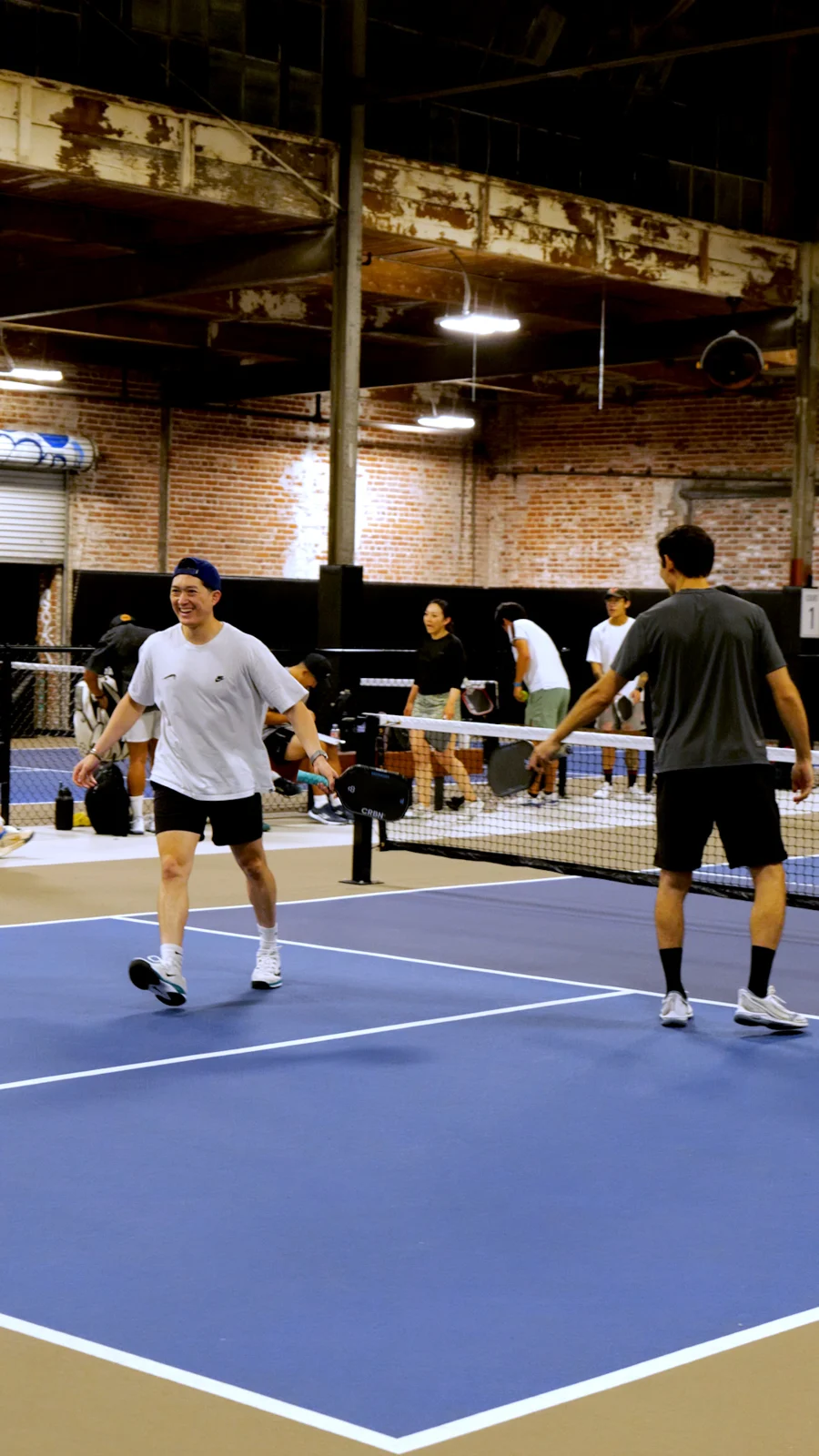
Across three separate organizations covered in this issue, the same design instinct shows up in different forms: a beginner's first ten minutes on a pickleball court decides whether they come back for a second session, so each smooths a different friction point in that window.
Three specific fixes, three specific problems
Pickle Alley offers ball-machine practice specifically so new players can get controlled, predictable repetitions before facing the unpredictability of a live opponent.1 Pickle Match Club and NYC Pickleball's ladder leagues both remove the "I don't have a partner" barrier entirely by design — sign up alone, and rotating doubles partners are built into every session.23 And LA Pickle Club's beginner rules guide puts the kitchen — the sport's single most counter-intuitive rule — first, not last, specifically because it's the fault beginners repeat most.4
Competitive Meta & Biomechanical Reset Dynamics
At the professional championship tier, this dynamic highlights a macro shift in how tour players construct points from the transition zone. As paddle face dwell times decrease and power-core carbon fiber compositions accelerate ball speeds toward 65 mph, winning margins are determined not by baseline groundstrokes but by 0.19-second reflex exchanges at the non-volley zone line.1 Tactical video breakdown confirms that top-seeded competitors are systematically prioritizing aggressive counter-punches over defensive resets, forcing opponents to speed up from disadvantageous low-contact heights.1
This evolution has triggered a parallel restructuring of athlete training regimens and commercial brand alignment. Tour pros now operate specialized movement labs with high-speed optical tracking, calibrating paddle balance weights to within tenths of an ounce while managing heavy tournament schedules across national circuits.1 As commercial endorsement portfolios expand into footwear, nutritional recovery, and regional club franchises, top athletes are establishing durable enterprise equity across the evolving professional sports landscape.1
Sources
Every fact above comes from these public pages. Open the original to check it, or to read further.
- Pickle AlleyPickleball Courts in Los AngelesCaptured Sep 27, 2026
- Pickle Match ClubPickle Match Club homeCaptured Sep 27, 2026
- NYC PickleballNYC Pickleball LeaguesCaptured Sep 27, 2026
- LA Pickle Club5 Rules of PickleballCaptured Sep 27, 2026
Chapter 06 · Club & CommunityRead it in the issue →