Pickle Match Club turns a weeknight into a season.
No owned courts, no permanent home — just a repeating weekly-to-quarterly structure that has run over 100 events since December 2024, and a self-reported community of 674 players.
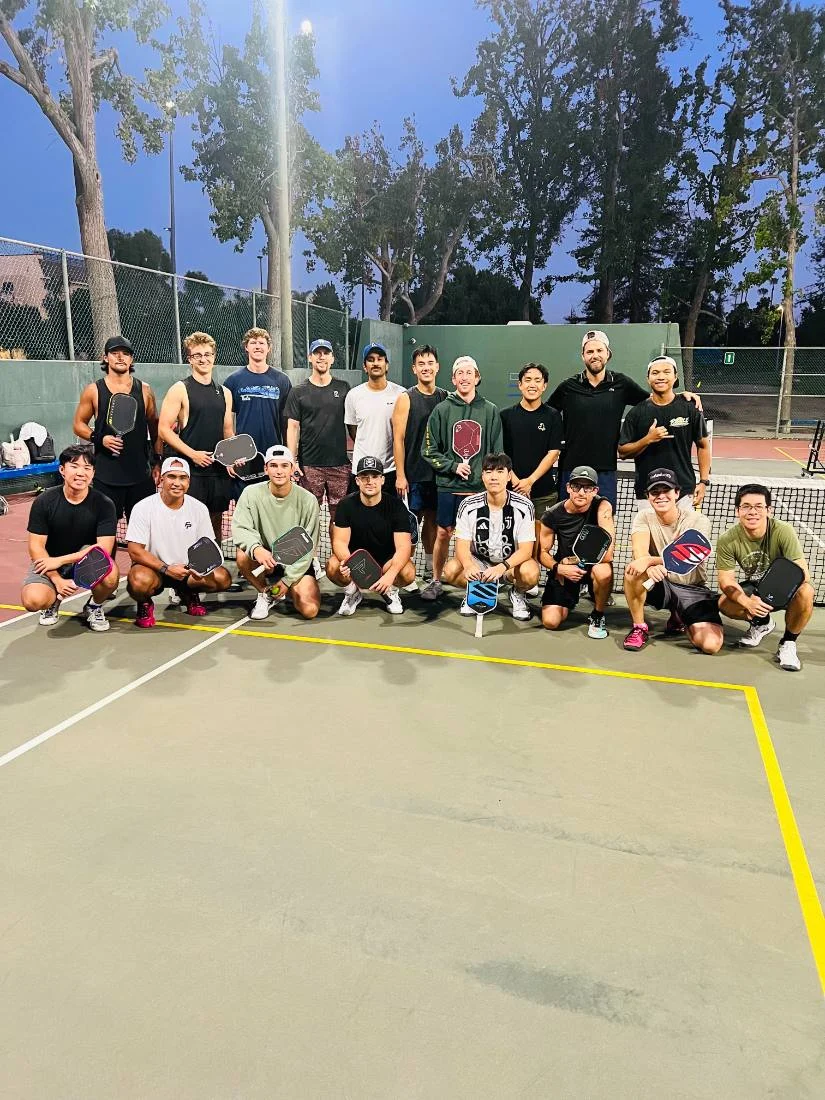
A single Tuesday night of round robins doesn't automatically add up to a season. Pickle Match Club's whole design is built to make sure it does: a repeating weekly, monthly and quarterly structure layered on top of ordinary drop-in play across Los Angeles courts.1
How one night becomes a season
"PMC Open" is the base layer — weekly nights rotating through ladders, round robins, fixed-partner formats, and DUPR-rated or moneyball games. Every point earned there feeds into the monthly "PMC Series" standings, tracked by division, which reset on the first of each month. Four times a year, the top monthly finishers earn a spot in "The Pickle Match Cup," the club's own seeded quarterly major.1 Themed social nights — a summer luau, a holiday event — run alongside the same Series points structure, so a purely social night still counts toward a player's season.1
Chart · Pickle Match Club, self-reported
674 players, more than two check-ins apiece on average
Cumulative totals since the club's December 2024 founding
- 674 players, more than two check-ins apiece on average
- Check-ins
- 1,631
- Players
- 674
Roughly 2.4 recorded check-ins per player, on averageDerived: 1,631 ÷ 674 ≈ 2.4
Source: Pickle Match Club, self-reported totals on its own site
Figures are self-reported by the club, not independently audited; averages obscure a likely wide spread between casual and regular attendees.
Municipal Planning & Facility Capital Horizons
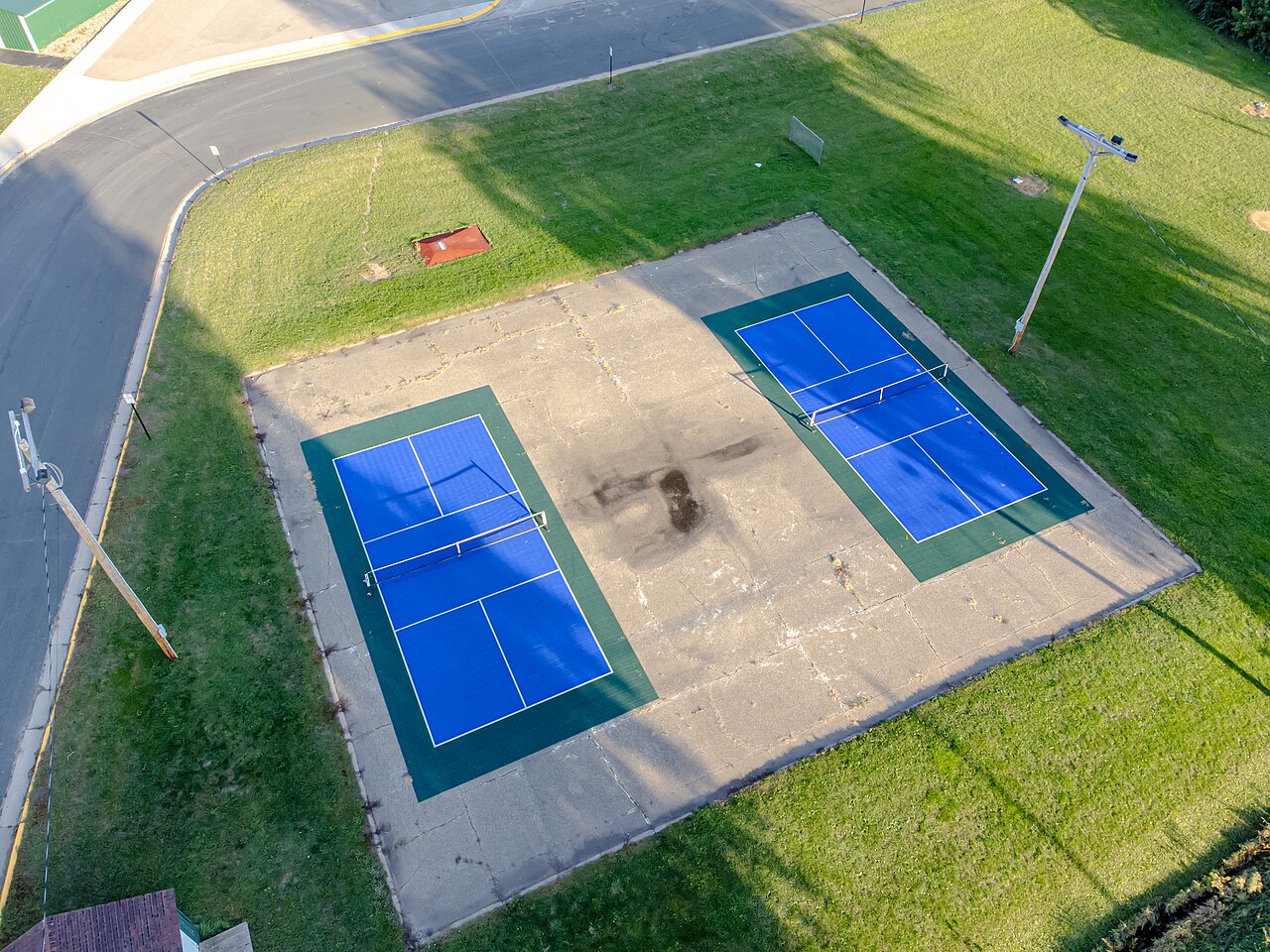
Beyond the immediate scheduling schedule, this facility illustrates the broader capital equation facing modern municipal planners. Converting public asphalt to dedicated court layouts is no longer an isolated park experiment; it represents a fundamental re-rating of recreational space efficiency.1 Where traditional tennis layouts support four players across 7,200 square feet, a multi-court pickleball footprint accommodates sixteen or more concurrent participants, quadrupling hourly throughput while concentrating court-wear dynamics on high-friction zones.1
For city agencies and concession operators, the ongoing operational bottleneck remains sound ecology and off-peak throughput management. High-frequency paddle impact at 1.2 kHz requires deliberate acoustic buffering, and the surrounding neighborhood stakeholders increasingly demand sound-mitigation curtains, verified decibel monitoring, and structured ladder rotations before greenlighting additional capital permits.1 As public recreation departments balance dedicated access against legacy court reservations, this location serves as a critical benchmark for urban density planning across the regional sports network.1
Sources
Every fact above comes from these public pages. Open the original to check it, or to read further.
- Pickle Match ClubPickle Match Club — Los Angeles pickleball events, round robins and tournamentsCaptured Sep 27, 2026
Chapter 06 · Club & CommunityRead it in the issue →