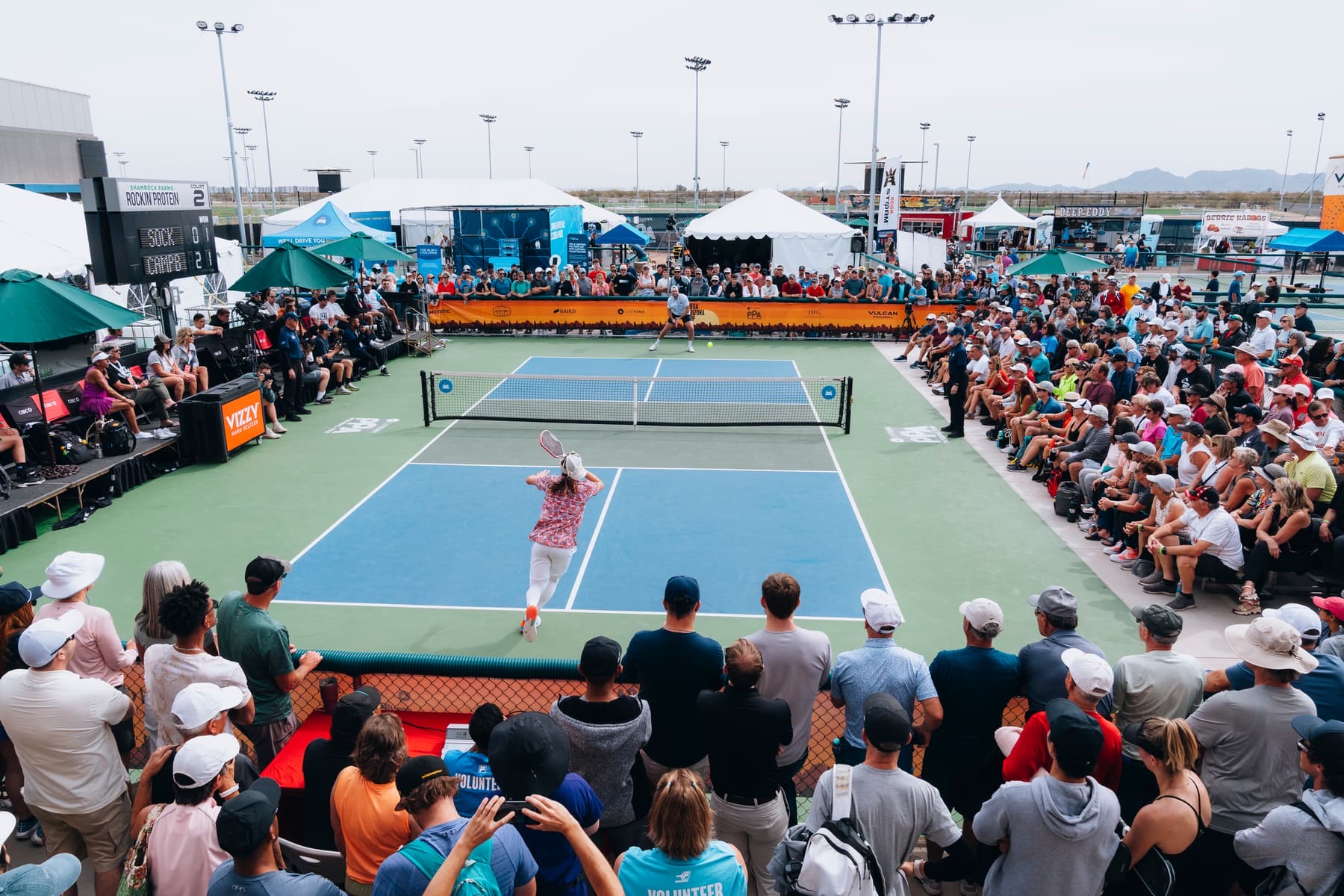
Club board: CityPickle leads the destination lane.
CityPickle's pitch is not just courts — it's a destination, with a bar, a restaurant, and a $100 million, 20-year city contract behind its flagship site.
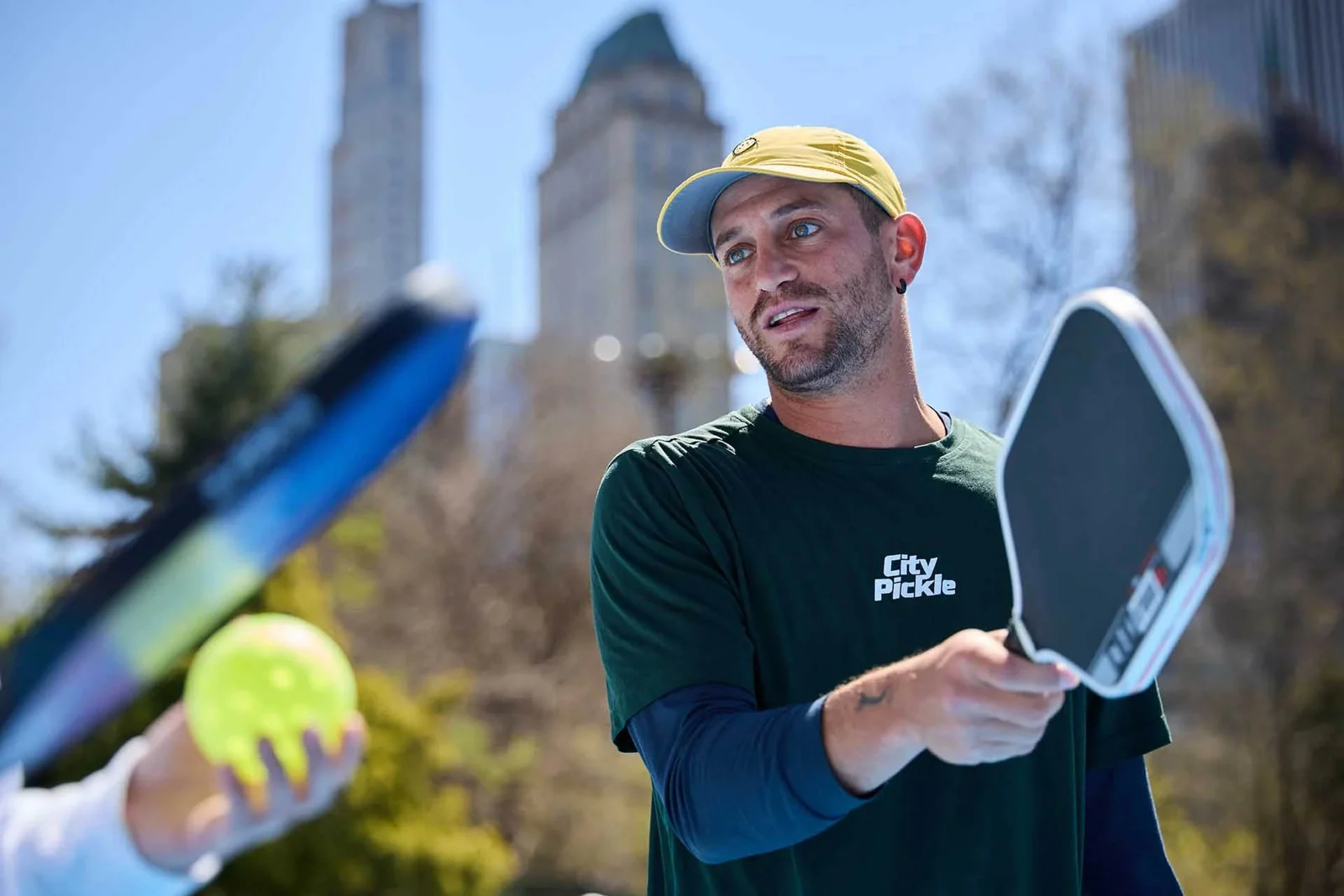
In the destination lane of this issue's club board, CityPickle is the clearest example: a club built around the idea that pickleball is a night out, not just a workout.1 Its own site frames the offer plainly: "Play. Eat. Drink. Connect."1
This issue covers CityPickle's largest site — the 20-year, $100+ million Wollman Rink concession in Central Park — in full elsewhere. On the club-board comparison specifically, what stands out is the model repeated across locations: a new Times Square flagship inside the Paramount Building with seven courts, a full bar and restaurant and city views; a Brooklyn Bridge location debuting in spring 2026; and a 25-court pickleball-and-padel facility, Boca Paddle, under development in Florida.2
Set against the other two entries on this issue's club board, CityPickle's position is distinct: Pickle Match Club (covered next) owns no venues and competes on cadence; the Los Angeles club spectrum (covered after that) spans everything from a purpose-built warehouse gym to a city-park concession. CityPickle is the only one of the three actively negotiating nine-figure municipal contracts for a single flagship site.
Municipal Planning & Facility Capital Horizons
Beyond the immediate scheduling schedule, this facility illustrates the broader capital equation facing modern municipal planners. Converting public asphalt to dedicated court layouts is no longer an isolated park experiment; it represents a fundamental re-rating of recreational space efficiency.1 Where traditional tennis layouts support four players across 7,200 square feet, a multi-court pickleball footprint accommodates sixteen or more concurrent participants, quadrupling hourly throughput while concentrating court-wear dynamics on high-friction zones.1
For city agencies and concession operators, the ongoing operational bottleneck remains sound ecology and off-peak throughput management. High-frequency paddle impact at 1.2 kHz requires deliberate acoustic buffering, and the surrounding neighborhood stakeholders increasingly demand sound-mitigation curtains, verified decibel monitoring, and structured ladder rotations before greenlighting additional capital permits.1 As public recreation departments balance dedicated access against legacy court reservations, this location serves as a critical benchmark for urban density planning across the regional sports network.1
Sources
Every fact above comes from these public pages. Open the original to check it, or to read further.
- CityPickleCityPickle homeCaptured Sep 27, 2026
- The Dink PickleballCityPickle Lands 20-Year, $100 Million Deal to Keep Pickleball in NYC's Central ParkNov 7, 2025
Chapter 04 · Tour & RankingsRead it in the issue →