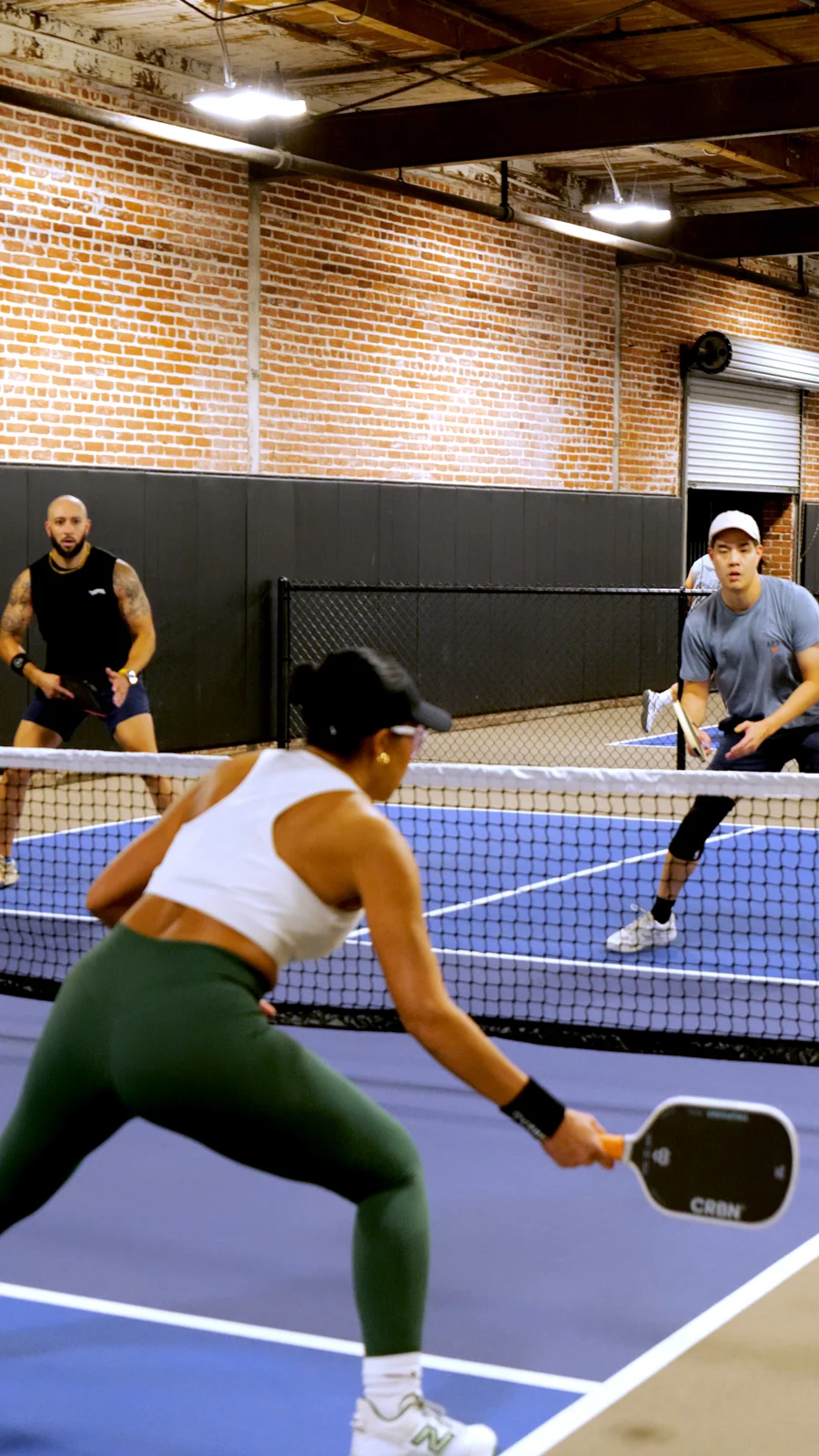
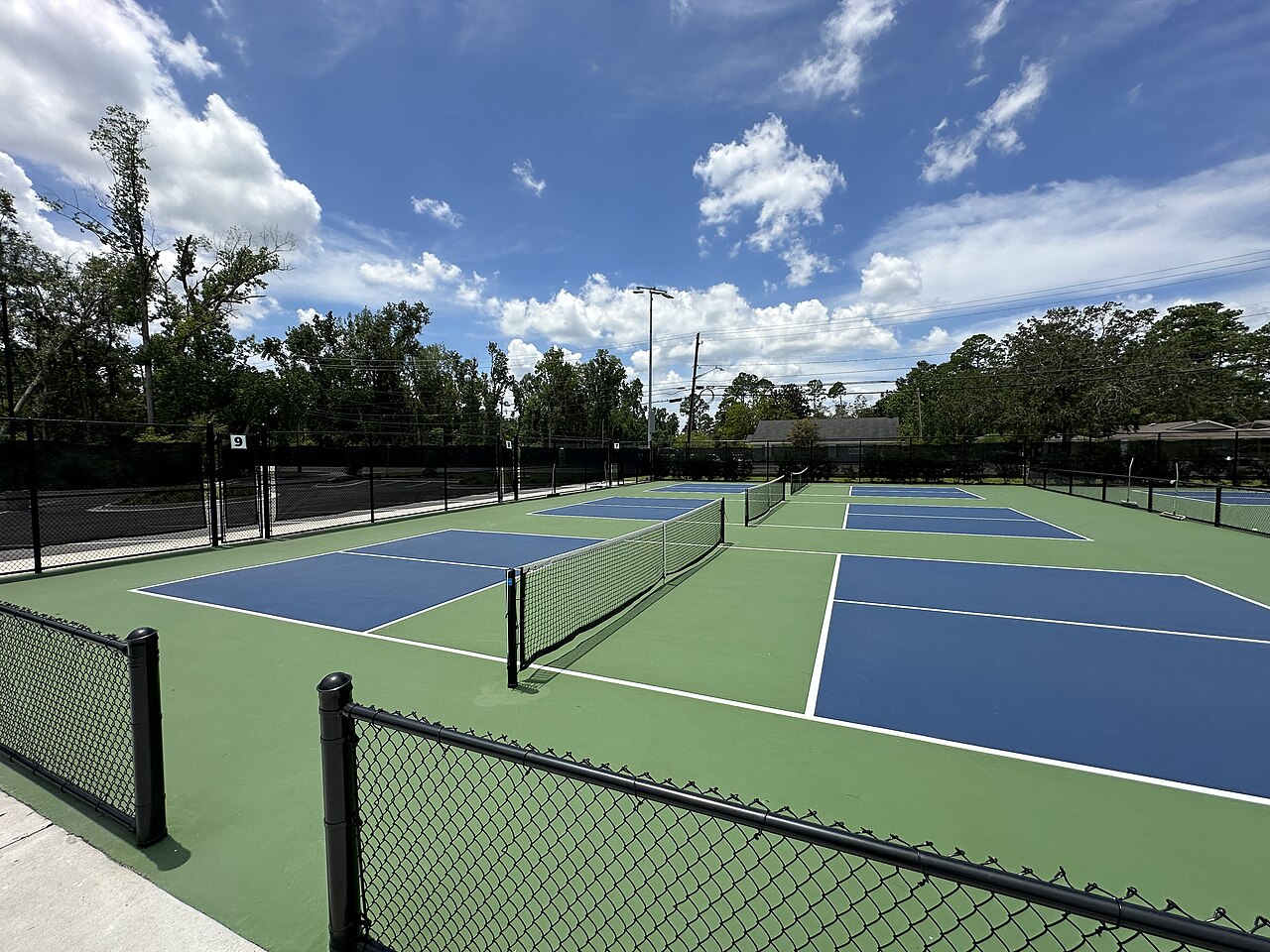
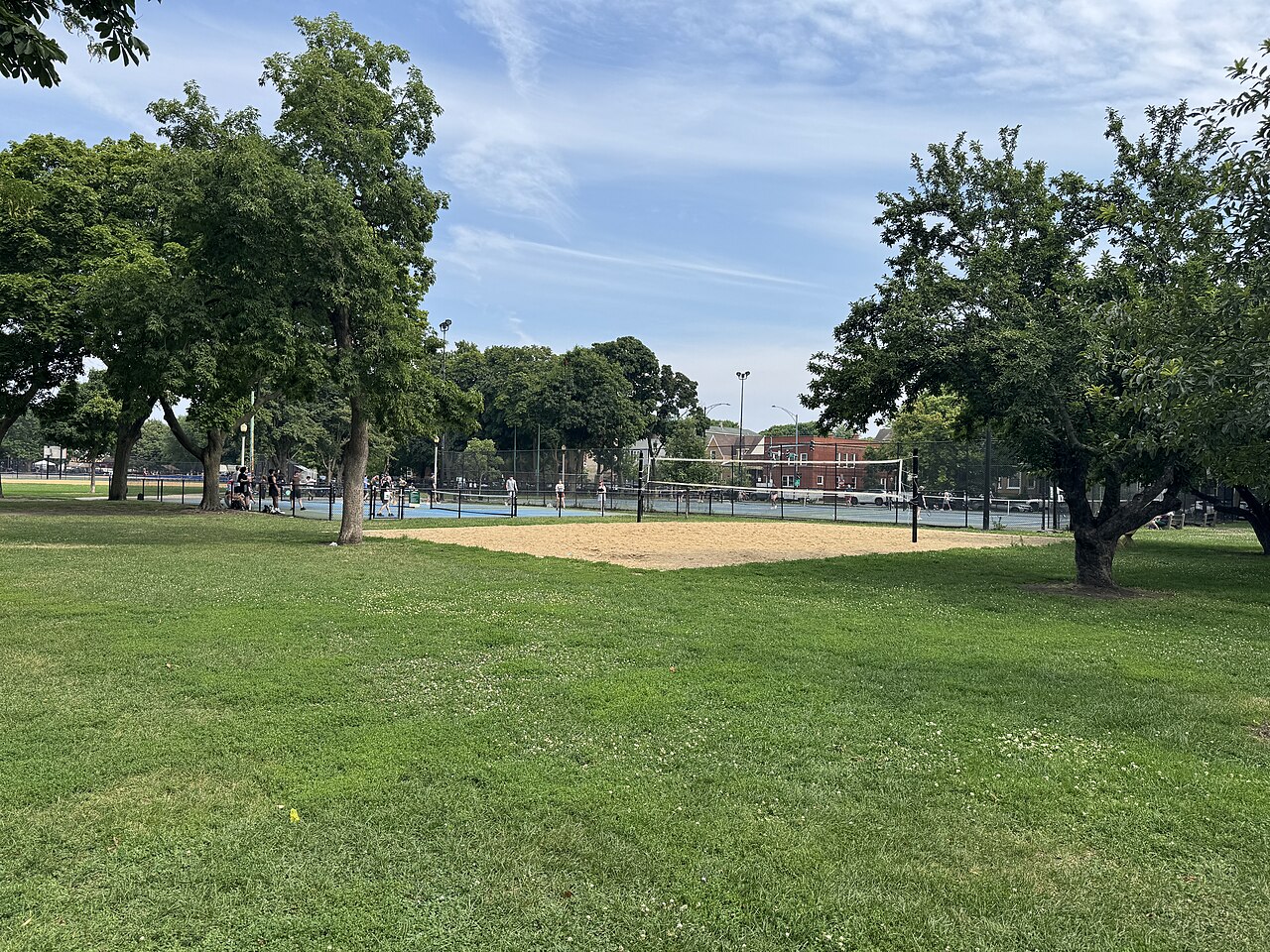
A city of courts is an architecture story.
A tennis coach with a 4:30 a.m. WhatsApp group. A filmmaker who sold a film while waiting for a court. Los Angeles Parks' own committee chair explaining the plan. Hermon Park is where LA's court math turns into a real argument.
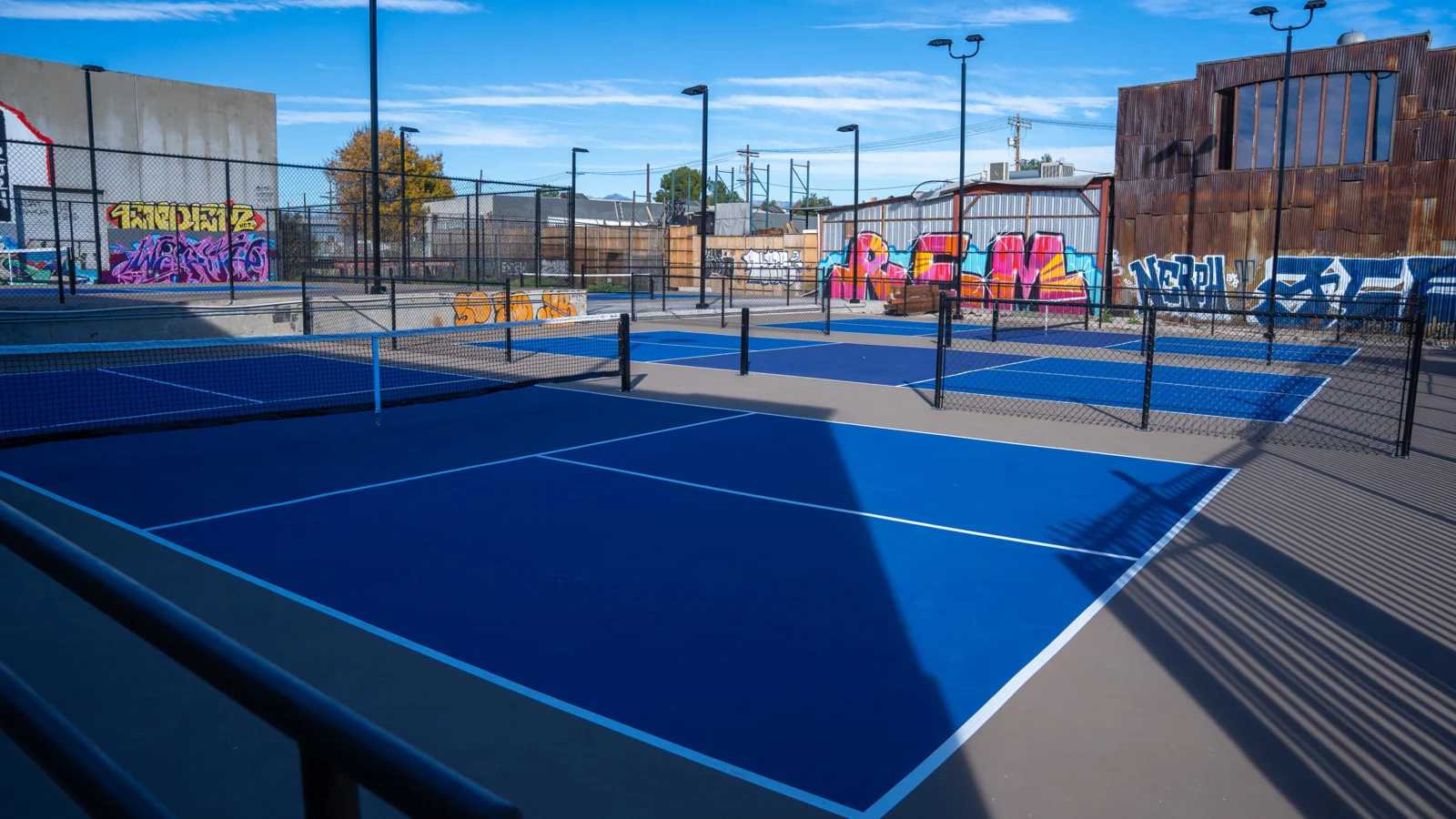
Real estate is always at a premium in Los Angeles, and that scarcity now runs straight through the city's public courts. At Hermon Park in northeast LA — a multi-acre green space with a playground, picnic tables and 11 free tennis courts, most first-come, first-served — the city's Department of Recreation and Parks proposed converting one tennis court into four pickleball courts.1 It is not the first LA park caught in this argument, and it will not be the last.
What tennis players are actually saying
Cynthia Su, a freelance film worker who plays tennis most days at Hermon, has become an organizer against court conversions after a similar fight at Griffith-Riverside in late 2023, where a petition stopped a plan to demolish spectator bleachers for six pickleball courts.1 "I'm not fundamentally against pickleball," she said. "I just wish it didn't have to come at the expense of an existing sport that already means so much to so many people."1 Tennis coach Alex Haug, who works out of Hermon almost daily, called the idea of converting courts "kind of upsetting," citing consistently long tennis wait times.1
You can just come at any point and just play. In L.A. that is a rarity.
Alex Haug, tennis coach, on Hermon Park's free courts
What pickleball players are actually saying
Pickleball players describe the identical problem from the other side. Tim Cruz, who lives in Los Feliz and works in film, says he court-hops between Glendale, West Hollywood, Pasadena and Burbank because "it's hard to get a good court rotation." In Glendale's four pickleball courts, he says weekend waits can run up to 90 minutes with roughly 30 players on the sideline.1 His read on the imbalance: "Most of the time, the tennis courts are empty. Then you just pan over to the pickleball courts and there's just like tons of people waiting. Why? Because the barrier of entry in pickleball versus tennis is vastly different."1
The city's own numbers and plan
Juan Aynat, who chairs LA Recreation and Parks' pickleball committee, gave LAist the clearest official accounting: the city has about 20 dedicated, lighted pickleball courts among roughly 60 free courts citywide.1 The department's strategy has shifted from shared-use "hybrid" courts toward standalone dedicated pickleball facilities — four debuted in Porter Ranch the previous summer — specifically so no tennis court has to be displaced.1 "We are definitely headed in the direction of just doing dedicated facilities," Aynat said, while acknowledging tennis players' concerns: "We have way more tennis courts, obviously."1
Chart · LA's free public courts
Dedicated pickleball is still a fraction of the city's free courts
LA Recreation and Parks free court inventory, as described by the department's pickleball committee chair, 2025
- Dedicated pickleball is still a fraction of the city's free courts
- Total free courts
- ~60
- Dedicated pickleball
- ~20
About one in three free city courts is dedicated to pickleballDerived: 20 ÷ 60 ≈ 0.33
Source: Juan Aynat, LA Dept. of Recreation and Parks, via LAist, Apr 6, 2025
Figures are approximate, as stated by the department; they do not include shared-use courts striped for both sports.
How Hermon Park's plan actually changed
The original Hermon proposal was to replace two tennis courts with eight pickleball courts; it was scaled back to one court and four pickleball courts after tennis-community concerns.1 Aynat pointed to a specific access gap driving the choice of that park: the nearby Montecito Heights Recreation Center has only two pickleball courts, and the department had been fielding requests for more access in that part of the city.1
Municipal Planning & Facility Capital Horizons
Beyond the immediate scheduling schedule, this facility illustrates the broader capital equation facing modern municipal planners. Converting public asphalt to dedicated court layouts is no longer an isolated park experiment; it represents a fundamental re-rating of recreational space efficiency.1 Where traditional tennis layouts support four players across 7,200 square feet, a multi-court pickleball footprint accommodates sixteen or more concurrent participants, quadrupling hourly throughput while concentrating court-wear dynamics on high-friction zones.1
For city agencies and concession operators, the ongoing operational bottleneck remains sound ecology and off-peak throughput management. High-frequency paddle impact at 1.2 kHz requires deliberate acoustic buffering, and the surrounding neighborhood stakeholders increasingly demand sound-mitigation curtains, verified decibel monitoring, and structured ladder rotations before greenlighting additional capital permits.1 As public recreation departments balance dedicated access against legacy court reservations, this location serves as a critical benchmark for urban density planning across the regional sports network.1
Sources
Every fact above comes from these public pages. Open the original to check it, or to read further.
Chapter 03 · Los AngelesRead it in the issue →