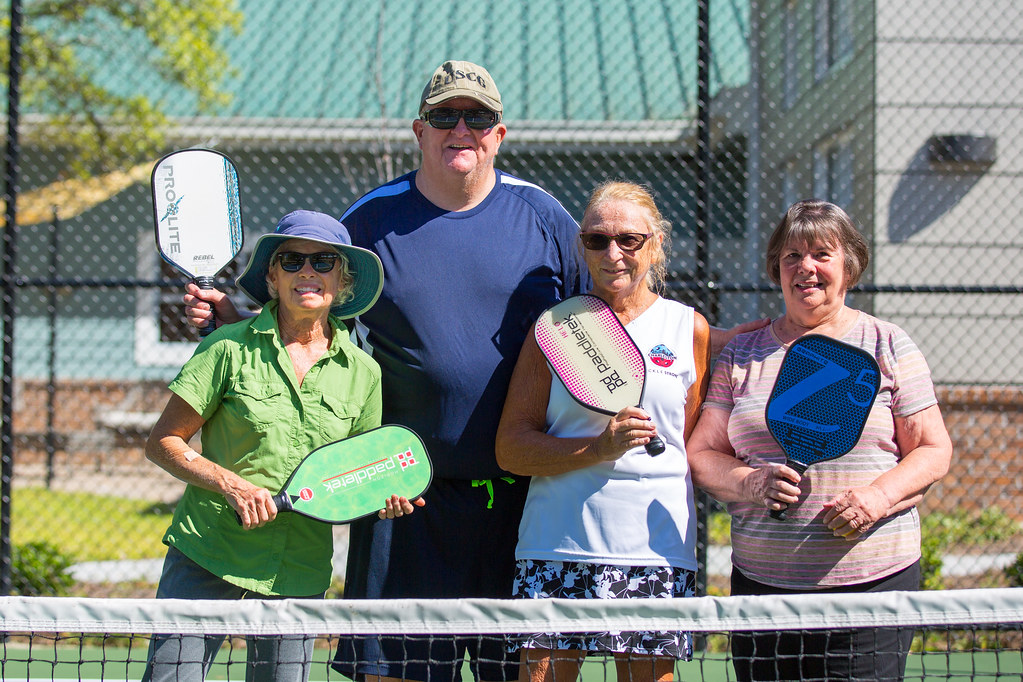
Court-night scenes we all recognize.
The paddle-tap handshake, the argument over a line call, the player who never leaves the kitchen edge — pickleball's fast growth has produced a shared set of recognizable scenes faster than almost any other sport.
Most sports take decades to build a shared library of recognizable in-jokes and rituals. Pickleball, growing as fast as USA Pickleball's own numbers document elsewhere in this issue — 104,828 members and 18,258 places to play as of 2025 — appears to have compressed that timeline dramatically, and dedicated pickleball media has taken notice, running recurring culture and lifestyle content alongside serious competitive coverage.12
That speed matters for how community forms. A shared joke or recognizable scene — the post-point paddle tap, the inevitable disputed line call, the player who camps at the kitchen edge all night — does real social work: it gives strangers at a drop-in session a common language before they've even played a point together.
Municipal Planning & Facility Capital Horizons
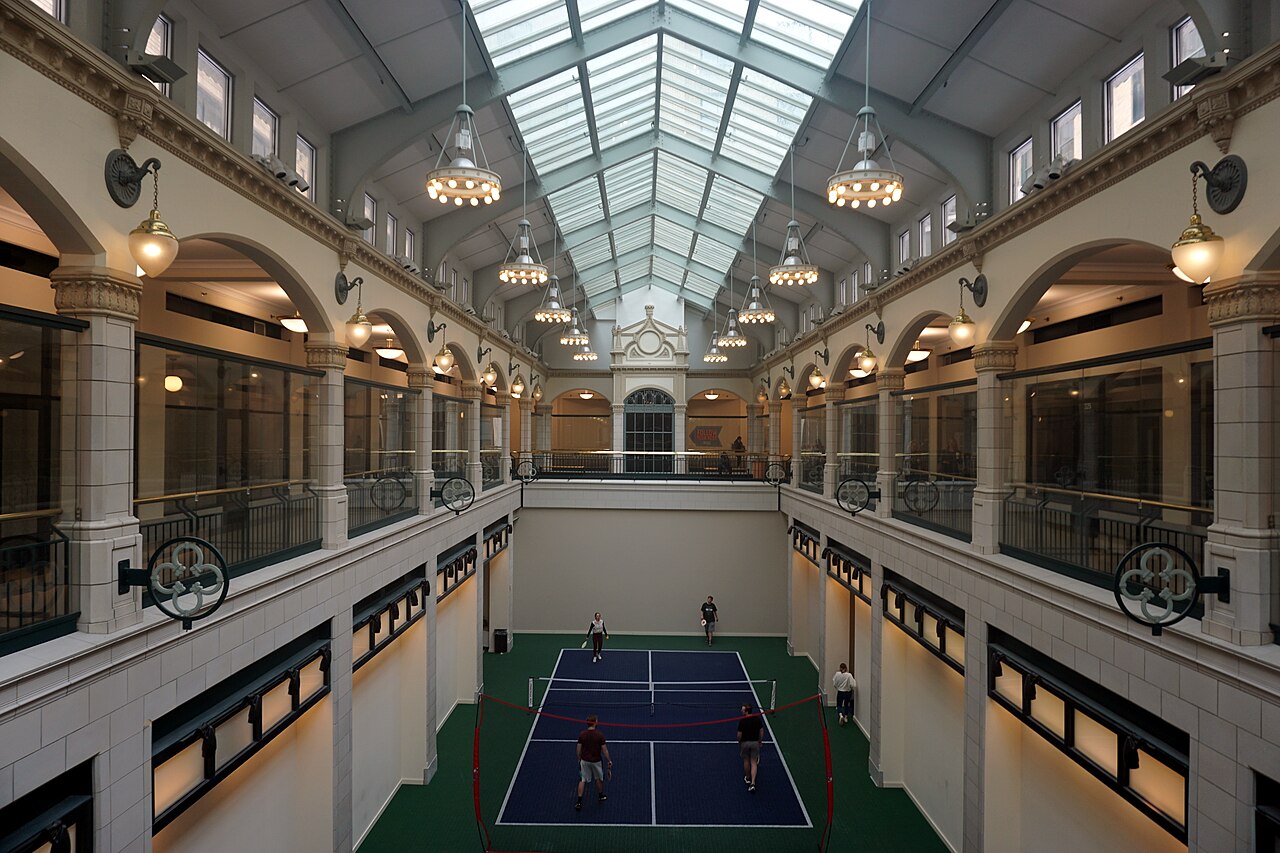
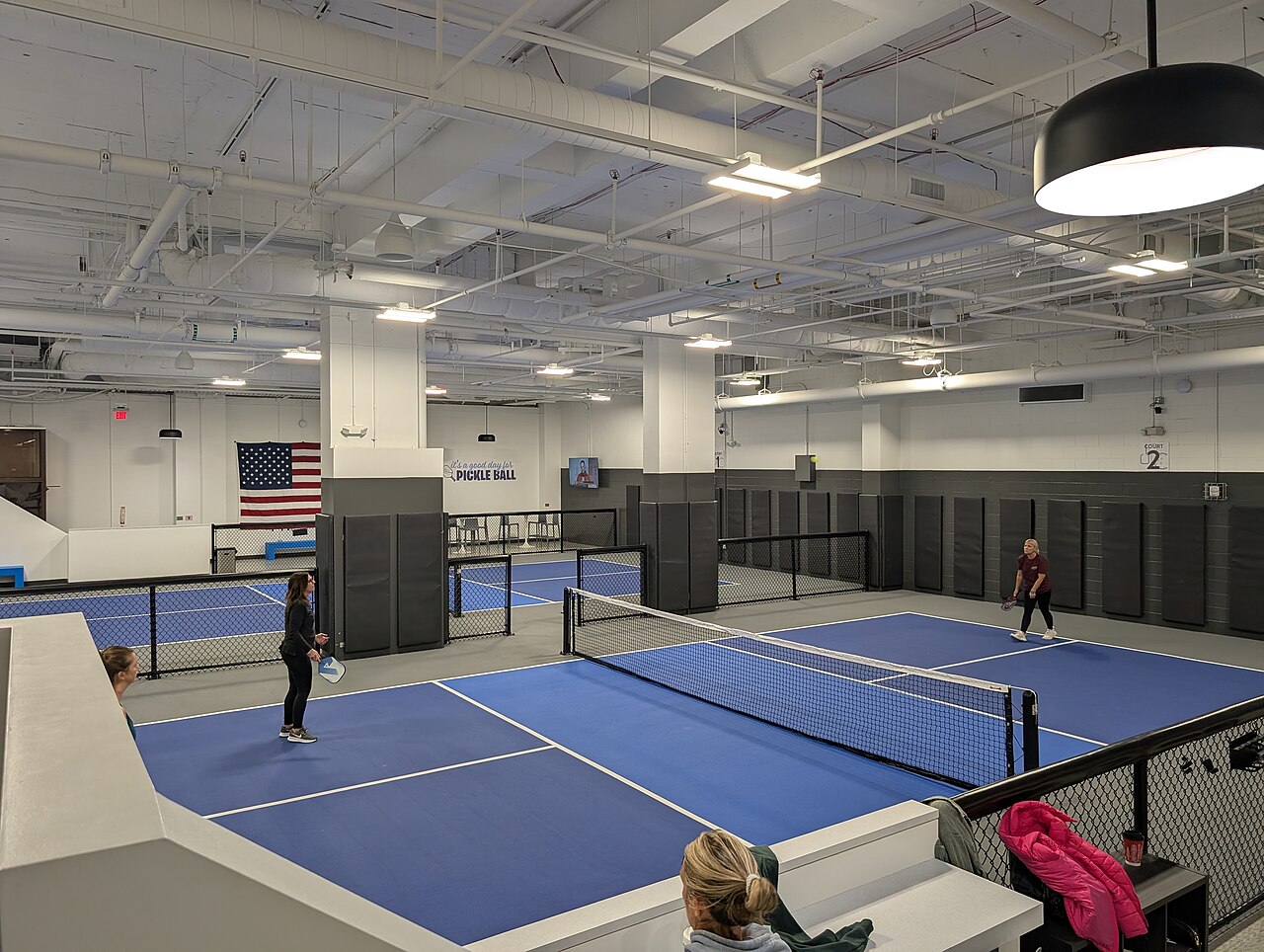
Beyond the immediate scheduling schedule, this facility illustrates the broader capital equation facing modern municipal planners. Converting public asphalt to dedicated court layouts is no longer an isolated park experiment; it represents a fundamental re-rating of recreational space efficiency.1 Where traditional tennis layouts support four players across 7,200 square feet, a multi-court pickleball footprint accommodates sixteen or more concurrent participants, quadrupling hourly throughput while concentrating court-wear dynamics on high-friction zones.1
For city agencies and concession operators, the ongoing operational bottleneck remains sound ecology and off-peak throughput management. High-frequency paddle impact at 1.2 kHz requires deliberate acoustic buffering, and the surrounding neighborhood stakeholders increasingly demand sound-mitigation curtains, verified decibel monitoring, and structured ladder rotations before greenlighting additional capital permits.1 As public recreation departments balance dedicated access against legacy court reservations, this location serves as a critical benchmark for urban density planning across the regional sports network.1
Sources
Every fact above comes from these public pages. Open the original to check it, or to read further.
- USA PickleballAnnual Growth Report: Key InsightsUpdated Jan 30, 2026
- The Dink PickleballThe Dink Pickleball: news and cultureCaptured Sep 27, 2026
Chapter 07 · CultureRead it in the issue →