A ranking is a timestamp with a job.
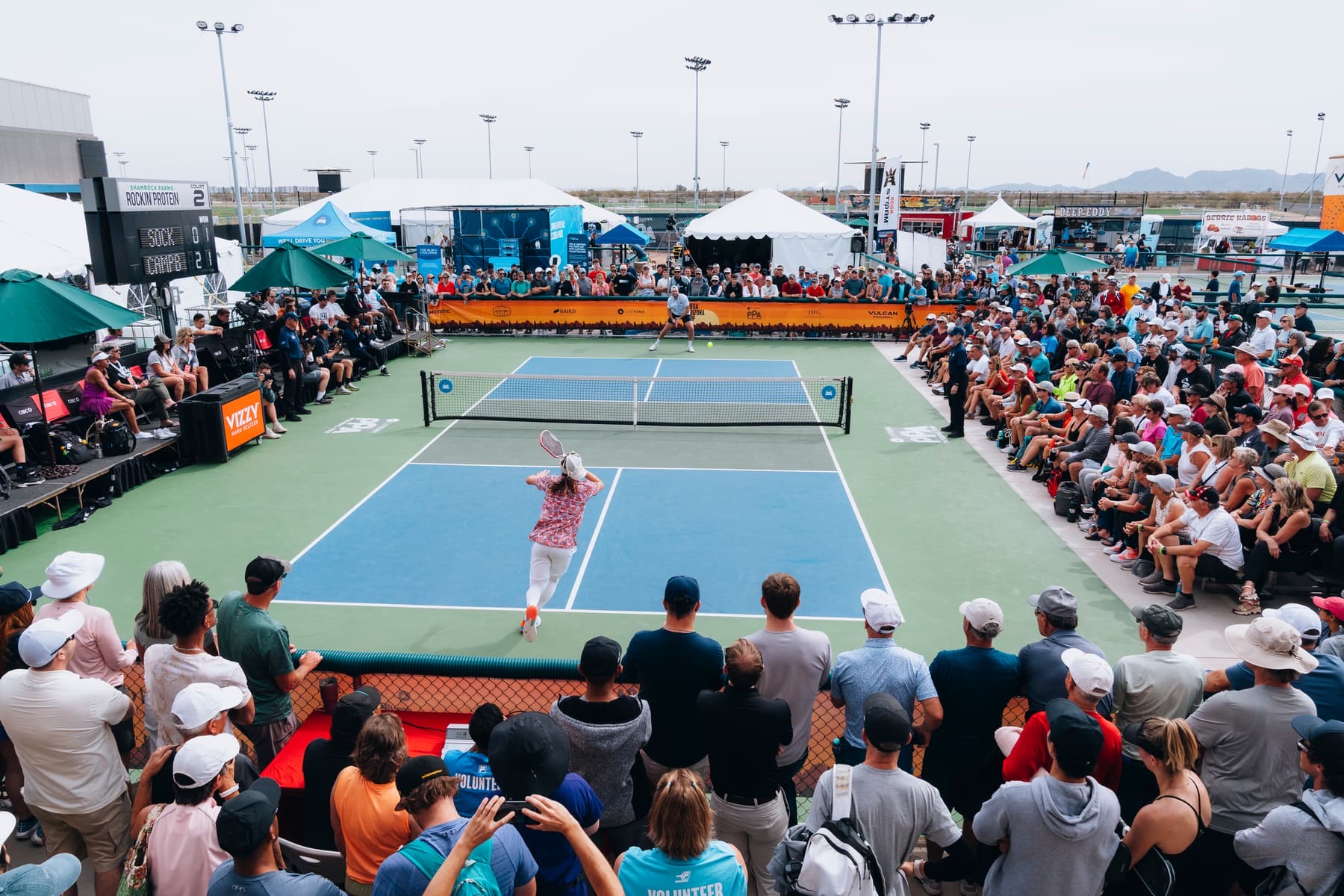
The PPA's new World Pickleball Rankings did real work at the Arizona Open — deciding who skipped straight to the round of 16 — which is the clearest way to understand what a ranking is actually for.
A ranking system is easy to treat as a scoreboard — a fixed measure of who is best. What the PPA Tour's new World Pickleball Rankings actually showed at the Veolia Arizona Open is more useful: a ranking is a timestamp that does a specific job, and the job changes what it needs to measure.1
The job it did in Mesa
At the Arizona Open, the World Pickleball Rankings decided the round-of-16 byes — the top four players or teams in each draw skipped straight past the early rounds.1 That single mechanical fact is the entire point: the ranking wasn't a debate topic, it was an input into the bracket. Ben Johns, seeded 22nd in singles by tournament seeding, still received a bye based on his world ranking rather than his event seed.1
That distinction — seed versus ranking — is worth sitting with. A tournament seed reflects how organizers expect a player to perform in this specific field. A ranking reflects a longer accumulated record. When the two disagree, as they did with Johns, the ranking can override the seed for byes specifically, which is a meaningful structural choice about what the tour wants to reward.
Rankings are also generational
The same logic runs all the way down to junior pickleball, where the Junior PPA's own rankings — covered elsewhere in this issue — use points, not age or seed, to rank a 13-year-old ahead of 17-year-olds in the same division.2 In both cases, adult and junior, a ranking is doing the same job: converting an accumulated history of results into a single number that a bracket-maker can act on.
Competitive Meta & Biomechanical Reset Dynamics
At the professional championship tier, this dynamic highlights a macro shift in how tour players construct points from the transition zone. As paddle face dwell times decrease and power-core carbon fiber compositions accelerate ball speeds toward 65 mph, winning margins are determined not by baseline groundstrokes but by 0.19-second reflex exchanges at the non-volley zone line.1 Tactical video breakdown confirms that top-seeded competitors are systematically prioritizing aggressive counter-punches over defensive resets, forcing opponents to speed up from disadvantageous low-contact heights.1
This evolution has triggered a parallel restructuring of athlete training regimens and commercial brand alignment. Tour pros now operate specialized movement labs with high-speed optical tracking, calibrating paddle balance weights to within tenths of an ounce while managing heavy tournament schedules across national circuits.1 As commercial endorsement portfolios expand into footwear, nutritional recovery, and regional club franchises, top athletes are establishing durable enterprise equity across the evolving professional sports landscape.1
Sources
Every fact above comes from these public pages. Open the original to check it, or to read further.
- Carvana PPA TourStorylines for the Veolia Arizona OpenSep 9, 2026
- Junior PPA TourJunior PPA Tour: rankingsCaptured Sep 28, 2026
Chapter 04 · Tour & RankingsRead it in the issue →