Council chambers are part of the court.
West Hollywood’s Plummer Park item turned a scheduling question into a public argument about who gets two courts, and it shows how the sport now grows: one agenda line at a time.
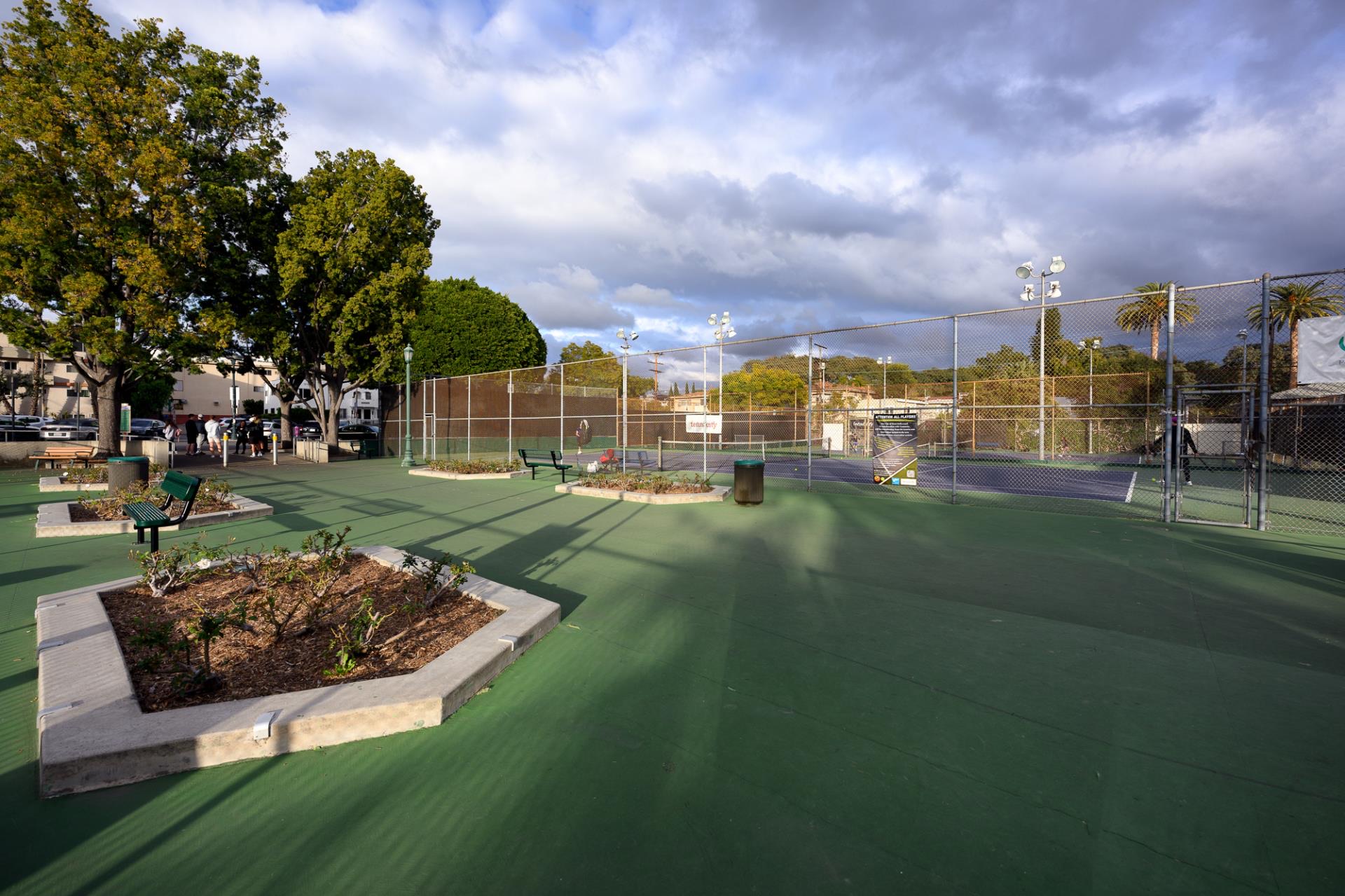
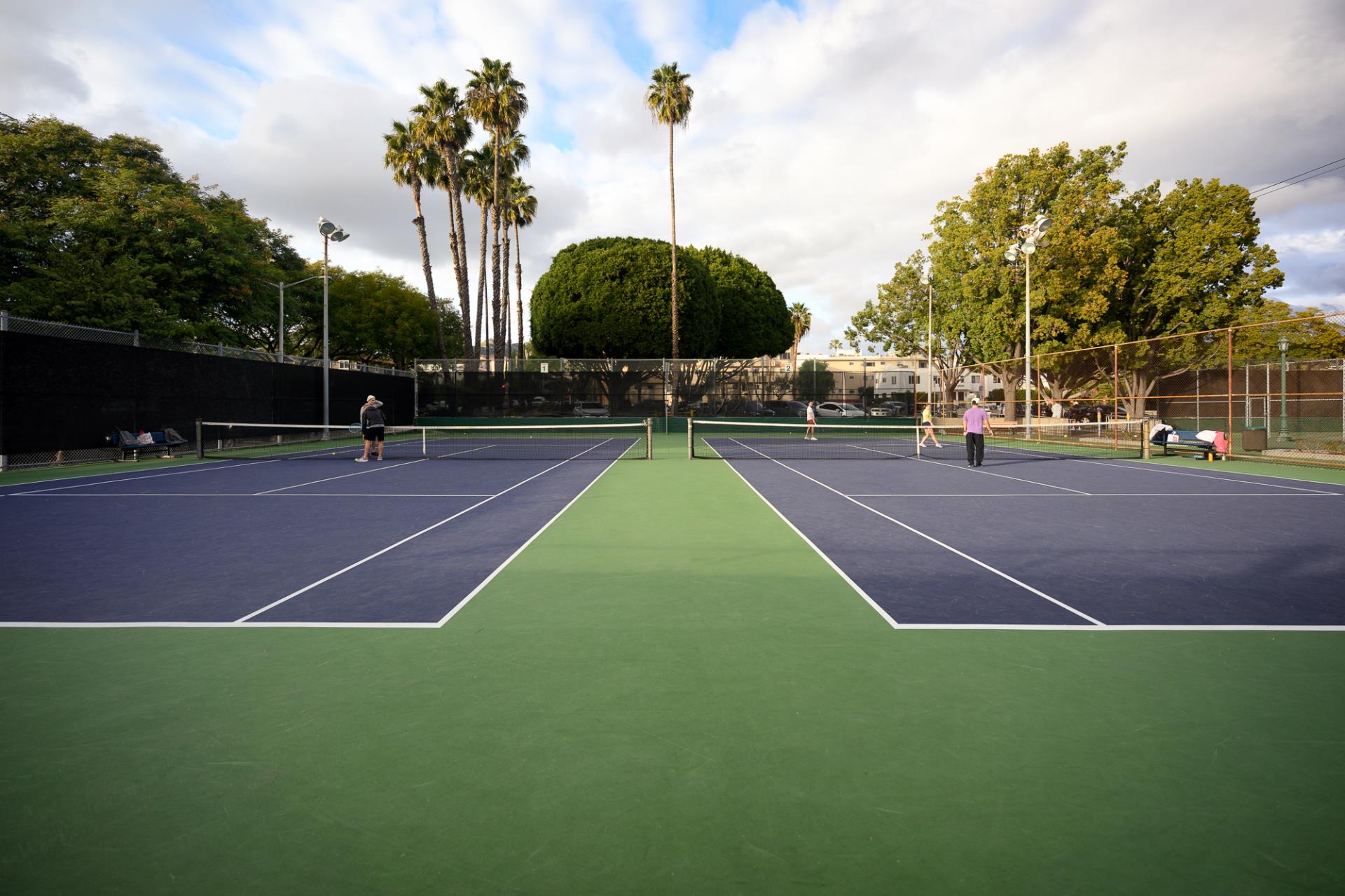
Plummer Park sits on North Vista Street in West Hollywood, and on most days its courts look like any busy public facility: seven lighted tennis courts, a mixed-use paddle court, a pro shop, and a reservation app that everyone refreshes.3 What changed this year is that the courts became an agenda item.
On March 2, 2026, the City Council took up item F.6, “Dedicated Pickleball Courts at Plummer Park,” initiated by Councilmember John M. Erickson.1 The item asked staff to increase dedicated pickleball access in two phases. First, Courts 6 and 7 would be reservable only for pickleball, by or before July 1, 2026. Second, after community outreach and feedback, those two courts would be restriped for pickleball only.1
How the courts are shared now
The staff report is specific about the current layout. Courts 1 through 5 are tennis only. Courts 3, 4 and 5 are teaching courts, where lessons by the city’s contractor take priority. Courts 6 and 7 are shared by tennis and pickleball, and one more court is a paddle court that is also open to pickleball.1 The two courts in question are the ones closest to Great Hall.1
Day-to-day operation is contracted. The city works with Tennacity at Plummer Park and West Hollywood Park; its contract covers court reservations, open play, lessons, special events and programming.1 Players book through the PlayByPoint app or website.3
The numbers behind the request
The most useful line in the report is a count. Tennacity’s 2025 figures show about 16,000 pickleball reservations and about 14,000 tennis reservations at Plummer Park over a six-month period.1 The report also notes that about 34,600 registered users are non-residents, compared with a little more than 1,200 West Hollywood residents.1 In other words, a small city’s park is serving a regional crowd.
Chart 1 · Plummer Park bookings
Pickleball out-booked tennis at Plummer Park
Approximate court reservations over a six-month period in 2025
- Pickleball out-booked tennis at Plummer Park
- Pickleball
- ~16,000
- Tennis
- ~14,000
Pickleball ≈ 53% of bookingsDerived: 16,000 ÷ (16,000 + 14,000) = 0.53
Source: City of West Hollywood staff report, item F.6, March 2, 2026 (figures from Tennacity)
The report gives rounded figures and does not say which six months. Reservations are not the same as players or hours played.
The report is candid that the two groups do not agree. The pickleball community has been “very interested” in more dedicated courts, while the tennis community has been “vocally opposed” to losing more tennis courts.1 The topic first surfaced during public comment at a November 12, 2025 Plummer Park subcommittee meeting, where it was not on the agenda.1
What residents told the council
The city’s online comment page for F.6 closed with nine public comments: eight opposed and one in support.2 Most of the opposition came from tennis players who said courts are already hard to reserve. Several suggested the city build new dedicated pickleball courts instead of converting tennis courts, and one pointed out that shared courts with portable nets already work.2
Why is removing tennis courts the only solution for more pickleball courts?
Public comment on item F.6, City of West Hollywood
The single supporting comment was short: more pickleball is a good idea.2 The imbalance is worth reading carefully. Online comments are a record of who wrote in, not a survey of park users, and the booking figures above point the other way.
Cost, timing and what we don’t know
The report lists no fiscal impact for the first phase. Restriping would cost money, and funding for that second phase was to be requested in the Fiscal Year 2026–27 budget. Staff would also check whether the Tennacity agreement needs to change under a new court layout.1 The broader Plummer Park Comprehensive Improvement Plan was running in parallel, with an ad-hoc subcommittee scheduled for March 5, 2026.1
Our capture of the city’s records does not include the council’s final vote on F.6 or a restriping date, so this story does not report an outcome. If you play at Plummer Park, the meeting minutes and the city’s facility page are the places to confirm what changed.23
Meanwhile, the lights
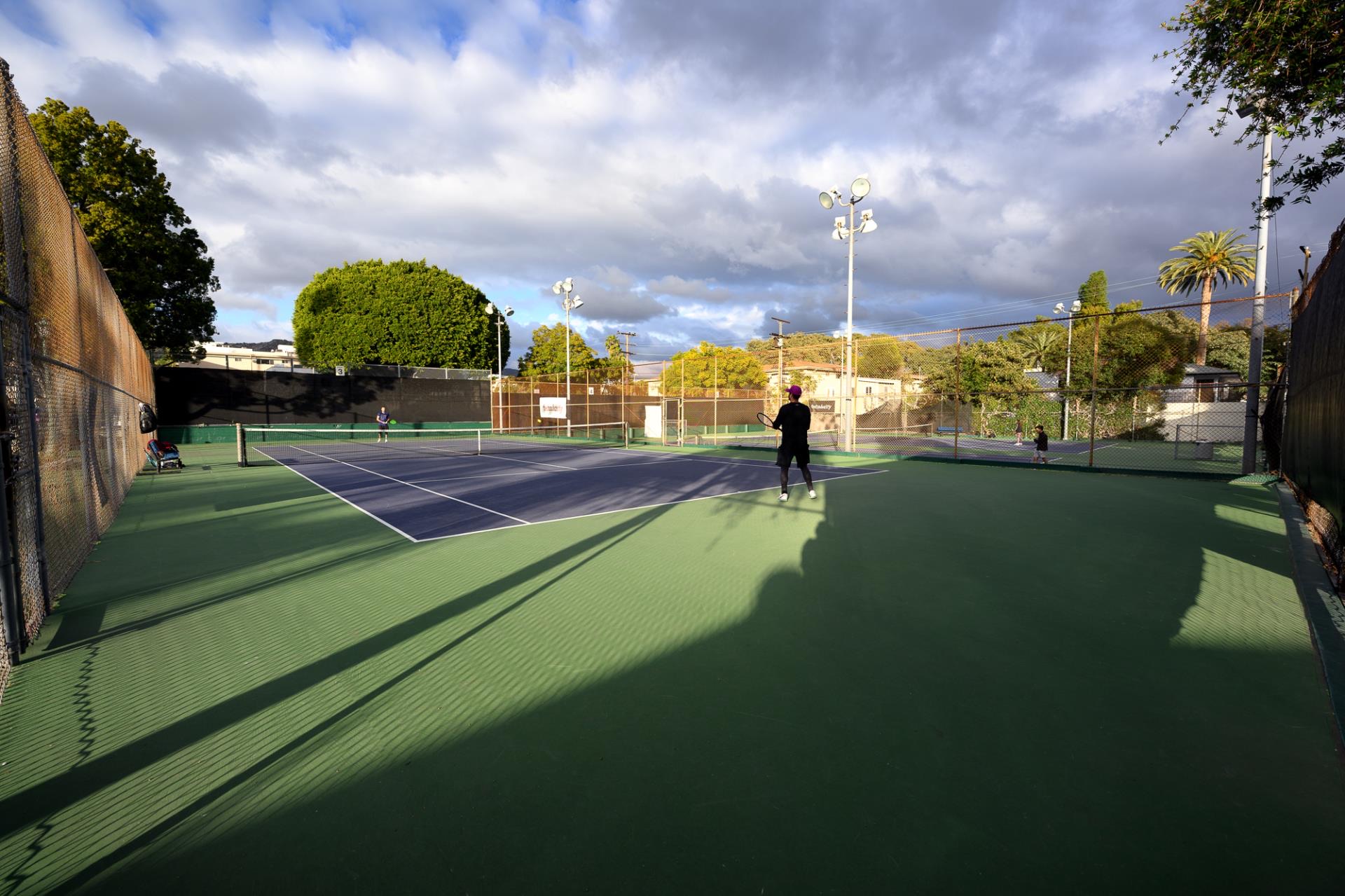
The courts also changed physically this summer. The city’s facility notice set out an LED lighting upgrade starting Monday, August 17, 2026, with estimated completion on Friday, September 4. The work ran on weekday daytimes in stages: Courts 1, 2, 6 and 7 and the paddleball court closed in week one, Courts 3, 4 and 5 in week two, and the courts reopened in week three for control-cabinet work and commissioning.3 It is a reminder that court access is decided by maintenance calendars as well as council votes.
Why this matters beyond one park
Los Angeles is working through the same trade-off at city scale. Its Department of Recreation and Parks says it wants to expand pickleball while “preserving the importance of tennis courts,” and its citywide committee is tasked with finding underused tennis courts for new or hybrid pickleball space.4 Plummer Park is a small, well-documented version of that decision. It shows what the argument looks like when it reaches a council agenda: booking data on one side, long-time users on the other, and a staff plan that tries to phase the change.
Municipal Planning & Facility Capital Horizons
Beyond the immediate scheduling schedule, this facility illustrates the broader capital equation facing modern municipal planners. Converting public asphalt to dedicated court layouts is no longer an isolated park experiment; it represents a fundamental re-rating of recreational space efficiency.1 Where traditional tennis layouts support four players across 7,200 square feet, a multi-court pickleball footprint accommodates sixteen or more concurrent participants, quadrupling hourly throughput while concentrating court-wear dynamics on high-friction zones.1
For city agencies and concession operators, the ongoing operational bottleneck remains sound ecology and off-peak throughput management. High-frequency paddle impact at 1.2 kHz requires deliberate acoustic buffering, and the surrounding neighborhood stakeholders increasingly demand sound-mitigation curtains, verified decibel monitoring, and structured ladder rotations before greenlighting additional capital permits.1 As public recreation departments balance dedicated access against legacy court reservations, this location serves as a critical benchmark for urban density planning across the regional sports network.1
Sources
Every fact above comes from these public pages. Open the original to check it, or to read further.
- City of West HollywoodStaff report: Dedicated Pickleball Courts at Plummer Park (Agenda item F.6)Mar 2, 2026
- City of West Hollywood (SpeakUp)F.6 Dedicated pickleball courts at Plummer Park: agenda item and public commentsMar 2, 2026
- City of West HollywoodPlummer Park Tennis & Pickleball Courts: facility page and lighting noticeAug–Sep 2026
- City of Los Angeles Department of Recreation and ParksPickleballCaptured Sep 27, 2026
Chapter 03 · Los AngelesRead it in the issue →