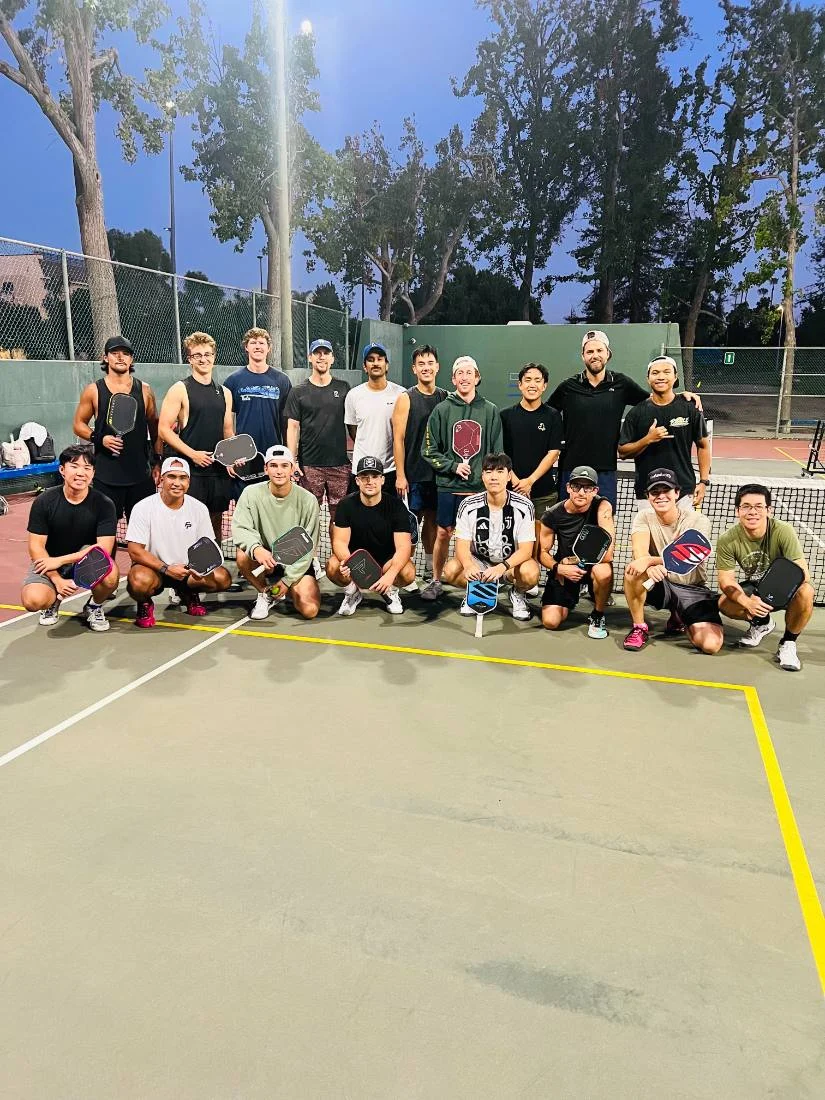
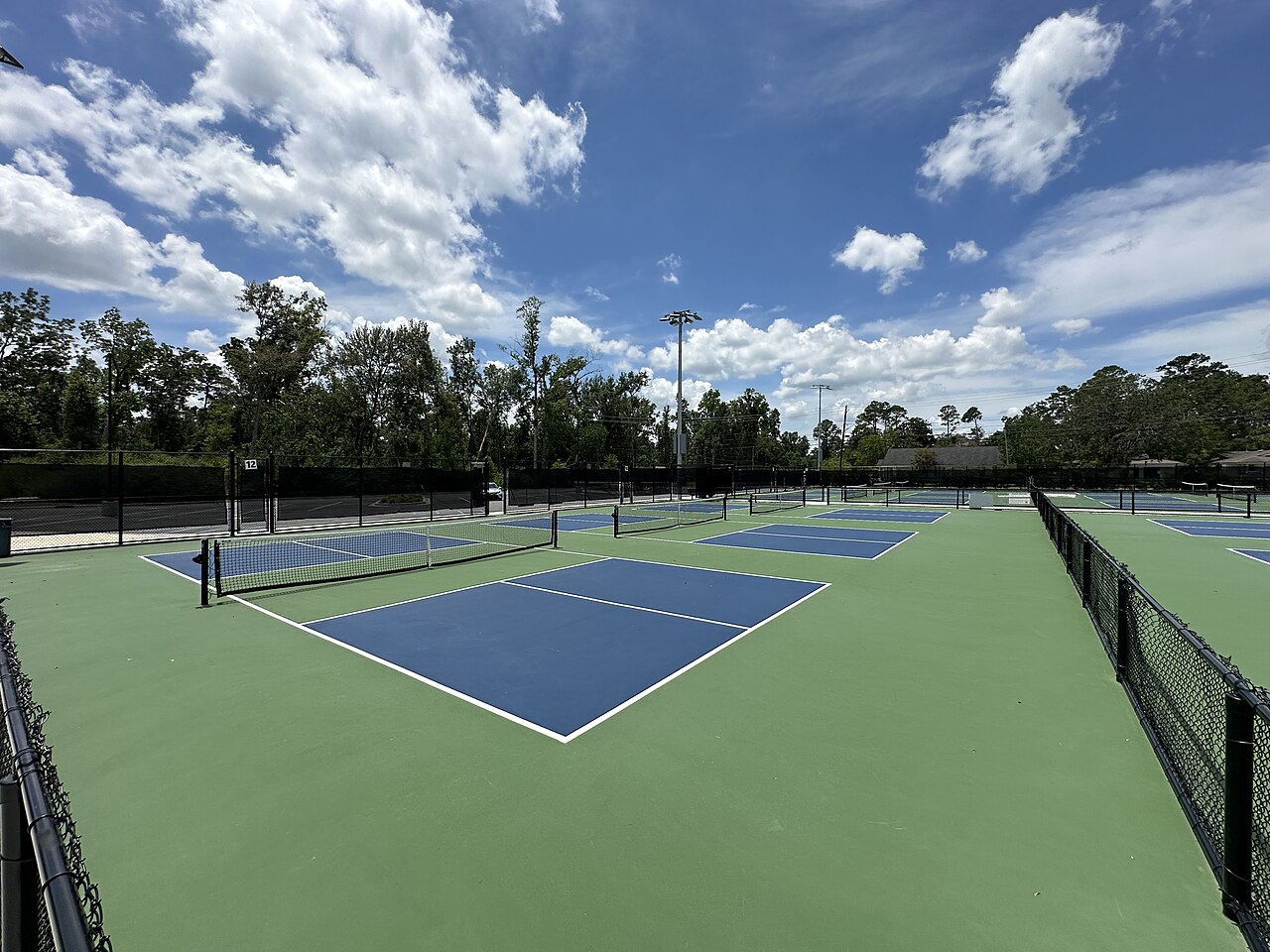
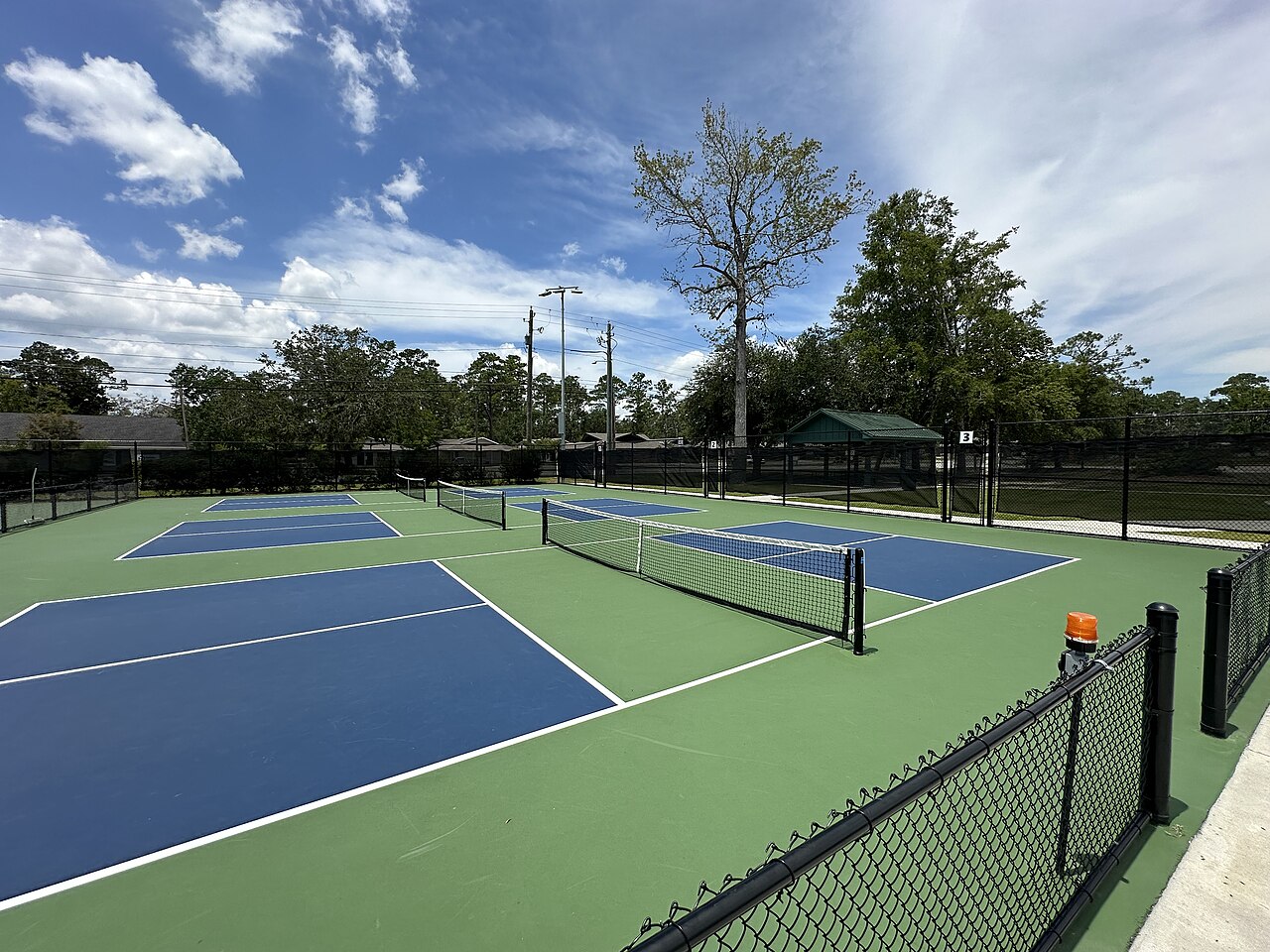
A new line is also a negotiation.
Every new court in this issue's Los Angeles reporting — Hermon, Griffith-Riverside, Echo Park — followed the same script: a proposal, a community meeting, and a compromise smaller than the original plan.
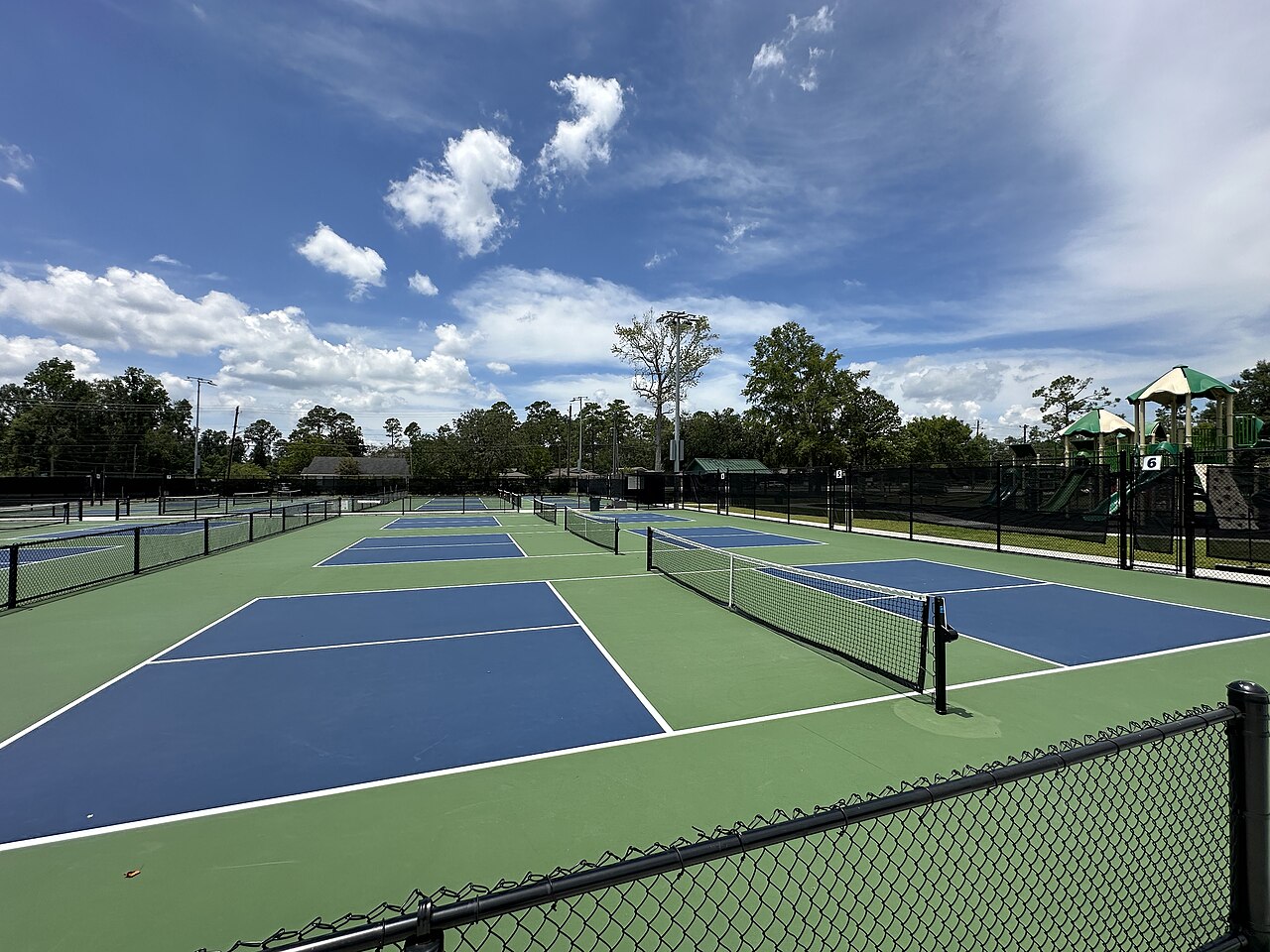
Painting a new line on a shared court looks simple. This issue's own LA reporting shows it never actually is: at Hermon Park, at Griffith-Riverside, and in Echo Park, adding pickleball courts followed the same pattern — a proposal, organized pushback, a public meeting, and a final plan smaller than the original one.1
The pattern, repeated across three parks
At Griffith-Riverside in late 2023, a petition stopped a plan to convert one tennis court into six pickleball courts and demolish its spectator bleachers. The following year, a similar fight broke out in Echo Park. At Hermon Park, the original proposal — replacing two tennis courts with eight pickleball courts — was scaled back to one tennis court converted into four pickleball courts, specifically after concerns from the tennis community, following a public survey and community meeting.1
Every one of those outcomes was a negotiation, not a unilateral city decision. The city's own committee chair described a strategy shift toward standalone facilities partly to avoid this exact recurring conflict — new courts, not converted ones, don't require the same negotiation with an existing user base.1
Municipal Planning & Facility Capital Horizons
Beyond the immediate scheduling schedule, this facility illustrates the broader capital equation facing modern municipal planners. Converting public asphalt to dedicated court layouts is no longer an isolated park experiment; it represents a fundamental re-rating of recreational space efficiency.1 Where traditional tennis layouts support four players across 7,200 square feet, a multi-court pickleball footprint accommodates sixteen or more concurrent participants, quadrupling hourly throughput while concentrating court-wear dynamics on high-friction zones.1
For city agencies and concession operators, the ongoing operational bottleneck remains sound ecology and off-peak throughput management. High-frequency paddle impact at 1.2 kHz requires deliberate acoustic buffering, and the surrounding neighborhood stakeholders increasingly demand sound-mitigation curtains, verified decibel monitoring, and structured ladder rotations before greenlighting additional capital permits.1 As public recreation departments balance dedicated access against legacy court reservations, this location serves as a critical benchmark for urban density planning across the regional sports network.1
Sources
Every fact above comes from these public pages. Open the original to check it, or to read further.
Chapter 06 · Club & CommunityRead it in the issue →