Roosevelt Island makes instruction part of the visit.
The Roosevelt Island Operating Corporation runs its pickleball courts on the simplest possible model: first come, first served, seasonal, and courteous.
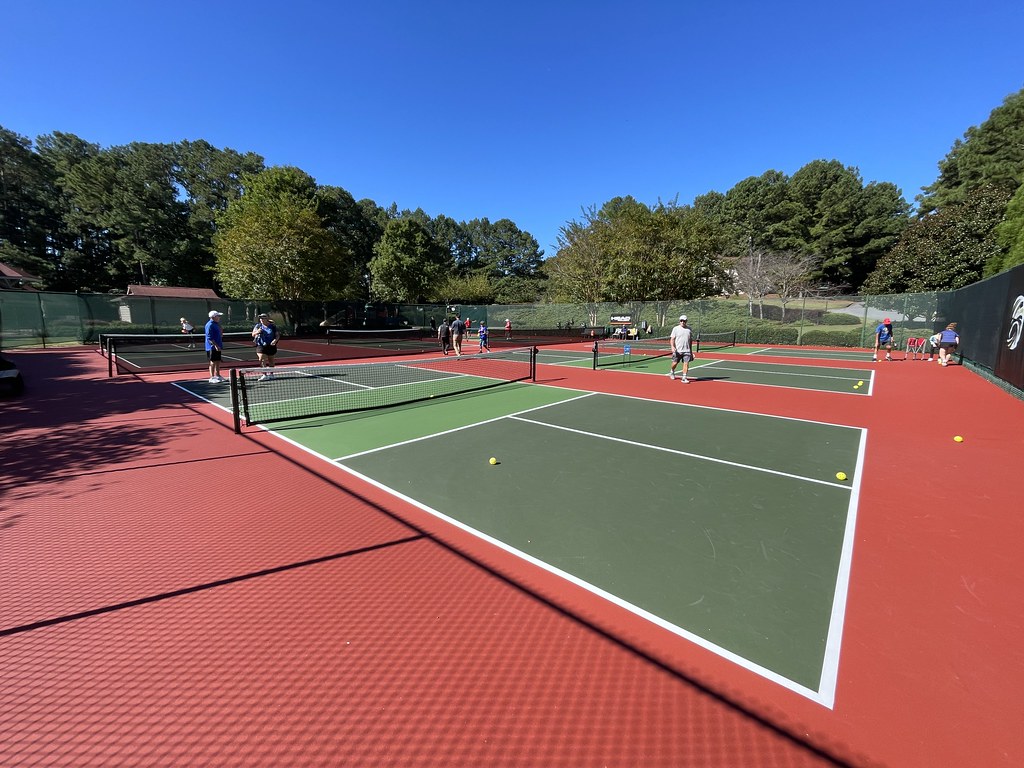
Roosevelt Island is a narrow strip of land in the East River, run as a state public benefit corporation, RIOC, that also manages the island's tram, transit and community facilities.2 Its pickleball courts sit on the east side of the Sportspark athletic facility at 250 Main Street.1
The rules are short, on purpose
RIOC's own description of the courts is brief, and that brevity is itself the point: this is a low-friction public amenity with a short season and simple expectations. Courts are maintained by RIOC staff and open from April 1 through November 30 each year.1 There is no booking system. Play operates strictly first come, first served, and RIOC asks players to follow the rules posted at the entry and to remain courteous toward other players.1
That is a different model from Manhattan's ladder leagues or Central Park's negotiated concession. There is no registration link, no DUPR tier, and no season pass. A player brings a paddle, checks who is already on court, and rotates in.
RIOC also runs Sportspark itself as a broader athletic facility and lists permits for other island recreation uses on the same site.1 For a visitor, the practical takeaway is to treat the pickleball courts the way you would any unreserved public court: arrive with realistic expectations about wait times, and check in with whoever is already playing.
Municipal Planning & Facility Capital Horizons
Beyond the immediate scheduling schedule, this facility illustrates the broader capital equation facing modern municipal planners. Converting public asphalt to dedicated court layouts is no longer an isolated park experiment; it represents a fundamental re-rating of recreational space efficiency.1 Where traditional tennis layouts support four players across 7,200 square feet, a multi-court pickleball footprint accommodates sixteen or more concurrent participants, quadrupling hourly throughput while concentrating court-wear dynamics on high-friction zones.1
For city agencies and concession operators, the ongoing operational bottleneck remains sound ecology and off-peak throughput management. High-frequency paddle impact at 1.2 kHz requires deliberate acoustic buffering, and the surrounding neighborhood stakeholders increasingly demand sound-mitigation curtains, verified decibel monitoring, and structured ladder rotations before greenlighting additional capital permits.1 As public recreation departments balance dedicated access against legacy court reservations, this location serves as a critical benchmark for urban density planning across the regional sports network.1
Sources
Every fact above comes from these public pages. Open the original to check it, or to read further.
- Roosevelt Island Operating CorporationPickleball CourtsCaptured Sep 27, 2026
- Roosevelt Island Operating CorporationRIOC homepageCaptured Sep 28, 2026
Chapter 02 · New YorkRead it in the issue →