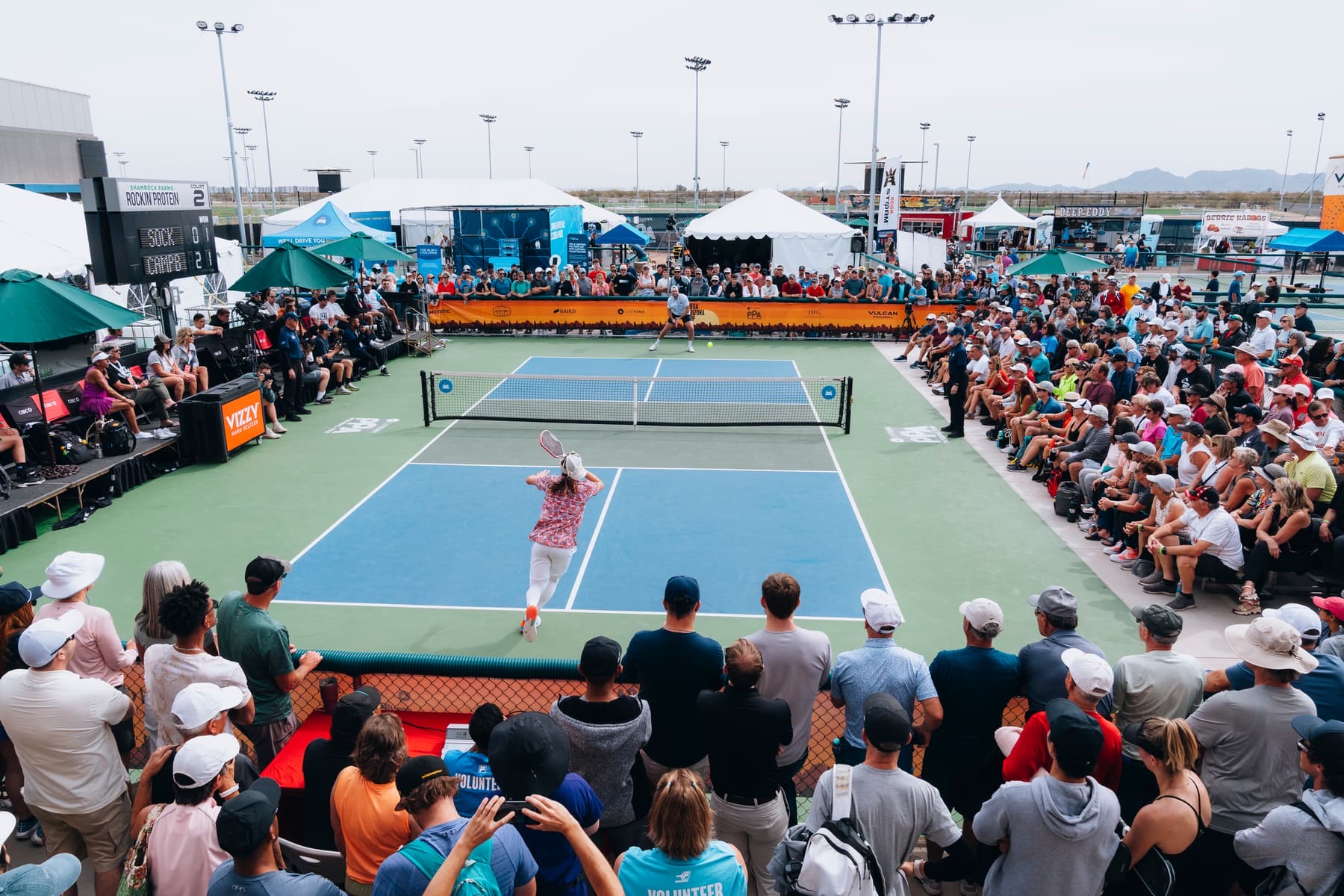
The September DUPR snapshot.
As of September 21, 2026, Ben Johns still tops DUPR's men's open doubles rankings — with a field of former college tennis players, MLP champions, and at least three players who overlap with this issue's PPA coverage.
DUPR's own published rankings, updated September 21, 2026, put a specific number on the exact story this issue has been tracking all month: Ben Johns leads men's open doubles at a 7.074 rating, with Christian Alshon — this issue's own player of the week — sitting fifth at 6.882.1
Chart · DUPR Men's Open Doubles, top 5
A five-hundredth-of-a-point season so far
DUPR men's open doubles rankings, updated Sep 21, 2026
- A five-hundredth-of-a-point season so far
- Ben Johns, 27
- 7.074
- JW Johnson, 24
- 7.036
- Hayden Patriquin, 21
- 6.925
- Andrei Daescu, 38
- 6.886
- Christian Alshon, 26
- 6.882
The gap from No. 1 to No. 5 is just 0.192 rating pointsDerived: 7.074 − 6.882 = 0.192
Source: DUPR rankings, dupr.com, updated Sep 21, 2026
DUPR ratings update continuously as new matches are logged; this is a single-day snapshot, not a season-end result.
What's notable in this specific list
The top ten spans ages 20 to 38, with no clear age cluster at the top — Gabriel Tardio (20) and Andrei Daescu (38) sit within a few hundredths of a point of each other.1 Andrei Daescu, Christian Alshon's men's doubles partner covered elsewhere in this issue, ranks fourth individually while their partnership was seeded second at the Veolia Arizona Open — a reminder that an individual DUPR rating and a specific partnership's tournament seed are two different measurements answering two different questions.
Competitive Meta & Biomechanical Reset Dynamics
At the professional championship tier, this dynamic highlights a macro shift in how tour players construct points from the transition zone. As paddle face dwell times decrease and power-core carbon fiber compositions accelerate ball speeds toward 65 mph, winning margins are determined not by baseline groundstrokes but by 0.19-second reflex exchanges at the non-volley zone line.1 Tactical video breakdown confirms that top-seeded competitors are systematically prioritizing aggressive counter-punches over defensive resets, forcing opponents to speed up from disadvantageous low-contact heights.1
This evolution has triggered a parallel restructuring of athlete training regimens and commercial brand alignment. Tour pros now operate specialized movement labs with high-speed optical tracking, calibrating paddle balance weights to within tenths of an ounce while managing heavy tournament schedules across national circuits.1 As commercial endorsement portfolios expand into footwear, nutritional recovery, and regional club franchises, top athletes are establishing durable enterprise equity across the evolving professional sports landscape.1
Sources
Every fact above comes from these public pages. Open the original to check it, or to read further.
- DUPRDUPR Top RankingsUpdated Sep 21, 2026
Chapter 04 · Tour & RankingsRead it in the issue →